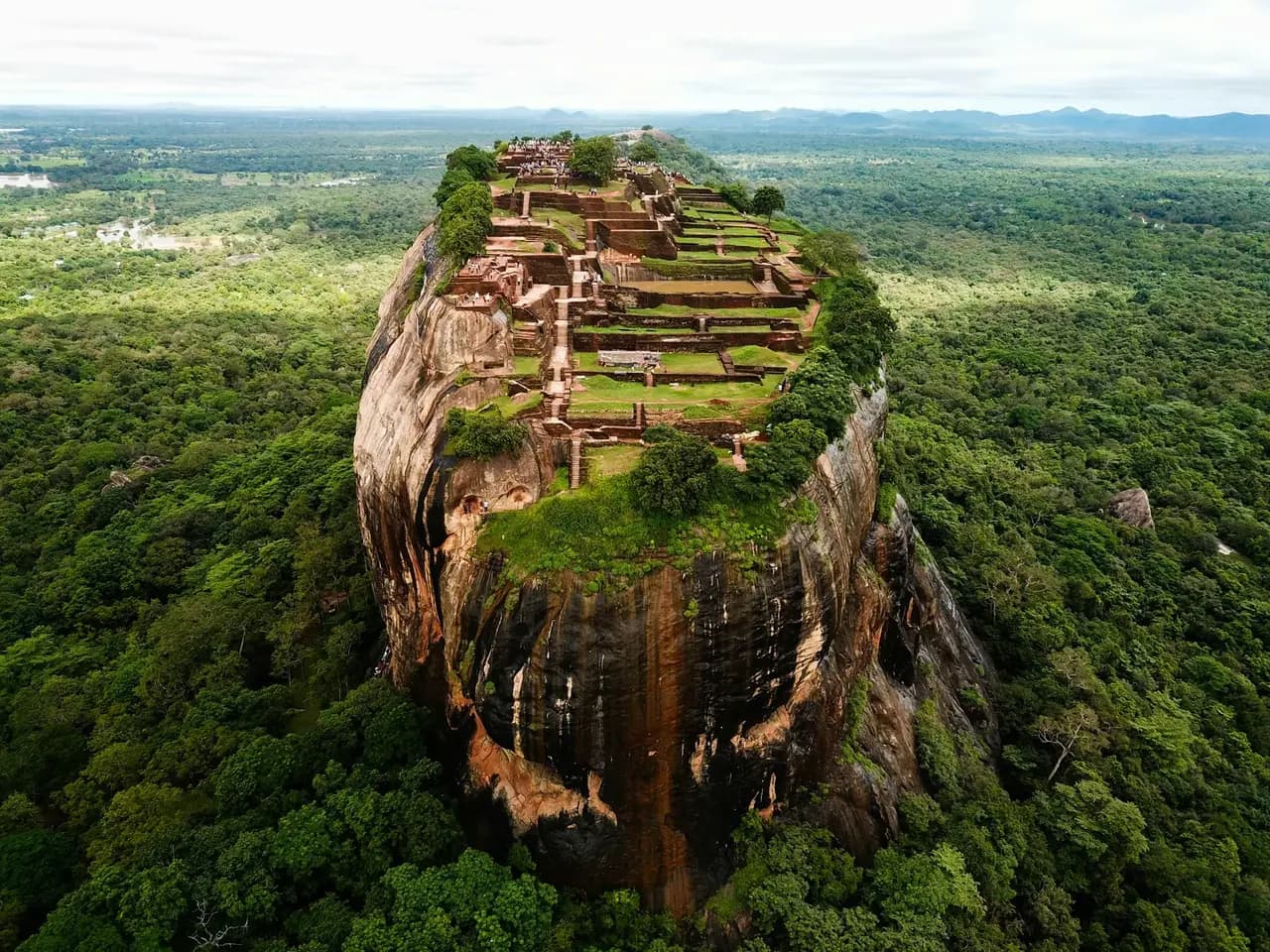
The Sri Lanka that appears in most travel itineraries - Sigiriya, the Kandy Temple of the Tooth, Yala, Ella, the Galle Fort - is genuinely excellent. These are famous places for good reasons. But after a decade of growing tourism, they are also increasingly crowded, increasingly priced for tourists, and increasingly distant from the Sri Lanka that exists just beyond the well-worn circuit.
There are five places that demonstrate exactly what "off the beaten path" should actually mean: a rock above the east coast with a panoramic view that rivals anything in the country, a Kandyan-era royal manor with 43 rooms that sees perhaps a handful of foreign visitors a week, a private garden estate that one of the 20th century's most important architects spent 50 years building, a 75-metre waterfall just 31 kilometres from Kandy that almost no international visitor has heard of, and a small but ecologically significant waterfall in Kalutara District that loggers are actively destroying.
None of these require 4WD vehicles, special permits, or physical heroics. All five are accessible in a standard trip with some additional planning. What they require is knowing they exist.
These three hidden gems work best when built around a longer itinerary. Lunuganga sits on the Colombo–Galle corridor; Maduwanwela requires a dedicated day from the south; Elephant Rock is the east coast's best-kept secret.
Planning a Sri Lanka Trip Beyond the Usual Circuit?
Find the best price to Colombo from your city
Search Flights →Compare prices across Booking.com, Agoda & more
Find Hotels →Bus fares, train times and transport options
Plan Transport →Powered by Travelpayouts · We may earn a small commission at no extra cost to you.
Tip
Our take: We tracked down every site in this guide through a combination of local contacts, repeat visits, and deliberate off-season exploration. The honest caveat: what is hidden shifts over time. Some of these will be less so by the time you visit - that is the nature of travel writing.
1. Elephant Rock, Arugam Bay - The Surfers' Secret Viewpoint
Arugam Bay has been on the surfer radar for decades. What almost no one outside those circles knows is that 4 kilometres south of the main town, a 100-metre-tall rock formation rises directly from the coastline and offers what is arguably the most complete coastal panorama in Sri Lanka - lagoon, beach, ocean, and jungle visible simultaneously from the same viewpoint.
The rock is named Elephant Rock because from certain angles, the silhouette resembles a sleeping elephant. Locals know it. The surfing community knows it. The mainstream tourist trail does not.
Why It Is Worth the Detour
Most visitors to Arugam Bay come for the surf break and leave without exploring south of the main point. The lagoon road toward Panama and Kumana National Park is one of the most beautiful drives on the island - a narrow track through jungle with wild elephants, peacocks, and monitor lizards alongside the road. Elephant Rock sits at the start of this route, and the view from the summit rewards the moderate climb immediately.
From the top: the Arugam Bay lagoon stretches inland to the left; the main beach curves away to the north; the Indian Ocean extends to the horizon in both directions. At sunrise, the light is golden and the bay is still. At sunset, surfers appear as silhouettes below the rock while the sky changes colour behind them. Neither view is photographed heavily because most people do not know to be there.
Getting There: The Route That Actually Works
There are three approaches to Elephant Rock, and only one is reliably recommended.
Avoid the beach walk (4 km of sand with no shade in east coast heat). Avoid the Google Maps route through Kudakalliya beach - it becomes impassable during the rainy season and requires navigating a narrow shoreline that can leave you stranded.
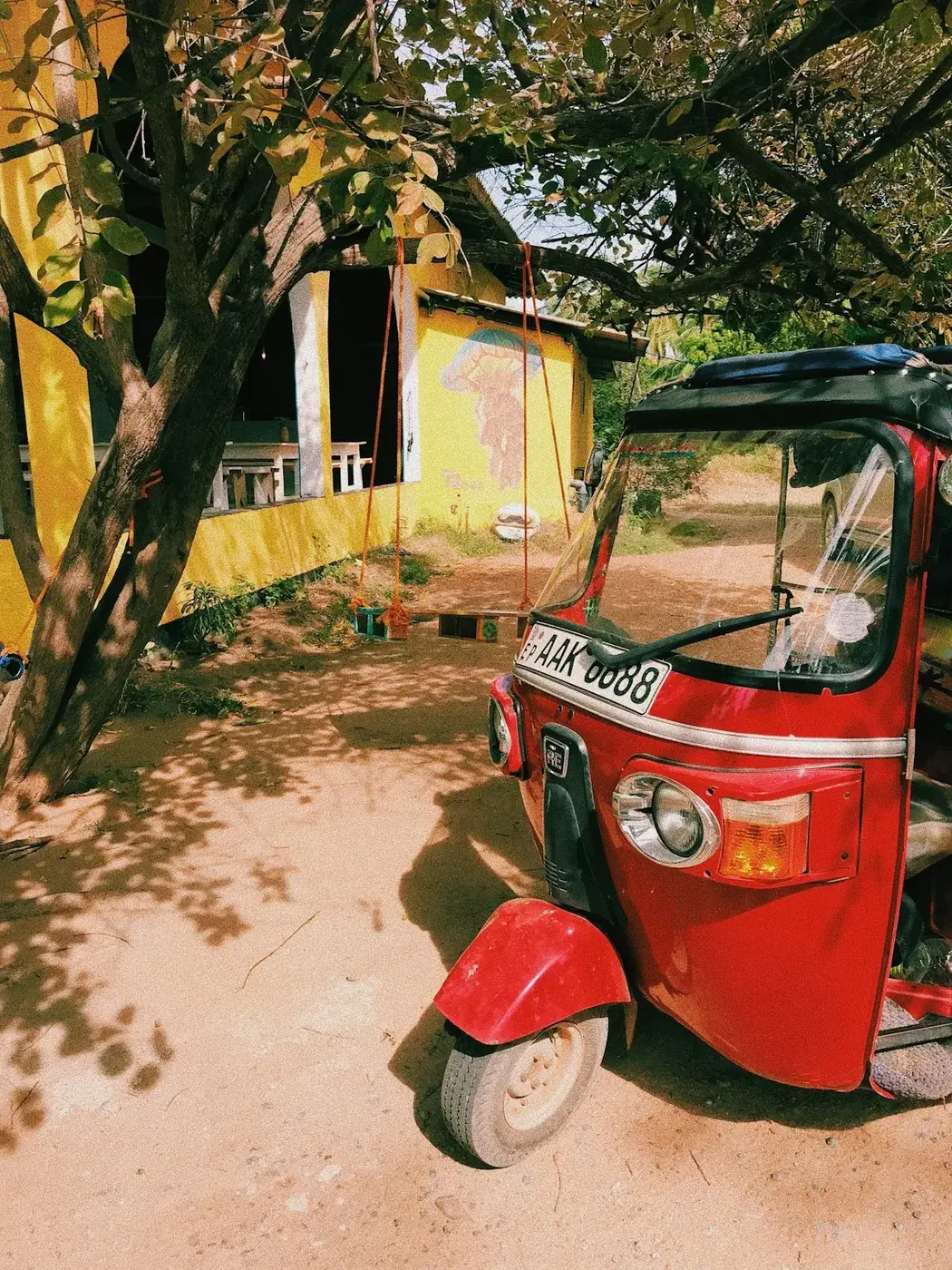
The route that works - what locals call the surfers' hidden path - starts on Panama Road heading south from Arugam Bay. Cross the Nawalaru Bridge, continue along the dirt road past the army camp, and follow the track to a small parking area near the rock's base. A tuk-tuk driver from the main bay will know this route, or can find it. The journey from town takes around 20 minutes.
At the rock, take the left-hand trail through the bushes rather than the path on the right - the left route is more stable and better maintained. Halfway up, a small Buddha shrine offers a natural rest point with partial views before the summit.
Tip
Go at sunrise or after 4 p.m. The midday heat on the east coast is formidable, and the exposed rock surface magnifies it. A torch, a litre of water per person, and proper footwear are the three things visitors most commonly wish they had brought.
When to Visit the East Coast
Arugam Bay's optimal season runs from May to September, when the northeast monsoon is dormant and the east coast is Sri Lanka's driest, clearest region. This corresponds exactly with the European and Australian winter - the months when the south coast is at its wettest.
Elephant Rock can technically be climbed year-round, but wet conditions make the rock surface hazardous and the dirt access roads unreliable. If in doubt, ask locally before setting out.
Nearest base: Arugam Bay town has accommodation ranging from surf-focused hostels to boutique beach properties. Book early for June to August peak season.
2. Maduwanwela Walawwa - A Royal Manor Frozen in 1700
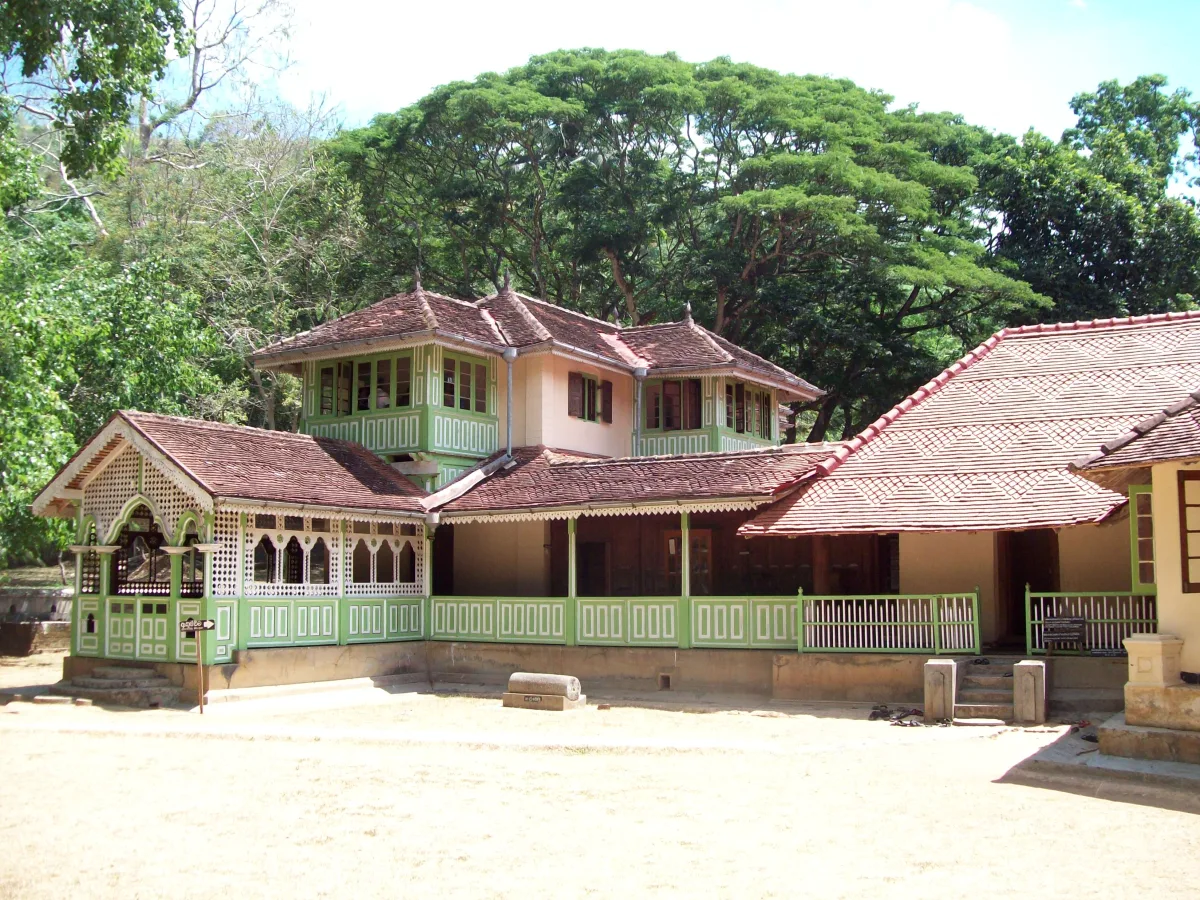
The word walawwa refers to the grand manor houses of Sri Lanka's hereditary chieftains under the Kandyan kingdom - part residence, part courthouse, part administrative centre, part expression of dynastic power. They are the closest equivalent Sri Lanka has to England's country houses or France's chateaux: buildings that served as the physical manifestation of regional authority across generations.
Most have not survived. Maduwanwela Walawwa has.
What 1700 Looks Like in 2026
Built around 1700 AD in the Sabaragamuwa Province's Kolonna region, the manor was the administrative seat of the Maduwanwela Maha Mohottala lineage - a dynasty that at its peak controlled 82,000 acres across four administrative regions. The structure you see today completed its final major renovation in 1905 and became a protected archaeological site in 1974.
What remains is formidable: 43 rooms arranged across seven inner courtyards, down from the original 121 rooms and 21 courtyards. The atmosphere is unlike anything else in Sri Lanka's heritage circuit. There are no crowds, no tour groups, no audio guides. A modest entry fee at the gate, a caretaker who may or may not speak much English, and 300 years of accumulated history entirely to yourself.
What to look for inside:
- The functioning courthouse with tiered seating for 100 - an extraordinarily intact colonial-era legal chamber
- Stone arches carved with Sinhala inscriptions that record the manor's administrative history
- Mosaic floors made from broken European porcelain - a detail that reveals the trade networks these chieftains maintained
- The ancient Kumbuk tree at the courtyard's centre, beneath which a sacred well has existed for centuries
- Period furniture and colonial-era objects that make the rooms feel occupied rather than exhibited
The contrast with Sri Lanka's major heritage sites is stark. At Sigiriya you will share the rock with hundreds of visitors; at Maduwanwela you may be the only foreign visitor in the building. The trade-off - a longer journey, less interpretive material - is paid back immediately in atmosphere.
Getting There
Maduwanwela Walawwa sits 207 km from Colombo in the Kolonna area of the Ratnapura District. The most practical approach:
By car or private driver: Take the A004 Colombo–Ratnapura highway, continue through Ratnapura toward Embilipitiya, then follow signs for Kolonna. Total driving time: 3.5 to 4 hours from Colombo, or 2 to 2.5 hours from the southern coast.
By public transport: Buses run from Colombo to Embilipitiya; from there, arrange local transport to Kolonna. This approach requires more time but is feasible for independent travellers.
The manor sits between two of Sri Lanka's most visited southern attractions - Yala National Park and the hill country - making it a natural detour on routes that many itineraries already cover. If you are travelling from Ella toward the south coast, Maduwanwela is reachable as a half-day side trip with a private driver.
Note
The walawwa is open Tuesday to Sunday. Entry requires a nominal fee paid at the entrance. Photography is permitted throughout. Visit in the morning when the courtyard light is best - and arrive with some knowledge of Kandyan history, since the on-site interpretation is minimal and the building rewards curiosity.
3. Lunuganga - Geoffrey Bawa's Life's Work on Dedduwa Lake
If you are interested in architecture, design, landscape, or any combination of the three, Lunuganga is one of the most important places in Asia to visit. If you are none of those things, it is still an extraordinarily beautiful estate on a lake two hours south of Colombo.
Geoffrey Bawa is the most influential architect Sri Lanka has produced - arguably the most significant Asian architect of the 20th century. We cover his life and work in detail in our Geoffrey Bawa and Lunuganga guide. His buildings appear on the cover of architecture monographs; his approach, which he called Tropical Modernism, shaped how a generation of architects thought about climate, materiality, and the relationship between interior and exterior space. He spent half a century working on Lunuganga, his private estate near Bentota, using it as a laboratory for ideas that later appeared in his major commissions.
Most tourists pass Bentota on the coastal train or the Southern Expressway without any idea that the estate exists.
What Bawa Built
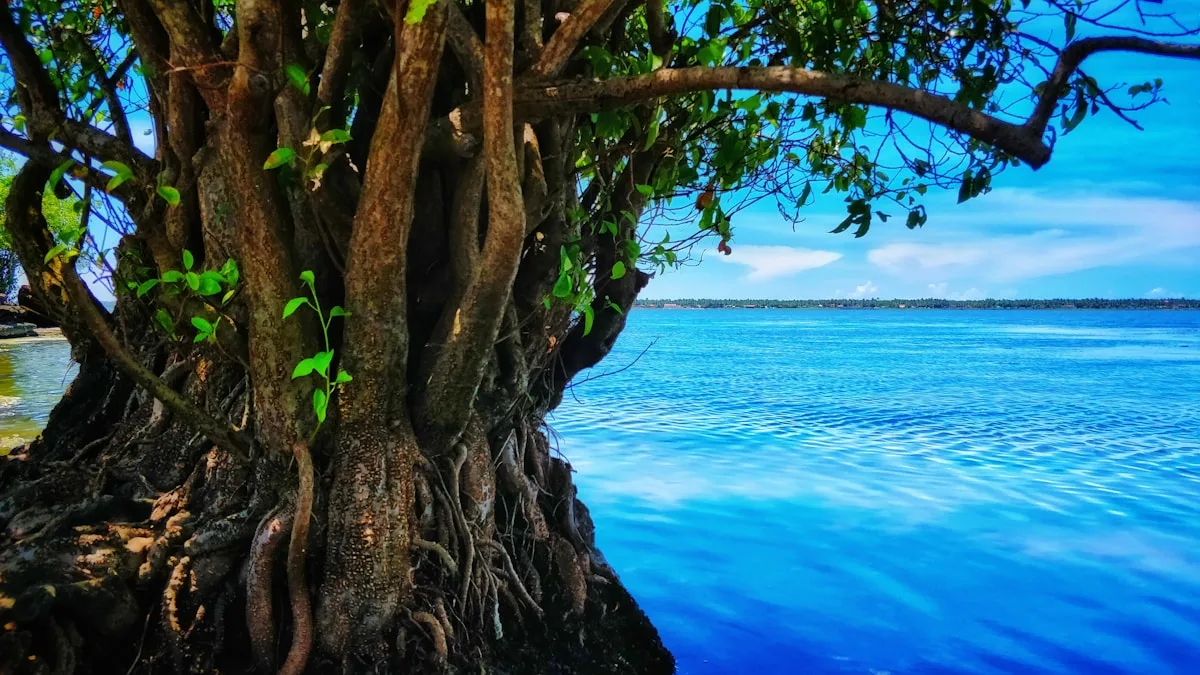
Lunuganga occupies a peninsula on Dedduwa Lake, approximately 90 minutes south of Colombo near Bentota. Bawa purchased the former rubber plantation in 1948 for 20,000 rupees - then spent 50 years reshaping every element of it.
The result is not a conventional garden and not a conventional building. It is closer to a landscape that has been continuously edited: terraces, water features, view axes, collected objects, and architectural fragments from Bawa's travels arranged through a series of spaces designed to be experienced in sequence. The mood changes as you move through the estate - expansive lake views give way to enclosed courtyard spaces, then open again onto the Red Terrace, a laterite dining area positioned to frame the water garden.
Key spaces within the estate:
- Cinnamon Hill - the levelled summit of the estate with a panoramic view of Dedduwa Lake, a Ming vase positioned against the horizon, and Bawa's own memorial stone (simple, unmarked almost, characteristically understated)
- The Gate House - displays a large mural by Australian painter Donald Friend, a recurring collaborator whose work appears at several Bawa properties
- The main house - a series of connected rooms that expand and contract, demonstrating Bawa's principle of "sequence and procession" in architecture
How to Visit
Day tours depart at 11 a.m., 2 p.m., and 3 p.m. daily and last 60 to 90 minutes. Admission is USD 20 for international visitors. The tours are guided and the guides are knowledgeable - worth asking questions, particularly about the reasoning behind specific spatial decisions.
Overnight stays are available through Teardrop Hotels, which manages nine heritage guesthouse rooms within the estate. Rates run around USD 400–500 per night including breakfast, guided tours of the estate, and refreshments. Staying overnight gives access to the property at dawn and dusk - the hours when the relationship between the garden and the lake is at its most extraordinary - and is the way Bawa himself would have wanted the estate to be experienced.
Getting there: By car, take the Southern Expressway south toward Bentota (approximately 1.5 hours from Colombo). By train, take the coastal line to Aluthgama station and then a 10–15 minute tuk-tuk to the estate. The proximity to Galle - 45 minutes further south - makes Lunuganga a natural addition to any itinerary that includes the fort city.
Tip
Book day tours in advance, particularly during the peak December–March season. The estate is not heavily marketed and does not appear on most Sri Lanka itineraries, which means availability is generally better than at mainstream heritage sites - but a confirmed booking prevents arriving to a full session.
4. Huluganga Ella Falls - A 75-Metre Waterfall 31km from Kandy That Almost Nobody Visits
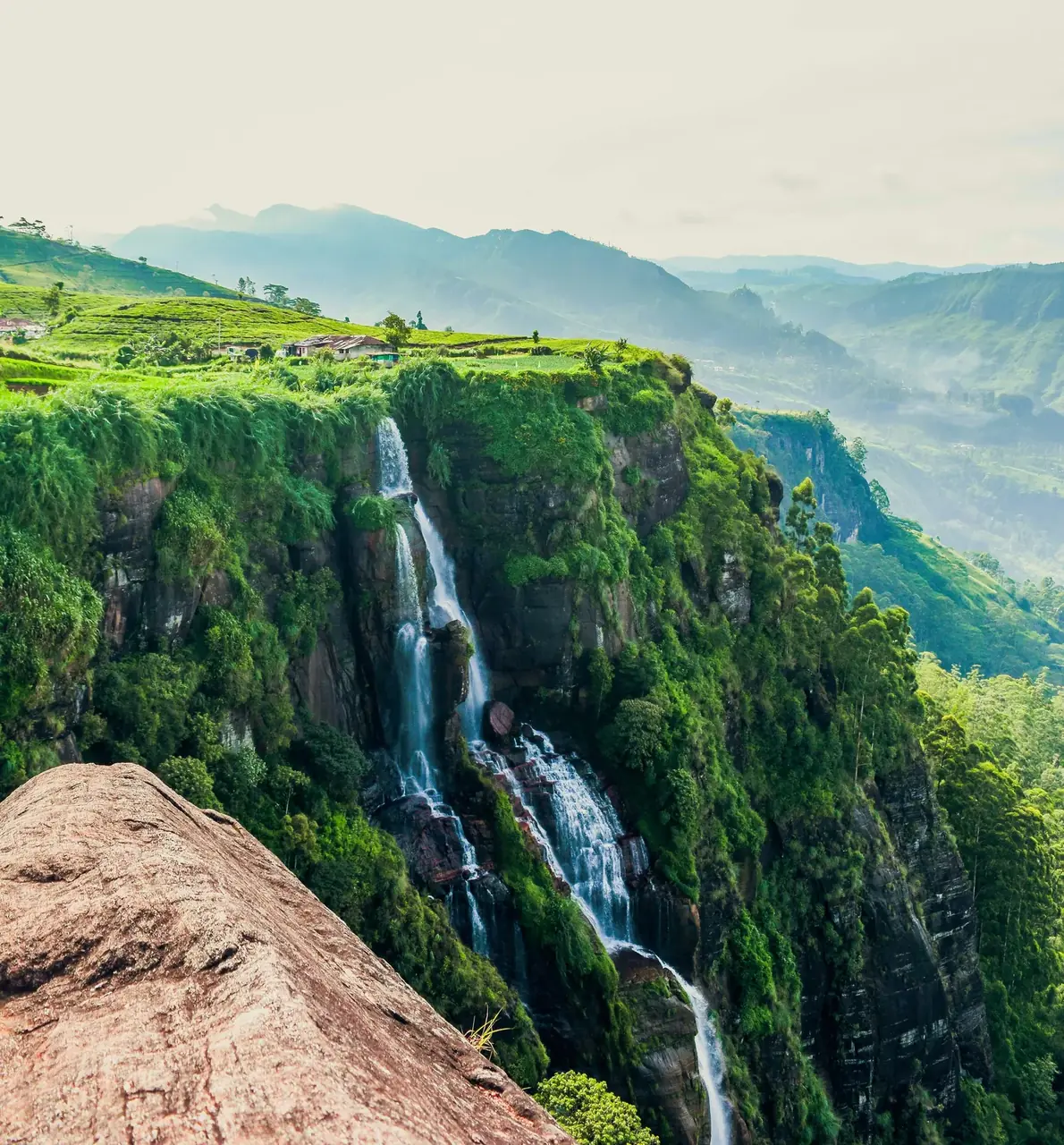
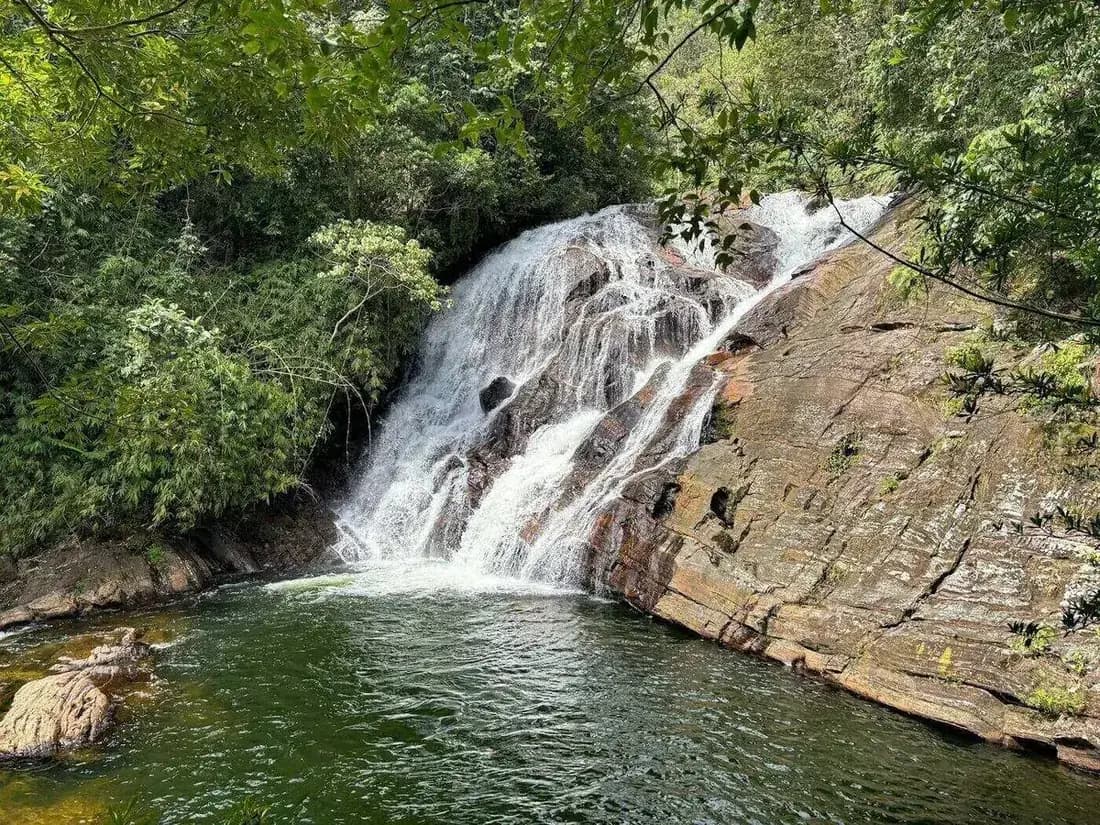
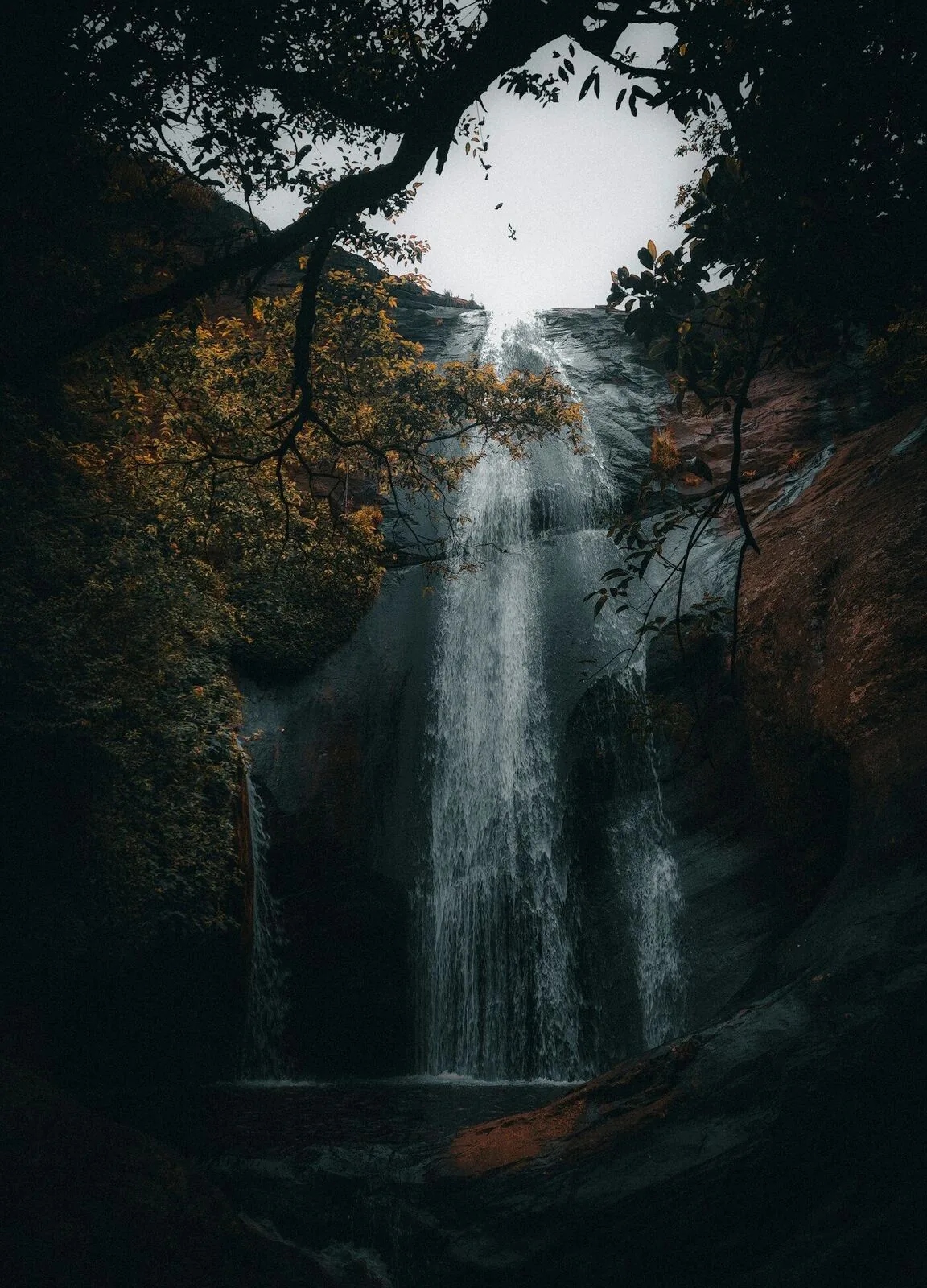
Sri Lanka's waterfall circuit - Bambarakanda, Diyaluma, Devon, Baker's Falls - is well-documented and increasingly well-visited. What falls almost entirely outside that circuit is Huluganga Ella, a 75-metre cascade on the Hulan Ganga River near the town of Panwila, just 31 kilometres northeast of Kandy city.
The water originates in the Knuckles Mountain Range - one of Sri Lanka's UNESCO World Heritage Sites - and descends through the villages of Elliyadda and Aratthana before flowing into the Victoria Reservoir. What sets Huluganga Ella apart from the standard Kandy-area waterfalls is its width: unlike the narrow vertical ribbons characteristic of most mountain falls, this waterfall spreads across a broad rock face, making it visually substantial even at reduced water volume.
The entry point is at the Panwila bridge over the Hulan Ganga River. A steel staircase near the bank building on the main road leads down to a base viewing platform. Entry costs LKR 50 per person - one of the smallest entry fees of any attraction in Sri Lanka.
Why it stays off the tourist radar: The waterfall gained cultural prominence as a filming location for Ella Langa Walauwa, a popular Sinhala teledrama - so Sri Lankan visitors recognise it immediately. International visitors simply don't know it exists. There is no English signage, no tour operator circuit, and no organised transport. It belongs entirely to domestic Sri Lankan tourism, which makes it exactly the kind of experience this guide exists to surface.
Getting there: From Kandy, take the Madawala Bazar road northeast toward Panwila. Total distance 31km, approximately 45 minutes by car. A tuk-tuk from Kandy costs LKR 1,500–2,500 each way. Best visited November to February when Knuckles rainfall peaks and the falls run at full volume.
Combine it with: Jodu Ella, Saree Ella, and Thaliya Wetunu Ella are all accessible within the same regional road network - a private driver can cover all four in a single day from Kandy. Read the complete Huluganga Ella guide for detailed directions, the Google Maps location, and full practical information.
Tip
One upstream caveat: a dam built for the Kundasale Water Supply Scheme sits between the reservoir and the falls. During extended dry periods it can reduce water flow. Visit after rain for the fullest effect - or time your trip for the November–February northeast monsoon season when the Knuckles streams run highest.
5. Thambadola Ella Falls (තඹදොල ඇල්ල) - A Waterfall Under Threat in Kalutara
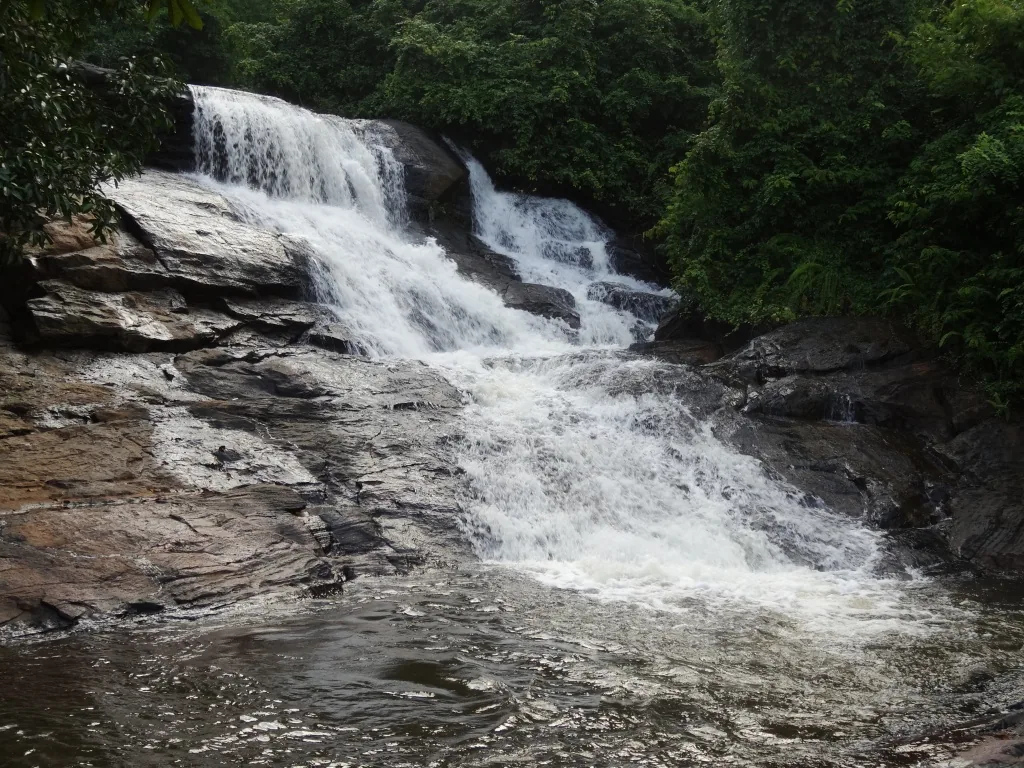
Most hidden-gem waterfalls in Sri Lanka are simply unknown. Thambadola Ella in the Kalutara District is something rarer and more urgent: a waterfall that is known, loved by those who live near it, and actively being degraded by industrial logging in the surrounding forest.
The fall is modest in height - 3 metres - but that number understates what this place is. The surrounding ecosystem is what matters. Indigenous fish species, birds, and a diverse array of naturally occurring plants inhabit the water and forest around the fall. Local villagers have used it as a water source for generations. And logging operations in the area have been depleting its aquifers, using the stream itself as a timber transport route - felled tree trunks floated downstream through the fall and pool below.
Why This Falls Belongs in a Hidden Gems Guide
The standard definition of a "hidden gem" is a place that is beautiful and overlooked. Thambadola Ella qualifies on both counts. But it earns its place in this guide for a third reason: it may not survive the decade in its current form if logging pressure continues unchecked.
This is not an unusual situation in Sri Lanka's wet zone, where the combination of tea plantation expansion, slash-and-burn cultivation, and unregulated logging has degraded dozens of similar ecosystems over the past 30 years. What is unusual about Thambadola Ella is that the community around it is vocal about the threat - local villagers have been raising the alarm about aquifer depletion and water quality for years. The falls appears in the Lanka Council on Waterfalls database as a site requiring environmental protection.
Visiting it is, in a small way, an act of documentation. The more people who know it exists, photograph it, and write about it, the harder it becomes to quietly destroy.
What You'll Find
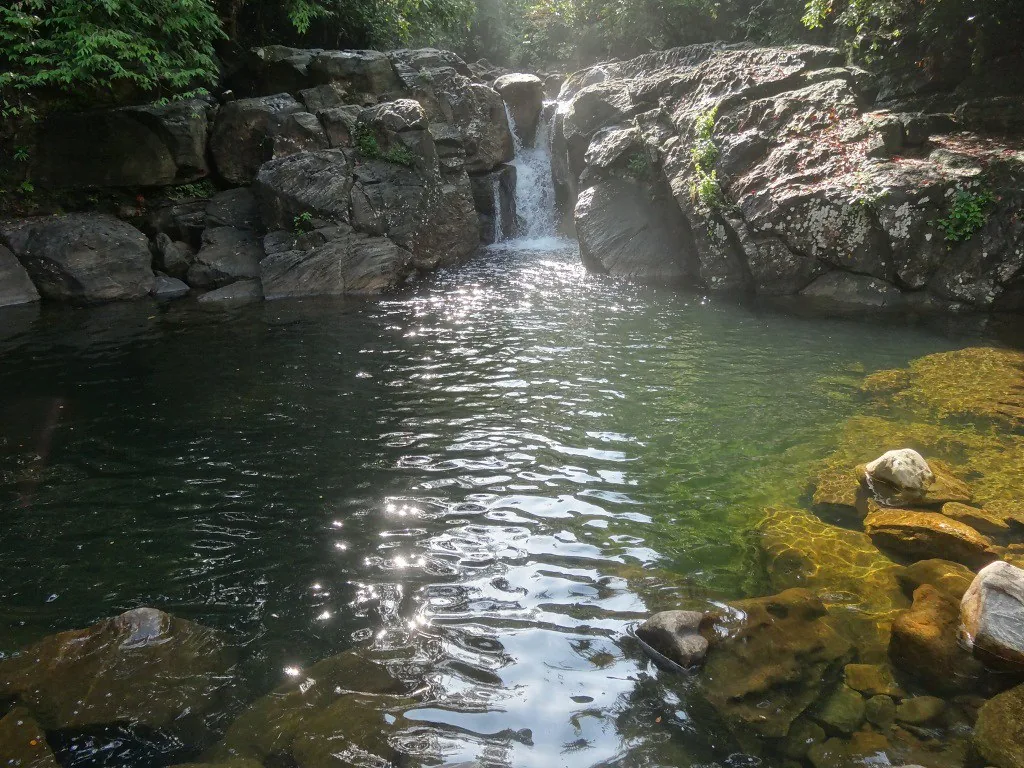
A wide fall spreading across flat granite rock steps into a clear pool, surrounded by jungle. The surrounding forest shows both its ecological richness - plant and bird diversity is high - and the signs of pressure: areas of logged hillside visible from the path, reduced water flow compared to what older visitors describe.
A footpath leads upstream to Julee Ella, a second waterfall approximately 200 metres further up the stream - a smaller drop into a deep, clear rock pool that is even quieter than the main falls. The combination of both makes the journey worth it.
Tip
Bathing caution: Local villagers who use this fall as a drinking water source are, according to the Lanka Council on Waterfalls, in the habit of discarding broken glass bottles into the pool below the fall. If you plan to enter the water, wear appropriate footwear and move carefully around the pool's edges.
Getting There
The falls is in the Kalutara District, accessible from two directions:
Route 1 (via Matugama): Take the road from Matugama toward Agalawatte via Kitulgoda. At Polgampala junction, turn onto the Kuruwita road heading east for 0.5 km - the fall is signposted from there.
Route 2 (more reliable for GPS users): Travel to Polgampola Junction either via Agalawatta–Bellana or via Matugama–Horawala. From the junction, take the Kurupita road for approximately 1.5 km. Take the first by-road on the right, then continue for 2 km to the end of the road. A well-maintained footpath leads from the road's end directly to Thambadola Ella - locals know it and will point the way.
The site is well-known to both Sri Lankan and foreign visitors who make the effort. There is no formal entry fee and no organised tourism infrastructure - which is both its charm and its vulnerability.
Nearest base: Matugama (15 km) or Kalutara town (roughly 35 km). Works well as a day trip from Colombo for visitors with a private driver - total distance from Colombo is approximately 65 km.
Best time to visit: The wet zone around Kalutara receives rain year-round, but the fall runs fullest between May and November. Avoid visiting immediately after heavy logging activity in the area - the water can run turbid with disturbed sediment.
Combining These Five: A Practical Route
None of these five places is a long detour from the main tourist circuit; they all anchor well to the itineraries most visitors are already running.
For south-focused itineraries (Galle, hill country, south coast):
- Add Lunuganga as a stop on the drive south from Colombo - it sits directly on the route
- Maduwanwela works as a dedicated day from the Yala or Ella area with a private driver
- Thambadola Ella Falls is 65 km from Colombo - a natural half-day trip before heading south, or a return stop on the way back from Galle
For east coast itineraries (Arugam Bay, Trincomalee, Pasikudah):
- Elephant Rock is already in Arugam Bay - budget half a day and a tuk-tuk
- The east coast is optimal May to September; the other sites work year-round
For the classic circuit (Colombo → Galle → Ella → Cultural Triangle → Kandy):
- Lunuganga slots in between Colombo and Galle without adding meaningful travel time
- Maduwanwela is accessible as a detour when driving between the hill country and the south coast
- Huluganga Ella is a natural Kandy add-on - 45 minutes northeast of the city, combine it with Jodu Ella and Saree Ella for a full waterfall day
- Thambadola Ella works as a Colombo-day excursion or a stop on the way to/from Kalutara and the south coast
Bentota and Aluthgama have a strong collection of beach and lagoon hotels. Staying here puts you within 10–15 minutes of Lunuganga and positions you perfectly for exploring the south coast the following day.
Where to Stay Near Lunuganga
Hotels near Bentota
Compare prices across Booking.com, Agoda & more
Powered by Travelpayouts · We may earn a small commission at no extra cost to you.
Why These Places Still Exist Off the Radar
The honest answer is that all five require something most mass-market itineraries are not designed to deliver: specific knowledge, a willingness to deviate from the standard route, and at least partial reliance on a private driver rather than organised tours.
The travellers who find Elephant Rock are usually surfers who heard about it locally. Those who visit Maduwanwela are usually historians, heritage enthusiasts, or visitors with enough time in the country to have exhausted the standard sites. Those who find Lunuganga are usually architects, designers, or people who looked at their Galle–Colombo journey and asked what they might be driving past. Those who find Huluganga Ella are usually visitors who asked a local in Kandy where the crowds don't go - and got an honest answer. Those who reach Thambadola Ella are usually the rare visitors who look past the obvious and seek out places that are both beautiful and fragile - the kind of place that rewards a visit precisely because it may not always be there.
All five are accessible to any visitor who plans deliberately. They remain undiscovered not because they are remote, but because they are invisible to the standard recommendation engine - not in the top ten lists, not on the most-photographed lists, not yet overwhelmed by the infrastructure that eventually standardises every formerly special place.
That will change - Sri Lanka is increasingly in the global spotlight, topping major "best places to travel in 2026" lists. For now, these five are still yours.
Related Guides
- Huluganga Ella Falls: Sri Lanka's Most Underrated Waterfall Near Kandy
- Ella Spice Garden: Sri Lanka's Best Cooking Class Hidden in Plain Sight
- Why Sri Lanka is the Smartest Long-Haul Choice for European and Australian Travellers in 2026
- Why Sri Lanka Is the Honeymoon Destination Modern Couples Are Choosing Over the Maldives
Advertisement
Flights, hotels and tours - all in one place.
Plan Your Sri Lanka Trip
Find the best price to Colombo from your city
Search Flights →Compare prices across Booking.com, Agoda & more
Find Hotels →Bus fares, train times and transport options
Plan Transport →Powered by Travelpayouts · We may earn a small commission at no extra cost to you.
Leave a Comment
Share your thoughts, questions, or travel experiences