Tip
Kandy in brief: Sri Lanka's last royal capital at 500 m elevation, 115 km east of Colombo. Home to the Temple of the Tooth Relic - the most sacred site in Theravada Buddhism - and the starting point of the Kandy to Ella scenic train. Most visitors stay 1–2 nights; 2 full days is the right amount to see Kandy properly without rushing. Plan it as part of a 7-day Sri Lanka itinerary or the 10-day route.
Kandy is where most first-time Sri Lanka itineraries pivot inland. The coastal circuit - Colombo, Negombo, or the south beaches - gives way to a city that sits in a valley of green hills, built around an artificial lake, with a Buddhist temple housing what is reputedly the tooth of the Buddha at its centre. The city has been the cultural capital of the island since the 16th century, and it still feels like it.
Most people spend one night here on their way to Ella or Nuwara Eliya. Two nights is the better choice. One night means rushing the Temple, skipping the Botanical Gardens, and never quite finding the quiet city underneath the tourist circuit. Two nights gives you time to walk the lake at 6am before anyone else is up, take the train on the scenic line east, and still have an afternoon to disappear into Udawattakele forest above the town.
This guide covers everything worth doing in Kandy - and the honest take on what you can skip.
Kandy's best-positioned hotels are on the hillsides above the lake with views over the valley. Properties in the city centre are convenient for the Temple but get traffic noise. Book well ahead December–March and during the Esala Perahera festival in July/August, when every room in the city fills up.
Where to Stay in Kandy
Hotels near Kandy
Compare prices across Booking.com, Agoda & more
Powered by Travelpayouts · We may earn a small commission at no extra cost to you.
The Temple of the Tooth (Sri Dalada Maligawa)
Entry fee: LKR 1,500 (foreign adults) | Hours: Daily 5:30 AM–8 PM | Puja times: 6:30 AM, 9:30 AM, 6:30 PM
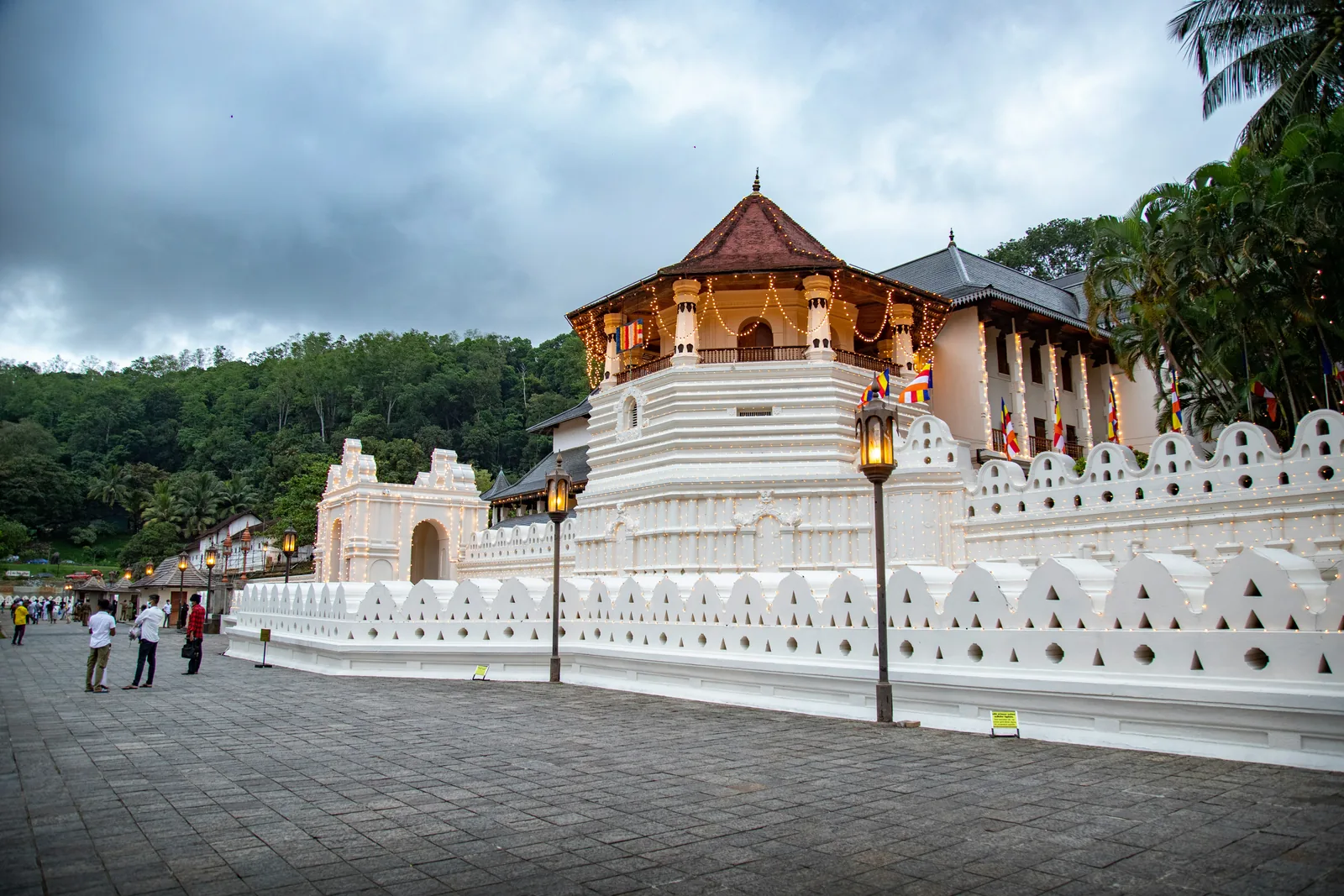
The Temple of the Tooth Relic - Sri Dalada Maligawa - is the single most important Buddhist site in Sri Lanka and one of the most significant in the world. It houses what is believed to be the left canine tooth of the Buddha, brought to Sri Lanka from India in the 4th century CE concealed in the hair of a princess. For over a millennium, possession of the relic was tied to the right to rule Sri Lanka: whoever held the tooth held political legitimacy.
The complex sits on the north shore of Kandy Lake and occupies a significant footprint. The relic itself is housed in a series of golden caskets nested inside each other, kept in the inner shrine room (Vadahitina Maligawa) behind ornate carved doors. The tooth is rarely visible directly - what you see is a golden stupa housing the caskets - but the atmosphere during the three daily pujas is extraordinary: drums, conch shells, the thick scent of jasmine and frangipani offerings, and a slow-moving line of devotees and visitors moving through the inner shrine.
Go for the morning puja. The 6:30 AM puja is the quietest and most atmospheric. By the 9:30 AM puja, coach groups from Colombo begin arriving and the outer courtyard fills quickly. The 6:30 PM evening puja is the most elaborate - drummers and musicians perform in the outer courtyard for 30–45 minutes before the inner shrine opens - but this is also when it is most crowded.
What to wear: Both shoulders and knees must be covered. Sarongs can be borrowed at the entrance if you're not dressed appropriately. Shoes must be removed before entering the main complex. Photography of the inner shrine room is restricted - follow the signs and the guidance of temple staff.
The museum complex: The temple complex also includes a museum of elephant regalia and processional objects used in the Esala Perahera. It is worth 30–45 minutes and gives context to what the festival actually involves.
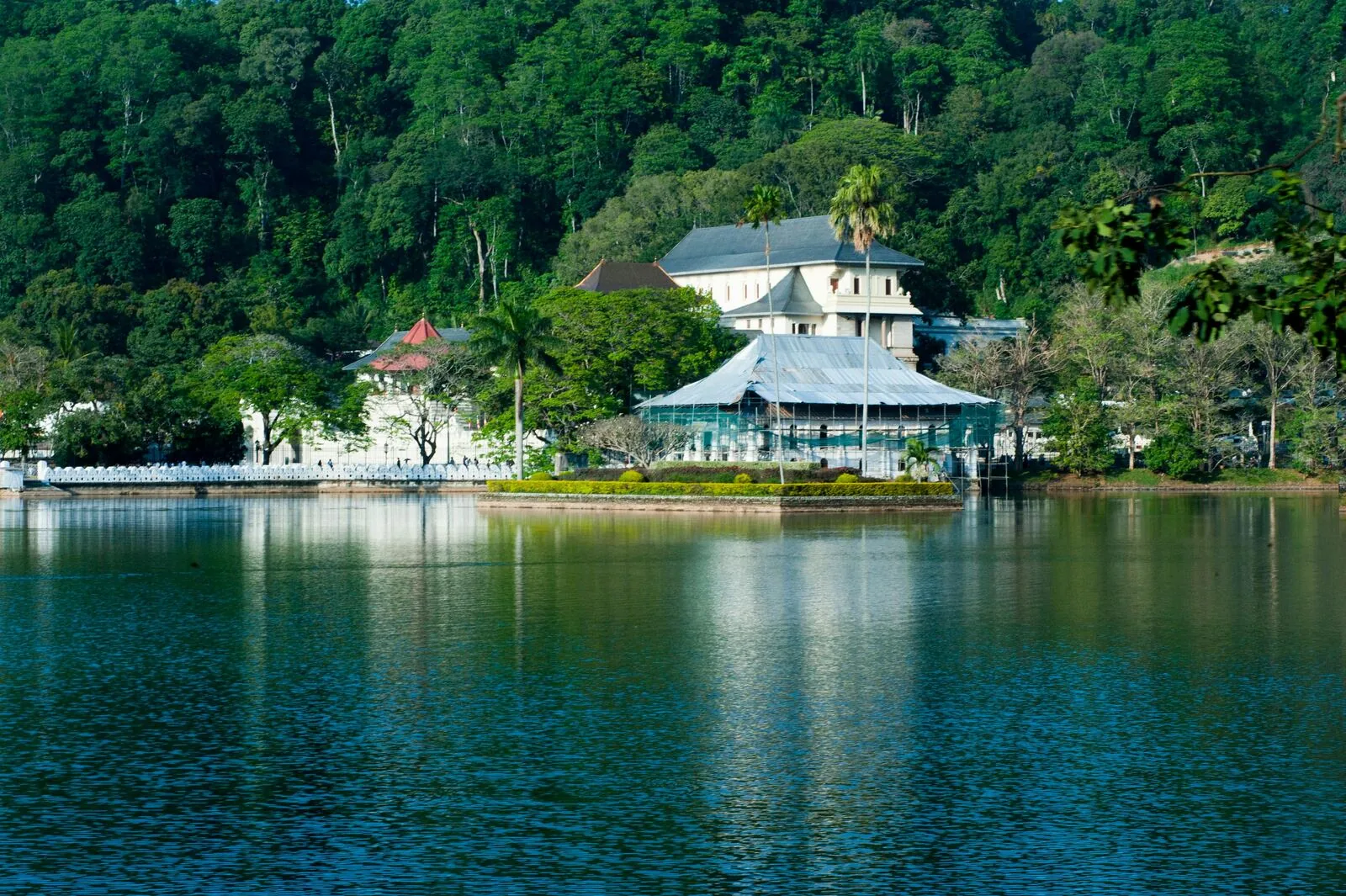
Kandy Lake Walk
Best time: 6–8 AM or late afternoon | Distance: 3.5 km around the full perimeter | Entry: Free
Kandy Lake (Kiri Muhuda - the Milky Sea) was created in 1807 by King Sri Wickrama Rajasinha, the last king of Kandy, who had the surrounding marshland drained and the valley dammed. The result is a 2.5-hectare artificial lake at the centre of the city, framed by the Temple on the north shore and the wooded hills of Udawattakele above.
Walking the full perimeter takes about 45 minutes at a relaxed pace. The south shore - the Dalada Veediya side - is the busiest and has the best views back to the Temple across the water. The east shore is quieter, tree-shaded, and popular with local walkers and joggers in the early morning. On calm mornings, the Temple and the surrounding hills reflect in the lake surface with unusual clarity.
At the centre of the lake is a small island housing a storage facility formerly used for the king's munitions - the drum-shaped structure is known colloquially as the "bathing house" though it served no such purpose. Water monitors (large lizards, up to 1.5 metres) are common along the quieter north and east shores; this is not cause for alarm - they are not aggressive and are considered sacred in the Buddhist tradition.
Combine it with early morning puja. Walk the lake at 6 AM, be at the Temple for the 6:30 AM puja, then have breakfast at one of the cafes along Dalada Veediya as the city wakes up. This sequence uses the morning light well and avoids the midday crowds.
Royal Botanical Gardens, Peradeniya
Entry fee: LKR 2,000 (foreign adults) | Hours: Daily 7:30 AM–5:30 PM | Distance from Kandy: 6 km southwest
The Peradeniya Royal Botanical Gardens are 147 acres of managed landscape set in a loop of the Mahaweli River, founded by the British in 1821 on the site of an earlier royal garden used by the Kandyan kings. They are among the best-maintained botanical gardens in South Asia, and the quality of what's here - the plant collection, the mature trees, the lawns and long avenues - justifies the detour from the city centre.
The highlights:
The Java Fig (Ficus benjamina): A single banyan-like tree near the central avenue with a canopy covering approximately 2,000 square metres. Worth walking around and looking up at. One of the most impressive individual trees in Sri Lanka.
The Orchid House: A large collection of native and hybrid orchids. Best visited in the morning when the building is cooler.
The Avenue of Royal Palms: A formal double row of palms leading toward the Mahaweli River bend, planted in the 19th century. The classic long-exposure photograph of Peradeniya is taken here.
The bamboo collection: A dense grove of giant bamboo species from around the world, some reaching 20 metres. Less visited than the palm avenue but more unusual.
The herbarium and spice garden: Demonstrates the range of Sri Lankan spice plants - cinnamon, nutmeg, cloves - in context. Useful if you haven't had a chance to see them growing elsewhere.
Getting there: Tuk-tuk from Kandy city centre is the easiest option (LKR 300–400). Buses to Peradeniya run regularly from the Kandy bus station but involve a 10-minute walk to the gardens entrance.
Hanthana Mountain Range
Difficulty: Easy to moderate | Duration: 2–6 hours depending on route | Access: 3 km from Kandy city centre
The Hanthana range is a line of six peaks running south of Kandy, the highest reaching 1,214 metres. It is Sri Lanka's most accessible mountain hiking from a major city - the trailheads begin less than 3 km from Kandy's clock tower - and yet very few tourists use it.
The terrain is a mix of tea estate paths, forested ridge trails, and open grassland summits. The views from the upper ridges look north over Kandy city and the surrounding valley, south into the Udapussellawa tea country, and on clear days, far enough west to see the coastal plains.
The standard route follows the Hanthana Tea Estate road to the lower ridge and climbs to the first peak (Hanthana I, approximately 1,100 m). This takes 2–3 hours return and involves a moderate gradient through tea bushes and then forested trail. There is a cell tower at the summit - not picturesque, but the panorama makes up for it.
The longer traverse links multiple peaks along the ridge. Most hikers cover 2–3 peaks in a half-day (4–6 hours). Beyond peak III the trail becomes less maintained - a local guide is useful for the full range.
Getting there: Tuk-tuk to the Hanthana Tea Estate entrance (LKR 200–250 from Kandy). Most guesthouses in Kandy can point you in the right direction; the University of Peradeniya also maintains trails on the western slopes. Start by 7 AM to reach the upper ridges before the midday heat and cloud.
Udawattakele Forest Reserve
Entry fee: LKR 600 (foreign visitors) | Hours: Daily 8 AM–5 PM | Location: Directly above the Temple of the Tooth
Udawattakele (the "Forbidden Forest" in Sinhalese) is 257 acres of natural rainforest on the ridge directly behind the Temple of the Tooth, less than 10 minutes' walk from the city centre. It was the private forest of Kandyan royalty, off-limits to commoners, and later a British colonial reserve. Today it functions as both a forest reserve and an informal lung for the city.
The trail network is simple: a main loop of roughly 3 km takes 1.5–2 hours and passes through genuine dense forest. Purple-faced langur monkeys are common, often seen in troops along the forest edge. Giant squirrels (Ratufa macroura - the Sri Lanka giant squirrel, rust-and-cream coloured and surprisingly large) move through the canopy above the main path. Birding is good in the early morning - red-backed flameback woodpeckers, green-billed coucals, and various sunbird species are regular.
Two meditation hermitages - small forest monasteries - sit within the reserve. Stay on the paths near these; they are active and monks are resident.
Worth doing if you have 2 nights. If you only have one night in Kandy, the Temple, the Lake, and the Botanical Gardens take priority. With two nights, the morning forest walk is a good use of the final morning before the train east.
Kandy Esala Perahera
The Esala Perahera is the largest and most spectacular Buddhist festival in Sri Lanka, running for 10 nights in July or August (dates follow the lunar calendar). The centrepiece is a nightly procession through Kandy's streets: dozens of elephants - the lead elephant carrying the sacred relic casket in a golden pavilion on its back - accompanied by hundreds of Kandyan drummers, traditional dancers, fire performers, and whip-crackers. The full procession on the final nights runs for several hours.
It is a genuine once-in-a-lifetime spectacle. If your itinerary can be arranged around the Perahera dates, do it. The city fills completely - every hotel in Kandy and within 30 km books up months ahead, and prices triple. Book as early as you can, ideally 3–4 months in advance for the final nights of the festival.
Viewing the procession: Paid stands line the route (LKR 5,000–15,000 depending on position and night). Street-side views are free but you lose 2–3 hours of standing time. The higher nights of the festival (nights 7–10) have the largest procession with the most elephants.
Kandyan Cultural Dance Show
Typical time: 5 PM or 5:30 PM, daily | Duration: 45 minutes | Cost: LKR 1,000–1,500
Kandy is the home of Kandyan dance - a highly codified performance tradition with precise footwork, elaborate costumes, and acrobatic elements developed at the royal court. Evening cultural shows are staged nightly at several venues near the city centre; the most established are the Kandyan Arts Association Hall and the Kandy Lake Club.
What's in the show: Kandyan dance (ves natuma and ves dancers with headdresses), fire-eating, coconut-shell fire performances (fire balls spun on chains), and a short demonstration of traditional drumming. Duration is typically 45 minutes.
Is it worth it? Honest answer: it is a curated performance for tourists, not a spontaneous cultural expression. The dancing itself is genuinely skilled and the costumes are spectacular. If you are interested in understanding Kandyan artistic tradition, a show is a good way to see the form performed properly. If you are expecting something raw and unscripted, manage your expectations.
Ambuluwawa Biodiversity Complex
Entry fee: LKR 500 (foreign visitors, tower climb) | Distance from Kandy: 22 km | Duration: Half-day
Ambuluwawa is a 1,964-metre hill in the Gampola valley, roughly 22 km south of Kandy, with a spiral staircase tower at its summit. The tower climb is the main draw - the winding concrete stairs circle the spire, and the view from the top (on a clear day) takes in tea-covered ridges, the valley below, and occasionally the central highlands to the south.
The complex sits within a biodiversity reserve with walking trails through forest. Four religious structures - Buddhist, Hindu, Muslim, and Christian - stand near the summit, representing the spiritual symbolism of the location in Sri Lankan tradition.
Worth it: Yes, if you have transport. The tower is genuinely good on a clear morning and the drive through the Gampola tea country is pleasant. Not worth it if you're relying on tuk-tuks (the road is steep and long). Hire a car or join a half-day tour from Kandy.
Pinnawala Elephant Orphanage
Distance from Kandy: 42 km northwest | Entry fee: LKR 4,000 (foreign adults)
Pinnawala is one of the most-visited tourist attractions in Sri Lanka and one of the most misunderstood. It began in the 1970s as a genuine sanctuary for orphaned and injured wild elephants; it has since grown into a significant operation housing over 90 elephants, many of them born in captivity.
The honest take: Pinnawala is complicated. The twice-daily river bath (the elephants being walked to the river to bathe, which is the defining image of the place) is a real event and impressive to see. However, many of the elephants are chained for long periods when not bathing, and animal welfare organisations have raised concerns about conditions for some individuals. The feeding sessions are popular with visitors but are operationally managed rather than naturalistic.
If elephant welfare matters to you, research current conditions before visiting and consider whether Udawalawe National Park - where wild elephants roam free and are observed from vehicles on safari - better aligns with your values. If you decide to visit Pinnawala, it is a 2-hour round trip from Kandy and is most commonly combined with a morning visit before driving onward to Sigiriya.
How Many Days to Spend in Kandy
1 night: Temple of the Tooth (evening puja + morning puja next day), lake walk, departure on the Ella train. You'll see the highlights but nothing else.
2 nights (recommended): Temple, lake walk, Royal Botanical Gardens in the afternoon, Hanthana hike or Udawattakele forest on the second morning, cultural show one evening, train east on day 3.
3 nights: Everything above plus a half-day to Ambuluwawa, a deeper exploration of the old city (the Natha Devale and Vishnu Devale temples near the main temple complex are rarely visited and interesting), and time to simply be in the city.
Getting to Kandy
From Colombo: The most reliable option is the train from Colombo Fort station (Intercity Express, 2.5 hours, LKR 250–400 for 2nd/1st class). Book online at seatreservation.railway.gov.lk a few days ahead, especially for weekends. Buses from Colombo Pettah bus station run regularly (3–3.5 hours, LKR 150–200) and are frequent but slower.
From Sigiriya or Dambulla: Hire a car or take a bus (2 hours, frequent). No direct train.
From Ella / Nuwara Eliya: The Kandy-to-Ella train also runs in reverse - departing Ella at 6:58 AM and arriving Kandy around 1:30 PM. One of Asia's best train journeys in either direction. Book ahead.
From Colombo Airport (BIA): 2.5–3 hours by car (100 km). Most visitors pre-arrange a transfer through their first night hotel; shared shuttles also operate.
Where to Stay in Kandy
Kandy's accommodation divides into two broad types: hillside properties with valley views and city-centre hotels with easy access to the Temple and lake. The hillside properties are quieter and the views are considerably better; the city-centre options are more convenient if you're arriving late or leaving early by train.
Peak season in Kandy is December–March and the Esala Perahera festival weeks in July/August. During the Perahera, every property within 30 km fills up - book 3–4 months ahead for festival nights. For the best valley views, prioritise hillside properties above the city rather than the busy streets near the lake's south shore.
Kandy Hotels: Our Picks by Budget
Hotels near Kandy
Compare prices across Booking.com, Agoda & more
Powered by Travelpayouts · We may earn a small commission at no extra cost to you.
Kandy: Frequently Asked Questions
How many days do you need in Kandy? Two full days and two nights is the right amount. One night covers the Temple and lake but leaves no time for the Botanical Gardens, a forest walk, or any real sense of the city. Three nights is worth it if you want to hike Hanthana or visit Ambuluwawa.
What is the best time of year to visit Kandy? Kandy sits in the hill country at 500 m elevation, which moderates its climate relative to the coast. The driest and clearest months are December to April, making this the most reliable period for hiking and the Botanical Gardens. The Esala Perahera festival in July/August is the most spectacular time to visit, but accommodation books out months ahead. Kandy receives some rain from both monsoons, so wet days are possible in any month.
What is the Temple of the Tooth and why is it important? Sri Dalada Maligawa (the Temple of the Tooth Relic) houses what is believed to be the left canine tooth of the historical Buddha, brought to Sri Lanka from India in the 4th century CE. It is the most sacred site in Theravada Buddhism, the dominant tradition in Sri Lanka, and for centuries possession of the relic was tied to the right to rule the island. The temple complex is active - daily pujas are performed three times a day and it receives tens of thousands of devotees and visitors each year.
Is Kandy safe? Yes. Kandy is a busy, well-established tourist city and street crime directed at tourists is rare. Standard precautions apply: keep valuables out of sight in busy markets, use metered taxis or pre-arranged tuk-tuks, and be aware of commission scams (tuk-tuk drivers taking you to gem shops or "spice gardens" where they receive a cut of purchases). The Temple area and city centre are safe to walk at any hour.
Can you do Kandy as a day trip from Colombo? Technically yes - the train takes 2.5 hours each way - but a day trip is a poor use of the journey time. You would have approximately 5–6 hours in the city, enough to see the Temple and lake but nothing else. Kandy is best experienced with at least one overnight stay.
What is the Kandy Esala Perahera? The Esala Perahera is an annual Buddhist festival held over 10 nights in July or August (dates follow the Sinhalese lunar calendar). It is the largest and most spectacular religious procession in Sri Lanka: nightly elephant processions through the city streets, led by the Maligawa tusker carrying a replica of the sacred relic casket. Kandyan dancers, drummers, fire performers, and thousands of participants fill the procession route. It is one of the largest festivals in Asia and genuinely worth planning a trip around if the dates align.
What train goes from Kandy to Ella? The Udarata Menike and Podi Menike express trains run from Kandy through the hill country to Badulla via Nuwara Eliya and Ella. This is widely regarded as one of the most scenic rail journeys in Asia - 7 hours through tea estates, tunnels, and mountain ridges. First-class and second-class reserved seats sell out 2–4 weeks ahead in peak season. See the full Kandy to Ella train guide for times, tickets, and which seats to book.
Related Guides
- Kandy to Ella Train: Tickets, Schedule & Best Seats (2026)
- Sigiriya Rock Fortress: The Complete Travel Guide (2026)
- Ella, Sri Lanka: The Complete Travel Guide (2026)
- 7-Day Sri Lanka Itinerary: The Perfect One-Week Route
- 10-Day Sri Lanka Itinerary: The Perfect Route for First-Timers
- Best Time to Visit Sri Lanka: A Month-by-Month Guide
Advertisement
Flights, hotels and tours - all in one place.
Plan Your Sri Lanka Trip
Find the best price to Colombo from your city
Search Flights →Compare prices across Booking.com, Agoda & more
Find Hotels →Bus fares, train times and transport options
Plan Transport →Powered by Travelpayouts · We may earn a small commission at no extra cost to you.
Leave a Comment
Share your thoughts, questions, or travel experiences