Tip
Pidurangala in brief: A 200m granite inselberg 1.5 km north of Sigiriya. Entrance fee: LKR 500 for foreigners (Sigiriya is $30 USD). Hike time: 45–60 minutes to the summit. The reward: an unobstructed panoramic view of Sigiriya Rock rising from the jungle canopy - a photo impossible to take from Sigiriya itself. Best done at sunrise. Shared tuk-tuk from Sigiriya village: LKR 200–300.
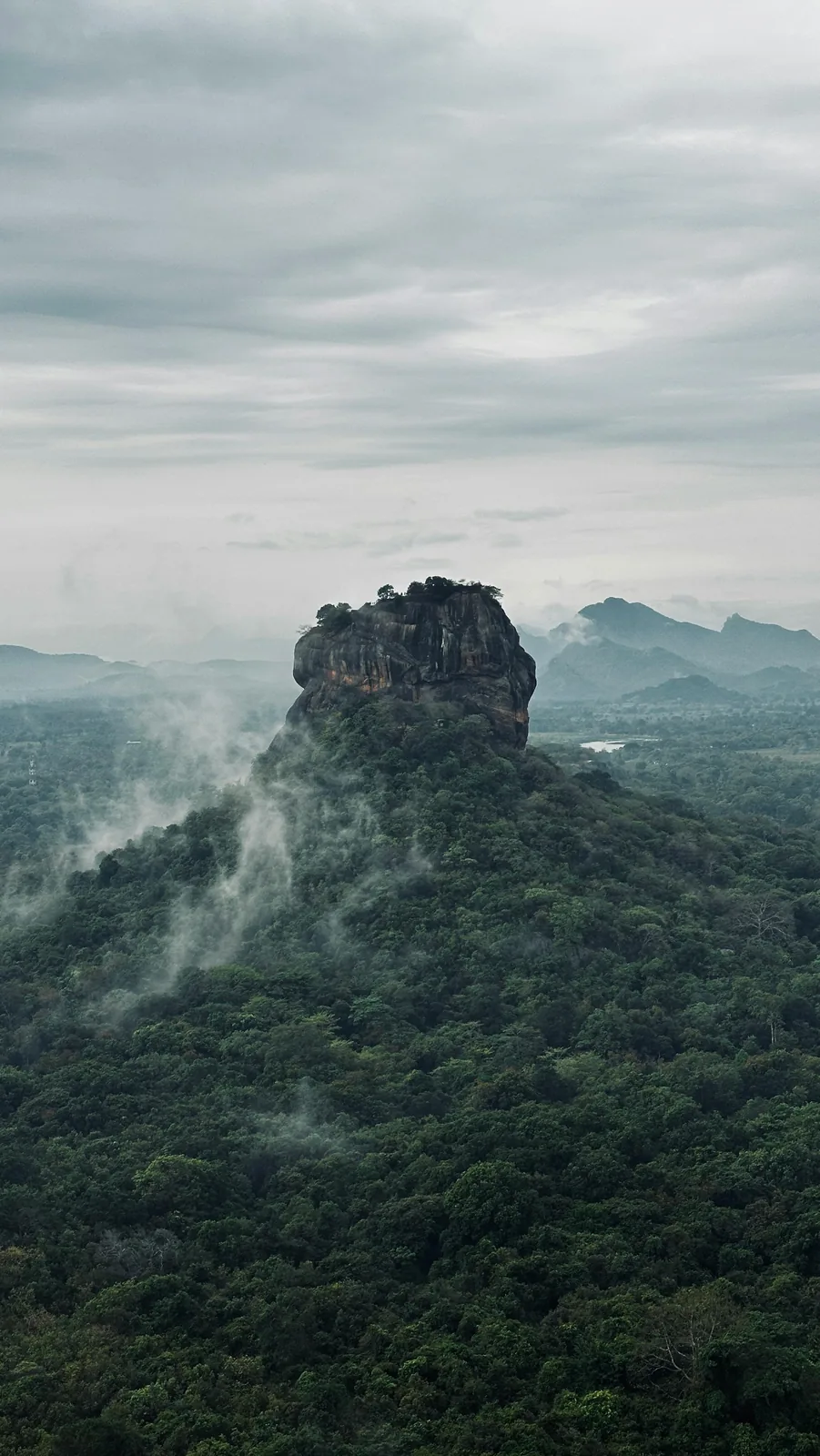
Pidurangala is Sigiriya's overlooked neighbour - literally. The two rocks sit 1.5 km apart, and from the summit of Pidurangala you can see Sigiriya framed by jungle in every direction. It is the view most people have of Sigiriya, without realising it was taken from another rock.
The hike is shorter and less crowded than Sigiriya's famous climb. The entrance fee is a fraction of the price. And for sunrise, when the light hits the east face of Sigiriya Rock and the mist sits in the valleys below, Pidurangala is one of the best viewpoints in Sri Lanka.
Tip
Our take: We consistently recommend Pidurangala over Sigiriya for couples and solo travellers wanting solitude. You get a better aerial view of Sigiriya itself, the climb is more interesting (genuine rock scrambling at the top), and on weekday mornings before 6:30 am we have had the summit completely to ourselves.
Pidurangala vs Sigiriya: Which Should You Climb?
This is the most common question, and the honest answer is: climb both if you can, but if you have to pick one, it depends what you want.
Do Sigiriya if:
- You want to see the 5th-century palace ruins and King Kashyapa's engineering achievement up close
- The frescoes (the famous Ladies of Sigiriya) are on your bucket list
- You're travelling with children who need established steps and handrails
- You want a fully structured heritage site experience
Do Pidurangala if:
- You want the best photograph of Sigiriya
- Budget matters ($30 vs LKR 500 - roughly 50× price difference for the same general view)
- You prefer a rougher, less-crowded trail through jungle and across rock
- You're doing sunrise and want to avoid the Sigiriya ticket office queue
Do both if: You have two days in the area, which most Cultural Triangle itineraries allow.
The Pidurangala Rock Temple
At the base of the climb sits Pidurangala Royal Cave Temple - an ancient Buddhist cave shrine that most visitors walk past without stopping. Take the time to look.
The temple dates to the 5th century CE. According to local tradition, King Kashyapa - who built the Sigiriya palace complex - asked the monks who previously occupied Sigiriya Rock to relocate here. He built them this temple in compensation. The main cave contains a large reclining Buddha carved directly from the rock, surrounded by smaller shrines decorated with murals.
Practicalities at the temple:
- Remove shoes before entering (leave them at the entrance; there is no theft issue)
- Shoulders and knees must be covered - borrow a sarong from the temple entrance if needed (LKR 50–100 deposit)
- The resident monks are welcoming to respectful visitors
- Photography of the interior murals is generally permitted; ask first
The temple entrance is where you pay the LKR 500 fee. The path to the rock starts from behind the temple.
The Hike: What to Expect
Distance: ~1 km each way
Time: 45–60 minutes up, 30–45 minutes down
Difficulty: Moderate - fit travellers of most ages manage it. The final section involves scrambling over bare granite boulders with no steps. Vertigo can be an issue at the summit edge.
Trail surface: Jungle path transitioning to bare rock. Gets slippery in rain - avoid wet days.
Stage 1: Temple to Forest (0–20 min)
A wide, shaded path leads from the temple through dense jungle. The trail is well-marked. You'll hear birds and occasionally see grey langur monkeys in the canopy. This section is easy and comfortable.
Stage 2: Forest to Rock Face (20–35 min)
The path narrows and begins rising more steeply. You'll pass a series of rope-assisted sections through the boulders and roots. Nothing technical, but you'll be using your hands to steady yourself. The jungle thins out.
Stage 3: Summit Scramble (35–50 min)
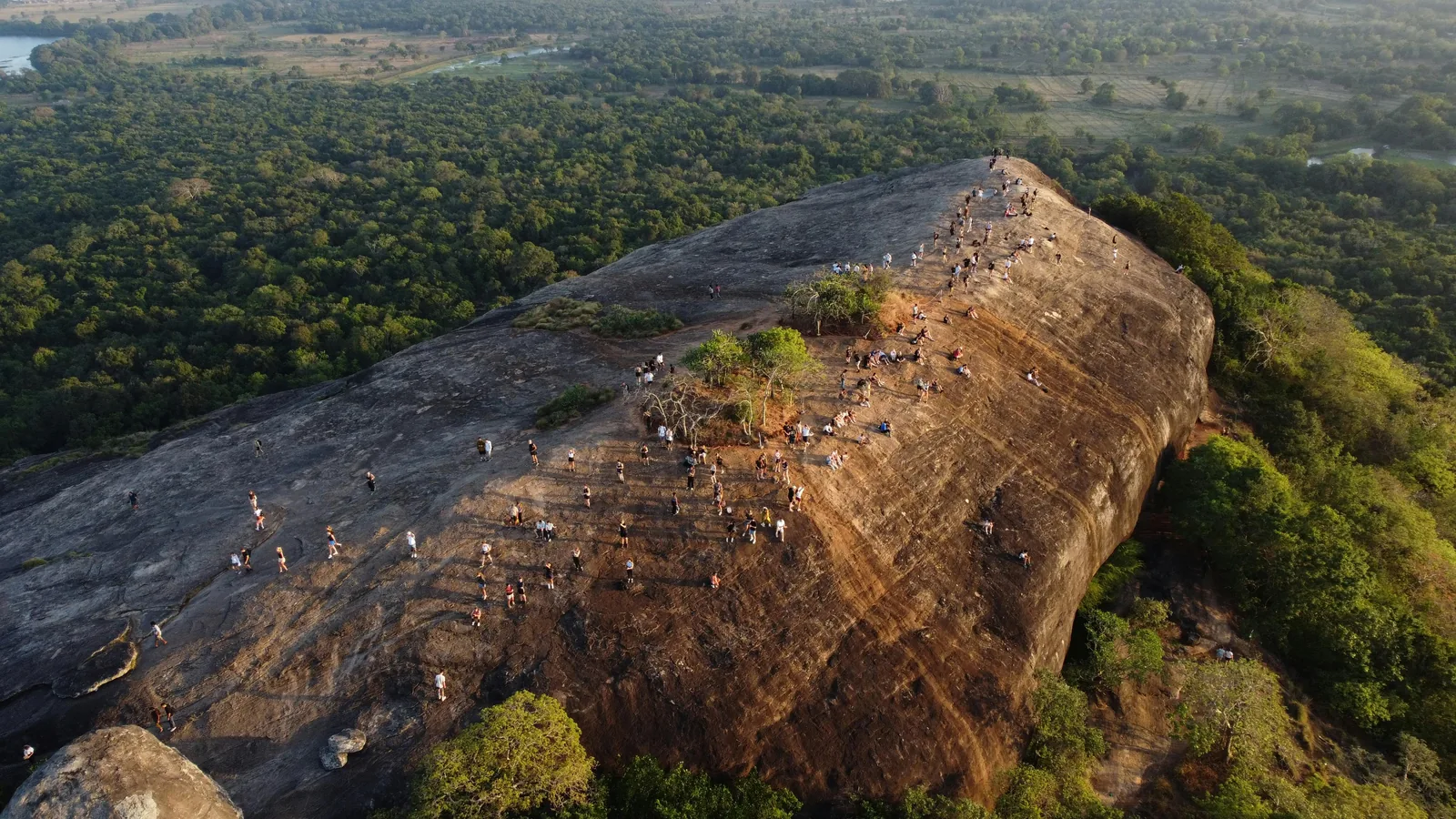
The final approach crosses open granite. There are no steps, no railings, no infrastructure - just the rock. Walk slowly, pick stable footing, and don't rush. At the summit, the rock is broad enough to sit and rest.
The summit: A wide, flat granite expanse with 360-degree views. Sigiriya Rock dominates the northeast. The Habarana plains extend to the horizon in all directions. In the early morning, mist sits in the valleys between the rocks and the forest. On a clear day, you can see across to the hill country in the south.
Sunrise at Pidurangala
Sunrise is the single best reason to choose Pidurangala. The timing works perfectly: the first light hits the east face of Sigiriya Rock directly, illuminating it as you watch from the summit. The jungle below sits in blue shadow while the rock blazes orange and red.
Logistics for sunrise:
- Sigiriya sunrise is around 5:45–6:15 am depending on time of year
- Aim to reach the summit 30 minutes before sunrise (allow 60 min for the hike)
- That means leaving your accommodation by 4:30–5:00 am
- The temple gate opens at dawn - if you arrive before the ticket office is staffed, wait at the entrance; the monks are used to early climbers and will take the fee when they open
- Bring a headtorch for the approach in darkness
- Take the sunrise photography position on the west side of the summit, facing Sigiriya
Is it worth getting up early? Yes. The midday crowds are significant and the heat is punishing. The sunrise crowd is small, the light is extraordinary, and the experience is fundamentally different from a noon visit.
Practical Information
Getting There
From Sigiriya village (1.5 km): Tuk-tuk LKR 200–300 each way. Most drivers will wait for you (negotiate a return price). Walking is possible but there is no path - it's along the road.
From Dambulla (20 km): Tuk-tuk around LKR 1,500 or hire a car. Most day trips from Dambulla combine Pidurangala or Sigiriya with the cave temple.
From Habarana (15 km): Habarana is a common base for Cultural Triangle exploration. Tuk-tuk to Pidurangala around LKR 1,200.
Entrance Fee
LKR 500 per person (foreigners). Payable at the Pidurangala Royal Cave Temple entrance. The fee covers both the temple and the rock climb.
There is no separate ticket for the rock - unlike Sigiriya, there is no ticket booth partway up.
What to Bring
- Water: At least 1 litre per person. No vendors on the trail.
- Sunscreen and hat: The summit is fully exposed.
- Shoes: Closed-toe with grip. Flip-flops are worn by some locals but genuinely dangerous on wet granite.
- Sarong or long pants: Required for the temple at the base.
- Headtorch: Essential for sunrise starts.
- Camera: The views are the main event.
Best Time to Visit
Best: November–April (dry season). Trails are dry, views are clear.
Avoid: Heavy rain days in any season - wet granite is hazardous. May–September is wetter but Pidurangala can still be climbed on dry mornings within that period.
Pidurangala + Sigiriya: Doing Both in One Day
Many travellers combine both in a single day. The practical approach:
- 5:00 am - Arrive at Pidurangala for sunrise. Climb to the summit (45–60 min). Spend 30–45 min at the top watching the light change.
- 8:00 am - Descend, take tuk-tuk to Sigiriya ticket office (open from 7:00 am). Beat the main tour bus crowds.
- 8:30–11:00 am - Climb Sigiriya. See the frescoes, explore the water gardens and summit palace.
- 11:30 am - Done before midday heat peaks. Head to Dambulla, Habarana, or Polonnaruwa.
This sequence avoids paying the Sigiriya price twice (you only need Pidurangala for the view of Sigiriya, not the reverse), and both climbs are done in the best light and coolest part of the day.
Sigiriya / Dambulla area hotels - best base for Pidurangala sunrise
Where to Stay Near Pidurangala
Hotels near Sigiriya
Compare prices across Booking.com, Agoda & more
Powered by Travelpayouts · We may earn a small commission at no extra cost to you.
Pidurangala & Sigiriya Tours
Skip the planning - book a guided sunrise hike or Sigiriya combo tour
Pidurangala for Photographers
Pidurangala is one of the best photography locations in Sri Lanka - specifically for the aerial view of Sigiriya Rock. Here is what works:
Gear: A telephoto lens (100–200mm equivalent) lets you isolate Sigiriya against the jungle backdrop with compression. A wide lens (24–35mm equivalent) captures the full panorama including the surrounding plains and Sigiriya Lake. Both are worth having.
Best light: Sunrise from the summit lights Sigiriya from the east, casting the rock in warm orange tones and creating shadow definition on its face. This is the money shot - arrive before first light. Late afternoon creates similar warm light from the west, and the Sigiriya side is then in shadow, which some photographers prefer for the drama.
The reclining Buddha shot: At the cave temple, the large reclining Buddha fills the interior with strong compositional lines. A wide-angle lens 2 to 3 metres back captures the full figure. Photography is permitted inside the temple.
From the top: The best Sigiriya compositions are from the northern end of the summit plateau, where the rock appears in its full height. The summit boulder in the foreground creates a natural layered composition when Sigiriya rises behind it.
Wildlife Around Pidurangala
The scrub forest surrounding Pidurangala and Sigiriya is considerably richer in wildlife than most visitors expect:
Grizzled giant squirrels: These large, slow-moving squirrels are common in the forest canopy around both rocks. Often spotted on the trail before sunrise when they are most active.
Grey langur monkeys: Troops of grey langurs inhabit the rocks and forest edges. They are significantly calmer around humans than the macaques at Dambulla. Often seen sitting motionless on rock ledges at dawn.
Painted storks and herons: Sigiriya Lake (visible from the Pidurangala summit) attracts large wading birds year-round. A pair of binoculars adds significantly to the summit experience.
Mugger crocodiles: Sigiriya Lake has a resident crocodile population. Occasionally visible from the summit on calm mornings when they surface near the shoreline.
Practical Comparison: Sigiriya vs Pidurangala
| Feature | Sigiriya | Pidurangala |
|---|---|---|
| Entry fee | LKR 4,500 (foreign visitors) | LKR 500 |
| Climb time | 1–1.5 hours | 45 minutes |
| Difficulty | Moderate (steep stairs, guardrails) | Moderate-hard (boulder scrambling) |
| Crowds | High (major UNESCO site) | Low-moderate |
| Summit view | Surrounding jungle and plains | Sigiriya Rock + jungle panorama |
| Historical interest | Extraordinary (5th-century palace) | Good (medieval rock temple) |
| Best for | History, heritage, UNESCO | Photography, sunrise, solitude |
The ideal: climb Pidurangala at sunrise for the Sigiriya view, then visit Sigiriya itself for the historical experience before the heat builds.
Pidurangala Frequently Asked Questions
Is Pidurangala worth it? Yes - especially if you're already at Sigiriya. For LKR 500 and 45 minutes, you get the best photographic view of Sigiriya Rock and a quieter, more natural hike. Most visitors who do both say Pidurangala's views are more dramatic.
Is Pidurangala harder than Sigiriya? In some ways, yes. Sigiriya has built steps and railings the whole way up. Pidurangala's upper section is unstructured boulder scrambling - there are no hand rails on the bare rock. Sigiriya is more physically demanding (it's taller - 200m vs 170m for Pidurangala) but the infrastructure makes it feel more manageable. Pidurangala feels wilder.
Can you see Sigiriya from Pidurangala? Yes - this is the main draw. Sigiriya Rock is clearly visible from the Pidurangala summit, roughly 1.5 km away, rising out of the jungle. The view is unobstructed and the rock fills a significant portion of the frame.
What time does Pidurangala open? The cave temple opens at dawn (approximately 5:30 am). For sunrise climbs, arrive early and the monks will collect the entrance fee when they're available. There's no hard opening time barring the gate - in practice, determined sunrise climbers start their approach from around 4:45 am.
How long does the Pidurangala hike take? 45–60 minutes to reach the summit. 30–45 minutes descending. Budget 2.5–3 hours total including time at the summit and the cave temple.
Is there a dress code for Pidurangala? Covered shoulders and knees are required for the cave temple at the base. On the rock itself there's no restriction. Bring a light layer or sarong for the temple; you can leave it at the base when you start the climb.
Is Pidurangala safe to climb alone? Yes. The trail is used by solo travellers routinely. Tell someone at your guesthouse your plans and return time. Take particular care on wet rock - the main risk at Pidurangala is a fall on slippery granite.
Related Guides
- Hot Air Ballooning in Sri Lanka: Sigiriya Sunrise Guide 2026
- Mirissa Beach Sri Lanka Guide 2026: Whale Watching, Surfing & Where to Stay
- Anuradhapura Sri Lanka Guide 2026: Ancient City, Sacred Sites & What to See
- Nuwara Eliya Sri Lanka Guide 2026: Tea Country, Gregory Lake & Things to Do
- Arugam Bay Surfing Guide 2026: Sri Lanka's Best Surf & East Coast Beach
Advertisement
Flights, hotels and tours - all in one place.
Plan Your Sri Lanka Trip
Find the best price to Colombo from your city
Search Flights →Compare prices across Booking.com, Agoda & more
Find Hotels →Bus fares, train times and transport options
Plan Transport →Powered by Travelpayouts · We may earn a small commission at no extra cost to you.
Leave a Comment
Share your thoughts, questions, or travel experiences