Tip
Quick answer: Anuradhapura needs a full day - rent a bicycle at the gate (LKR 300/day) and cycle between the main sites, which are spread across 40 sq km. Start with Sri Maha Bodhi at dawn when the pilgrimage atmosphere is most powerful, then work through the three great stupas by midday. Entry: Sacred City ticket ~USD 25 (or the Combined Cultural Triangle ticket at USD 50 covers all four UNESCO sites). Stay one night in Anuradhapura town - arriving in the afternoon rush is chaotic. Pair with Sigiriya (70 km) and Polonnaruwa (100 km) for the full Cultural Triangle circuit.
Anuradhapura was Sri Lanka's first great capital - a city that endured for fourteen centuries, from the 4th century BC to the 11th century AD. At its peak it was one of the largest cities in the ancient world, home to a sophisticated hydraulic civilisation that built reservoirs and irrigation canals across the dry north-central plain. Today, the ancient city is a UNESCO World Heritage Site and one of the most important Buddhist pilgrimage destinations in the world.
What makes Anuradhapura different from other heritage sites is that it is still actively worshipped. The Sri Maha Bodhi - a 2,300-year-old sacred fig tree, the oldest documented tree in the world - receives a continuous stream of pilgrims from across Sri Lanka and the Buddhist world. The great stupas are not museum exhibits but living places of devotion. Walking the ancient streets, you will find monks in saffron robes, families carrying jasmine offerings, and the smell of incense from shrines that have been maintained continuously since the 3rd century BC.
Tip
Our take: Most visitors try to see everything in one day and leave exhausted. Anuradhapura is better as a two-night stay. The Sacred Bodhi Tree at dawn - before tour groups arrive - is one of the most quietly powerful experiences in Sri Lanka, and you need the second day to reach the outlying sites properly.
What to See in Anuradhapura
Sri Maha Bodhi
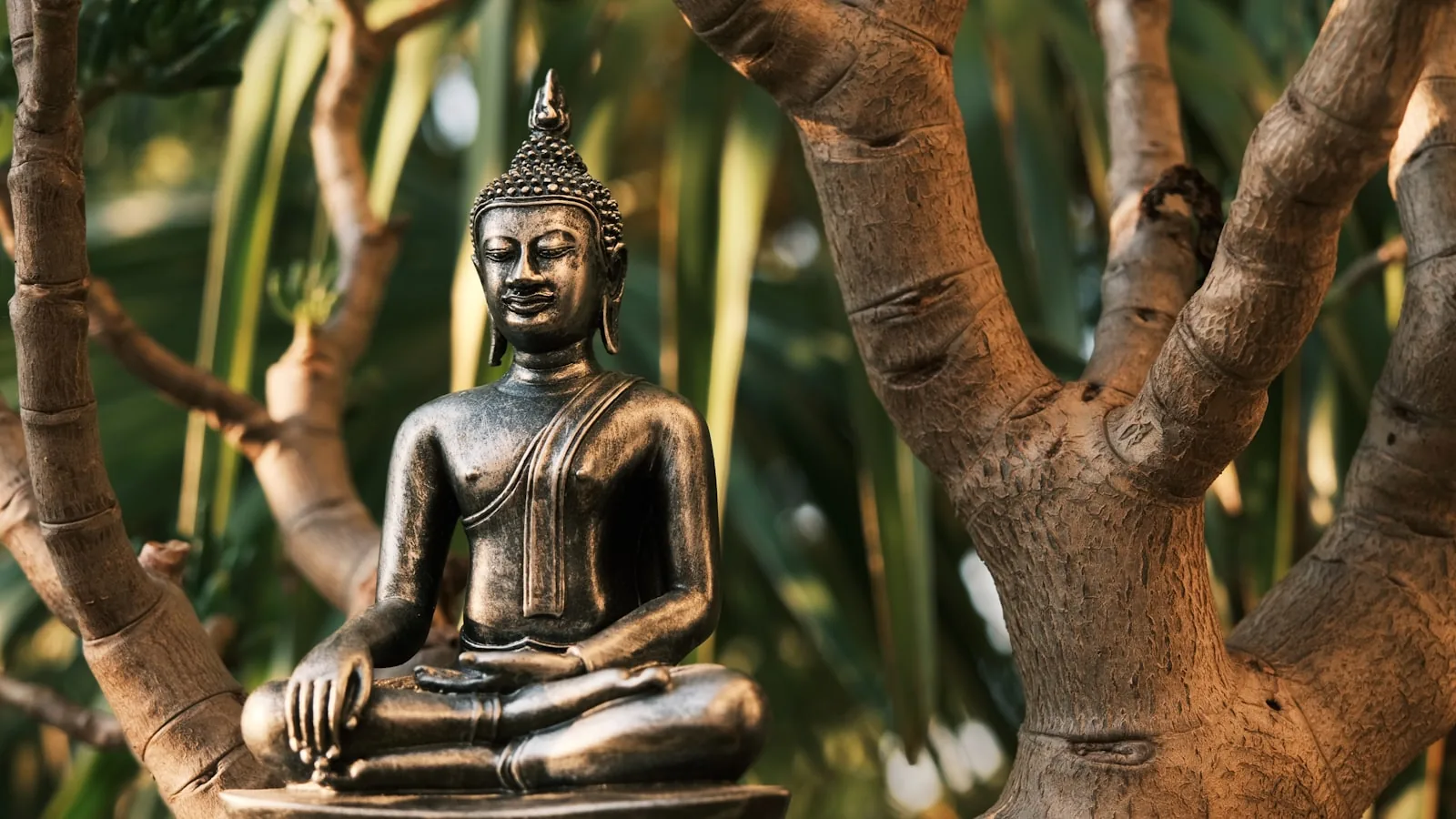
The most sacred object in Anuradhapura, and the oldest documented tree in the world. The Sri Maha Bodhi is a sacred fig tree (Ficus religiosa) grown from a cutting of the original Bodhi tree in Bodh Gaya, India - the tree under which the Buddha attained enlightenment. The cutting was brought to Sri Lanka in 288 BC by the Princess Sanghamitta, daughter of Emperor Ashoka, and planted by King Devanampiya Tissa. It has been tended continuously ever since.
The tree today is protected by golden railings, flanked by a terrace where pilgrims leave flowers, light oil lamps, and tie white flags. The atmosphere at dawn is extraordinary: hundreds of pilgrims in white clothing moving around the tree in the early light, with bells and chanting from the surrounding temples. Arrive before 7 am to experience the morning devotions before the tourist crowds arrive.
Practical: Dress modestly (shoulders and knees covered; remove footwear before the terrace). White clothing is preferred by pilgrims but not required for visitors. Photography is permitted from the terrace but not up close to the tree itself.
Ruwanwelisaya Dagoba
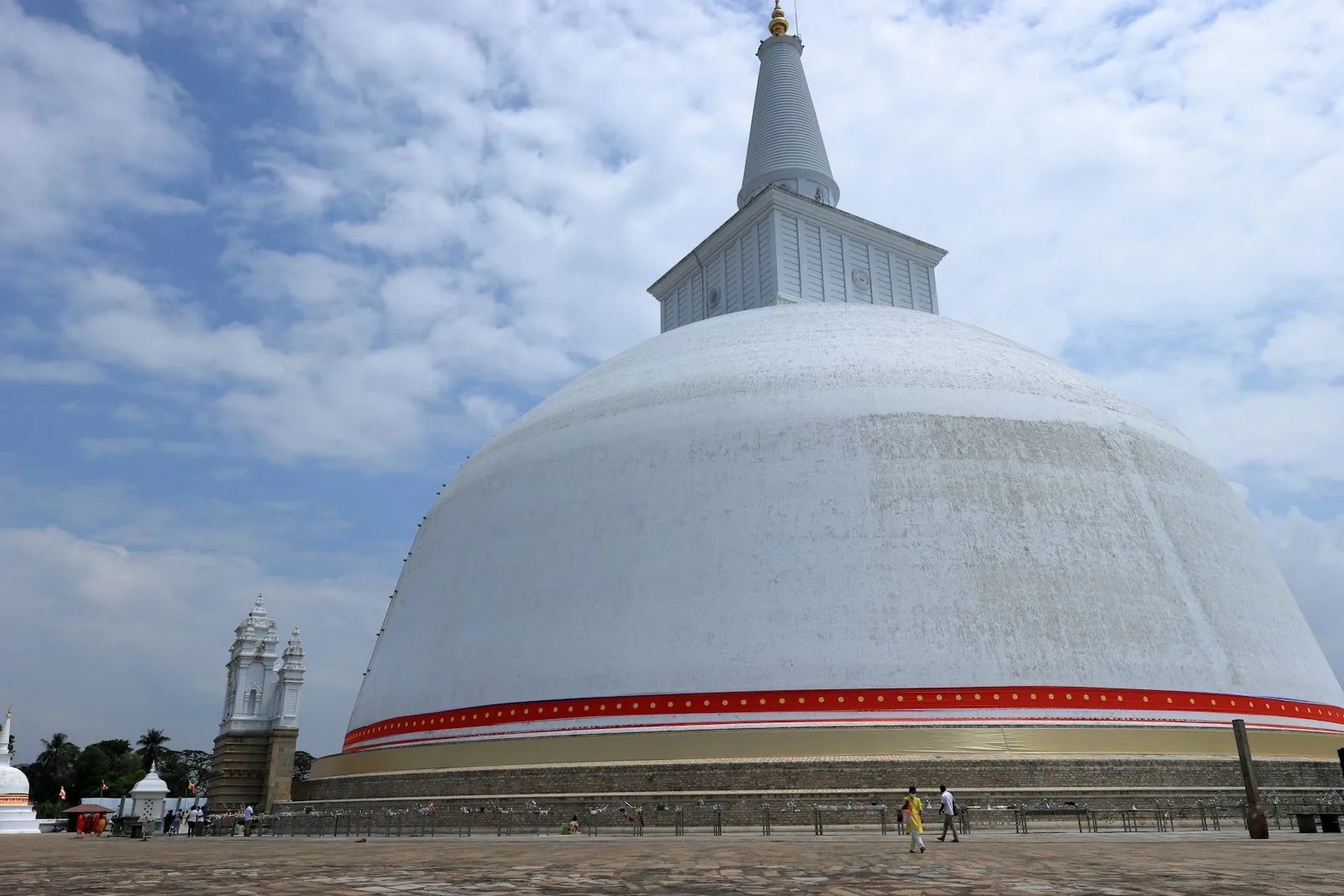
The most celebrated stupa in Sri Lanka. Ruwanwelisaya (also called Mahathupa, the Great Stupa) was built by King Dutugemunu beginning around 140 BC and completed under his successors. The dome stands 91 metres tall and 290 metres in circumference - a feat of ancient engineering built entirely from brick, with a relic chamber at the centre said to contain relics of the Buddha.
Walking the perimeter path (pradakshina) around the stupa is the primary act of devotion here. The white-washed dome is flanked by four vahalkadas (ceremonial façades) at the cardinal points and guarded by stone elephant heads along the base wall. The elephants are a deliberate architectural choice: in Buddhist symbolism, elephants represent strength, stability, and the earth itself supporting the stupa.
The best light for photography falls on the dome in the early morning (east face) and late afternoon (west face). The stupa is floodlit at night and particularly dramatic during Poya (full moon) days when it fills with pilgrims.
Jetavanaramaya
The largest brick structure in the ancient world and, when completed, the third-tallest building on earth after two Egyptian pyramids. Built by King Mahasena in the 3rd century AD, Jetavanaramaya originally stood 122 metres high - today the ruined dome reaches 71 metres, still vast enough that the scale takes a moment to comprehend from the base.
The stupa stood at the centre of a monastery complex of 3,000 rooms, housing thousands of monks at the height of the Anuradhapura period. Extensive excavations have revealed the monastery buildings around the base, and the Jetavanaramaya Museum on site holds artefacts recovered during restoration - including a gold sash believed to have belonged to the Buddha.
Note: Jetavanaramaya is currently undergoing UNESCO-assisted restoration. Access to the base is possible but the immediate perimeter scaffolding changes the views. The approach from the south offers the cleanest lines.
Thuparamaya
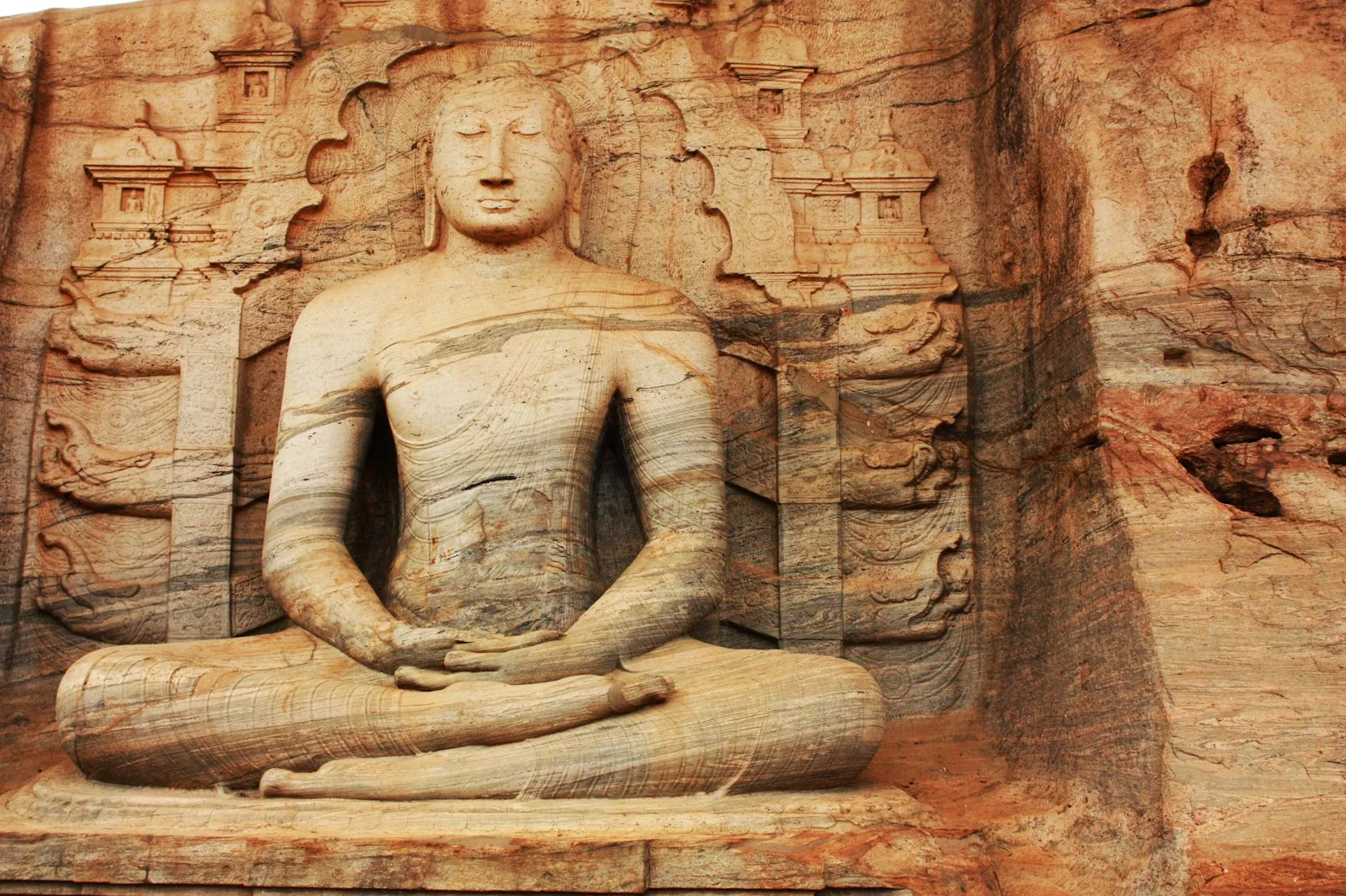
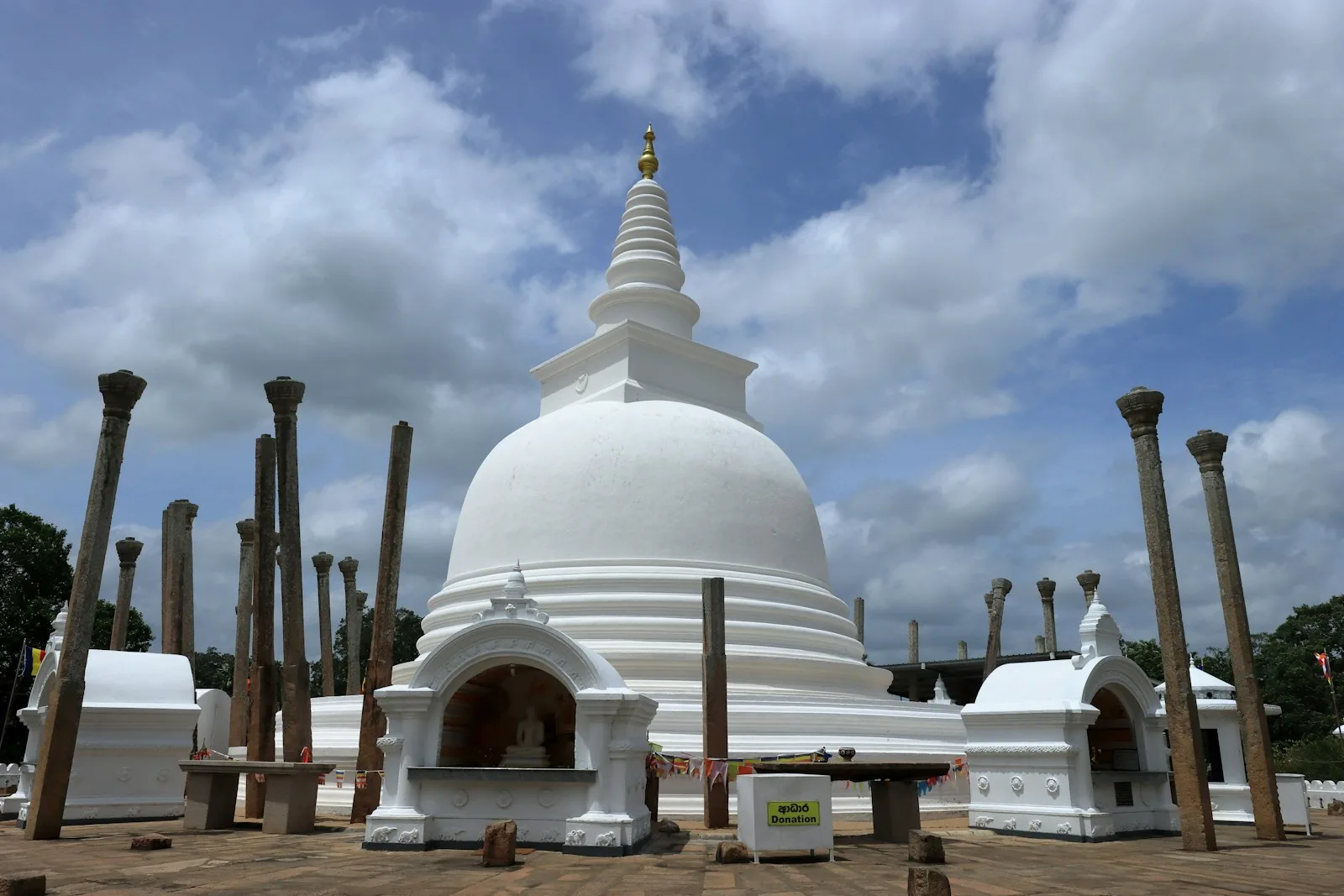
The oldest stupa in Sri Lanka, built in the 3rd century BC by King Devanampiya Tissa following his conversion to Buddhism. The bell-shaped dome is modest by Anuradhapura standards (19 metres high) but its age and historical significance make it a primary pilgrimage stop. The stupa is surrounded by rows of stone pillars - the remains of a vatadage (circular relic house) that once covered the dome.
Thuparamaya is said to contain a collar-bone relic of the Buddha, sent from India by Emperor Ashoka. The intimate scale of the site and the constant presence of monks make this feel more like an active monastery than a monument.
Abhayagiri Dagoba
At 75 metres (originally estimated at 115 metres), Abhayagiri was the second-great stupa of Anuradhapura and the centrepiece of one of the two great monasteries that divided the ancient city. The Abhayagiri monastery followed the Mahayana tradition, while the nearby Mahavihara followed the Theravada - a theological division that shaped Sri Lankan Buddhism for centuries.
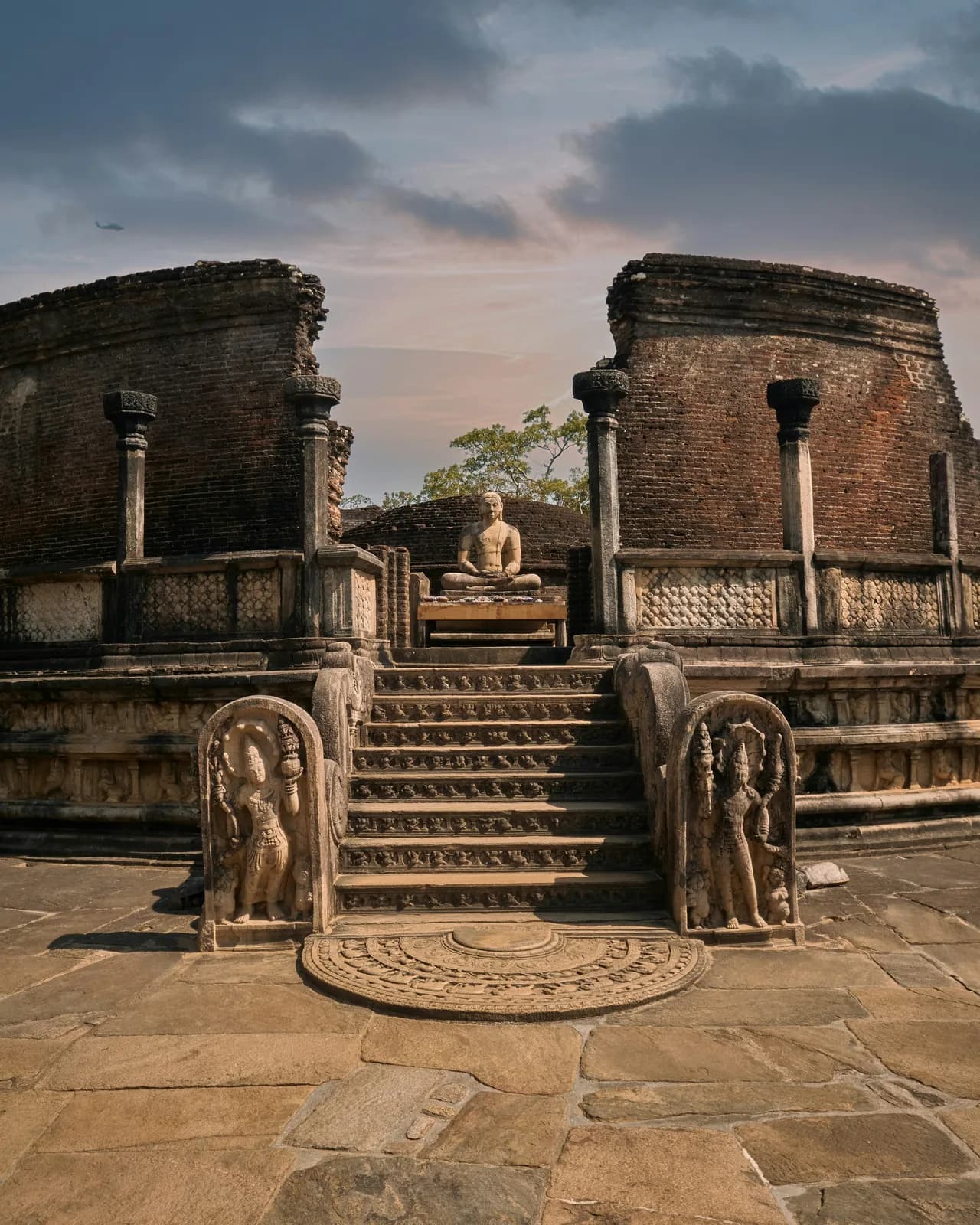
The surrounding monastery complex is extensive and partially excavated. The Moonstone at Mahasena's Palace - a beautifully carved semicircular stone guarding the entrance to the palace precinct - is considered the finest example of this characteristically Sri Lankan architectural element. The carving shows a flame border, swans, elephants, horses, and lions in concentric bands, with a half-lotus at the centre.
Isurumuniya Rock Temple
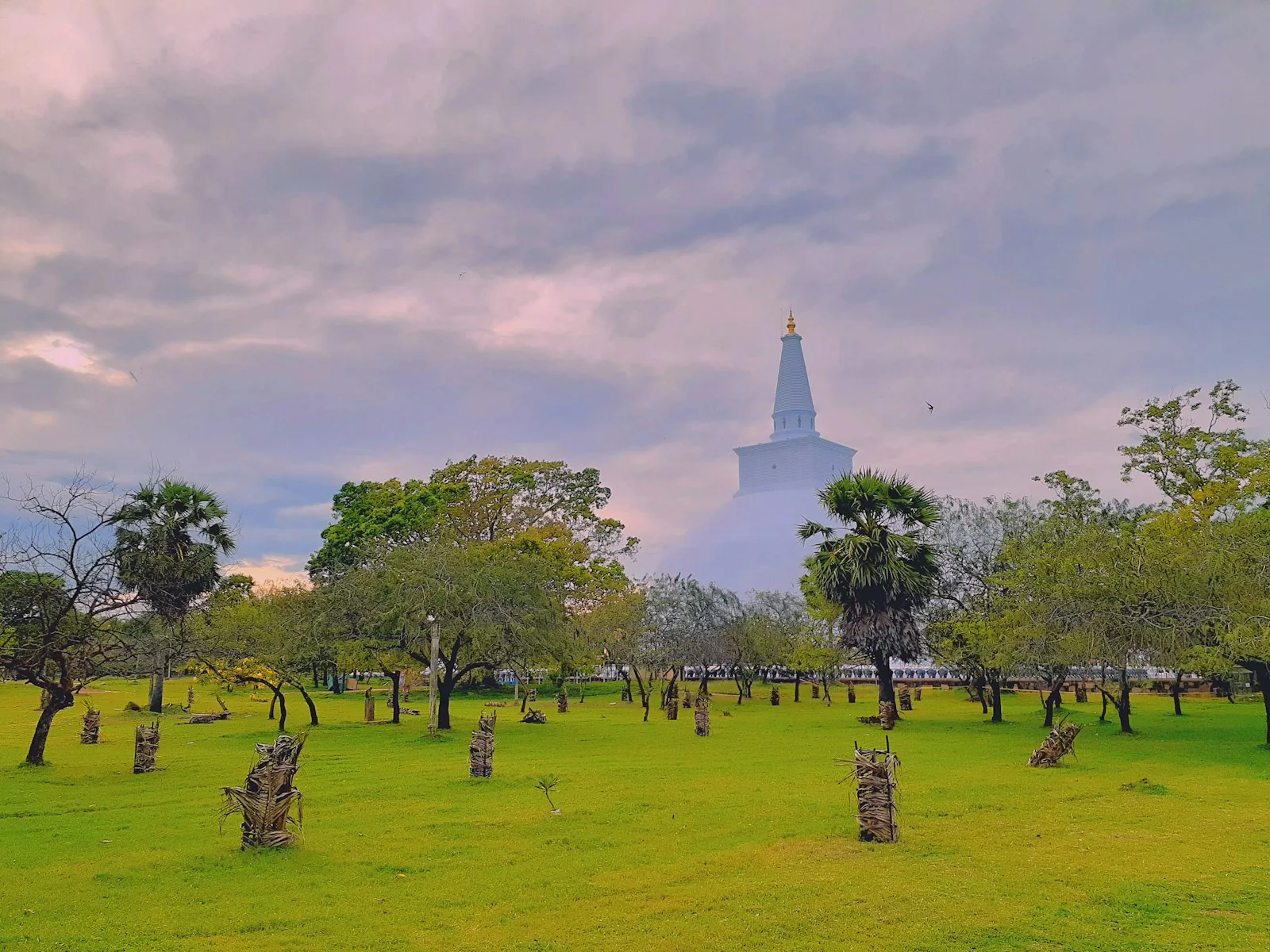
The most atmospheric site in Anuradhapura. Isurumuniya is a rock temple carved into a granite outcrop above a lotus pond at the southern edge of the ancient city. The rock carvings here are the finest in Anuradhapura: the celebrated Isurumuniya Lovers carving - a couple in intimate pose, the man gently touching the woman's chin - is housed in the small museum on site. Dating to the 5th century AD, it is one of the great works of ancient Sri Lankan art.
The main shrine contains a seated Buddha image within the cave. The pool below the outcrop has a carved panel of elephants playing in water - one of the most charming pieces of ancient Sri Lankan sculpture. The setting rewards taking time: a bench beside the lotus pond, with the rock above and the evening light falling on the carvings.
Entry: Separate from the Sacred City ticket (included with combined ticket). Small on-site museum holds the Isurumuniya Lovers and other recovered carvings: LKR 300 museum entry.
Lovamahapaya (Brazen Palace)
Only the 1,600 granite pillars remain of what was once a nine-storey palace housing 1,000 monks, with a roof of bronze tiles that gave it the name "Brazen Palace." The forest of pillars, arranged in 40 rows of 40, is an eerie and powerful sight - particularly at dusk when the light falls through the gaps. Built by King Dutugemunu, it stood adjacent to the Sri Maha Bodhi and served as the heart of the Mahavihara monastery.
Samadhi Buddha Statue
A 4th–5th century AD seated Buddha carved from dolomite marble in the Samadhi (meditation) mudra. The statue is considered one of the finest Buddha images in Sri Lanka - the serene expression has been studied and praised by scholars of Buddhist art for a century. Prime Minister Jawaharlal Nehru reportedly kept a photograph of it in his cell during his imprisonment by the British, for its calming effect. The site is calm and well-maintained; visit in the early morning.
Twin Ponds (Kuttam Pokuna)
Two ancient bathing pools of different sizes connected by an underground pipe - once used by monks from the Abhayagiri monastery. The pools are engineering marvels: built in the 4th century AD, they remain intact, with original stone steps descending into each pool and carved makara (sea monster) water spouts. The pools are not filled today but the stonework and proportions are outstanding. One of the underrated sites in Anuradhapura.
Mihintale Day Trip
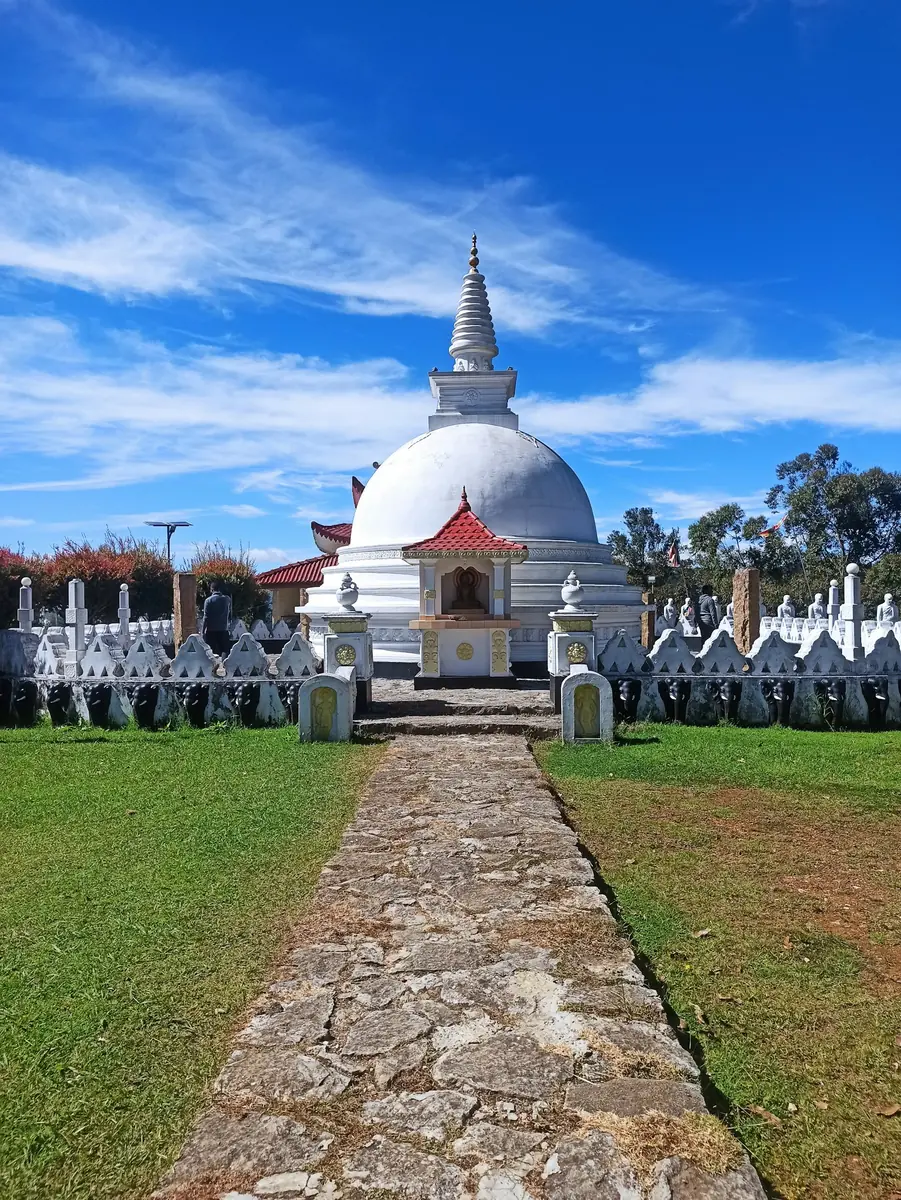
13 km east of Anuradhapura and included on the same ticket, Mihintale is the site where Buddhism was introduced to Sri Lanka. In 247 BC, King Devanampiya Tissa encountered the monk Mahinda (son of Emperor Ashoka) on this hill during a deer hunt, and their conversation led to the king's conversion. The hilltop monastery Mahinda established became the cradle of Theravada Buddhism in Sri Lanka.
The site today requires climbing 1,840 granite steps to reach the hilltop dagobas - the ascent takes 30–40 minutes at a steady pace. Key stops on the way up:
- Kantaka Cetiya - a large dagoba at the foot of the hill with carved reliefs, one of the finest examples of early Sri Lankan sculpture
- Refectory - the ancient dining hall, with a 9-metre stone trough used to feed monks
- Ambasthala Dagoba - at the hilltop, marking the spot where Mahinda and Devanampiya Tissa first met; flanked by granite lion sculptures
- Mahaseya Dagoba - the summit, with panoramic views over the dry plain stretching to Anuradhapura
Go early: The climb in the midday heat is punishing. Leave Anuradhapura by 7 am and complete Mihintale before 10 am, then return for the afternoon sites.
Getting Around Anuradhapura
Bicycle: The recommended way to see the ancient city. The main sites are spread over 40 sq km - too far to walk comfortably but too spread out for constant tuk-tuk negotiation. Bikes are available at the main gate, guesthouses, and numerous roadside sheds for LKR 250–400/day. The ancient city roads are mostly flat and well-maintained.
Tuk-tuk: A tuk-tuk and driver for the day costs LKR 3,000–5,000. Practical if you prefer not to cycle or are visiting with young children. Ask your guesthouse to arrange; avoid drivers who approach you at the bus stand.
On foot: Not practical for covering the full ancient city in a day but fine for exploring the Sri Maha Bodhi precinct and surrounding sites on foot.
Where to Stay in Anuradhapura
Hotels in Anuradhapura
Check availability & prices on Booking.com
Powered by Booking.com · We may earn a small commission at no extra cost to you.
Most accommodation is in Anuradhapura's new city (4–5 km from the ancient city gates). Staying inside or immediately adjacent to the sacred precinct is not possible - the area is protected.
Palm Garden Village - the most established mid-range hotel in Anuradhapura, with pool, multiple restaurants, and shuttle service to the ancient city. LKR 12,000–20,000/night.
Ulagalla Resort - 35 km from Anuradhapura near Thirappane, this luxury property sits in a 200-acre landscape of rice paddies and ancient tanks. Best choice for those wanting the Cultural Triangle in comfort. Upper range.
Guesthouses around Stage Road and Main Street - the practical mid-budget choice: clean, well-run family guesthouses within cycling distance of the ancient city gates, from LKR 4,000–8,000/night. Owners typically arrange bicycles, tours, and reliable information.
Getting to Anuradhapura
From Colombo (200 km): By train (Colombo Fort to Anuradhapura) - approximately 4 hours on the Kandy line; departures every 2–3 hours. By bus - the expressway to Kurunegala and then north, approximately 4–5 hours. By car - 3.5–4 hours via the A1 highway or Kandy road.
From Sigiriya (70 km): 60–90 minutes by private car or tuk-tuk. This is the most common pairing - Sigiriya in the morning, arriving Anuradhapura by early afternoon for a first-half exploration, then the full site next day.
From Polonnaruwa (100 km): 1.5–2 hours by private car. The direct road passes through the dry zone agricultural landscape - flat and fast.
From Kandy (140 km): 2.5–3 hours by car. The most scenic approach, descending from the hills to the dry plain.
Practical Information
Entry: The Sacred City ticket costs approximately USD 25 (LKR 7,750 at current rates). The Combined Cultural Triangle Ticket (USD 50) covers Anuradhapura, Sigiriya, Polonnaruwa, and Dambulla - buy it at any of the four sites; strongly recommended if you're visiting more than one.
Opening hours: Sites open from 6 am (some from 5:30 am for dawn devotions). Museums close at 5 pm. The ancient city itself has no closing time - walking the main roads at dusk is possible.
Dress code: Shoulders and knees must be covered at all religious sites. Footwear must be removed before entering shrines and at the Sri Maha Bodhi precinct. White clothing is culturally appropriate (and practical in the heat). Sarongs are available for hire at most site entrances.
Best time to visit: The dry north-central zone means Anuradhapura is hot year-round (28–36°C). December–March and June–September are the drier months. Avoid visiting during major Poya (full moon) days if you prefer fewer crowds - the sites can be intensely busy during religious holidays.
Time needed: One full day for the ancient city. Add half a day for Mihintale. Two days gives a relaxed pace without rushing.
Book Anuradhapura Tours & Sacred City Visits
Ancient city guided tours, cycling safari, and full Cultural Triangle packages.
Anuradhapura: Frequently Asked Questions
Is Anuradhapura worth visiting? Yes - it is one of Asia's great ancient cities and one of the most atmospheric UNESCO Heritage Sites on the Indian subcontinent. The combination of living pilgrimage culture, ancient engineering, and dramatic landscape makes it unlike anything else in Sri Lanka.
How long do I need in Anuradhapura? One full day covers the main sites on a bicycle. Add a half-day for Mihintale, or stay two nights to experience the sites at dawn and dusk without rushing.
What is the Combined Cultural Triangle Ticket? A USD 50 ticket covering all four major UNESCO sites in the Cultural Triangle: Sigiriya, Polonnaruwa, Dambulla Cave Temple, and Anuradhapura. If you're visiting any two, it pays for itself. Buy at the first site you visit.
Can you hire a guide in Anuradhapura? Yes - licensed guides are available at the main gate and through guesthouses. Rates are approximately LKR 3,000–5,000 for a half-day tour in English. Guides are particularly valuable at Anuradhapura for explaining the differences between the sites and the historical timeline, which is not well-documented on-site signage.
Is Anuradhapura suitable for children? Yes, in the dry season and with realistic planning. The bicycle option makes it engaging for older children. The Sri Maha Bodhi and the elephant-decorated base of Ruwanwelisaya are particularly memorable for young visitors. Bring sun protection and water.
What should I wear in Anuradhapura? Light, modest clothing: long trousers or skirts, and shirts covering the shoulders. Comfortable walking sandals that can be slipped off easily (you will remove footwear many times). White is widely worn by local pilgrims and is appropriately respectful.
How does Anuradhapura compare to Polonnaruwa? Anuradhapura is larger, older, and more atmospheric - but also more spread out and harder to navigate without planning. Polonnaruwa is more compact and has the finest individual sculptures (particularly Gal Vihara). Most visitors to the Cultural Triangle do both; if only one is possible, Anuradhapura for its living pilgrimage culture, Polonnaruwa for concentrated archaeological grandeur. See the full Polonnaruwa guide.
Can I visit Anuradhapura and Sigiriya in one day? Possible but rushed. Sigiriya requires a full morning (climb + exploration); Anuradhapura's main sites need 4–5 hours minimum. A single long day is feasible with an early start, but staying overnight between the two sites gives a significantly better experience.
Related Guides
- Dambulla Cave Temple Guide 2026: Sri Lanka's Golden Temple & Rock Caves
- Polonnaruwa Ancient City Guide 2026: Ruins, Gal Vihara & What to See
- Sigiriya Rock Fortress: The Complete Travel Guide (2026)
- Kandy, Sri Lanka: The Complete Travel Guide (2026)
Advertisement
Flights, hotels and tours - all in one place.
Plan Your Sri Lanka Trip
Find the best price to Colombo from your city
Search Flights →Compare prices across Booking.com, Agoda & more
Find Hotels →Bus fares, train times and transport options
Plan Transport →Powered by Travelpayouts · We may earn a small commission at no extra cost to you.
Leave a Comment
Share your thoughts, questions, or travel experiences