

There is a moment on the Kandy-to-Ella train - somewhere between the tea estates rolling away to the horizon and the mist lifting off the valleys below - when you understand why Sri Lanka keeps surprising people. You expected a beautiful island. You did not expect quite this.
Sri Lanka sits in the Indian Ocean at the tip of the Indian subcontinent, a teardrop-shaped island roughly the size of Ireland that manages to pack in more variety per square kilometre than almost anywhere on earth. For honeymooners, this density of experience is the decisive advantage: within a single two-week trip you can have a private beach, a leopard sighting, a sunrise above the clouds, a feast of food that will fundamentally change how you think about rice and curry, and a scenic train journey that travel writers regularly describe as one of the most beautiful in the world.
And it costs a fraction of the Maldives that sits just a short flight away.
All international flights arrive at Bandaranaike International Airport (CMB) near Colombo. Emirates, Etihad, Qatar Airways, and SriLankan Airlines fly direct from most major hubs.
Book Your Honeymoon Flights to Sri Lanka
Flights to Sri Lanka
Find the best price to Colombo from your city
Powered by Travelpayouts · We may earn a small commission at no extra cost to you.
1. Beaches That Rival Anywhere in the World
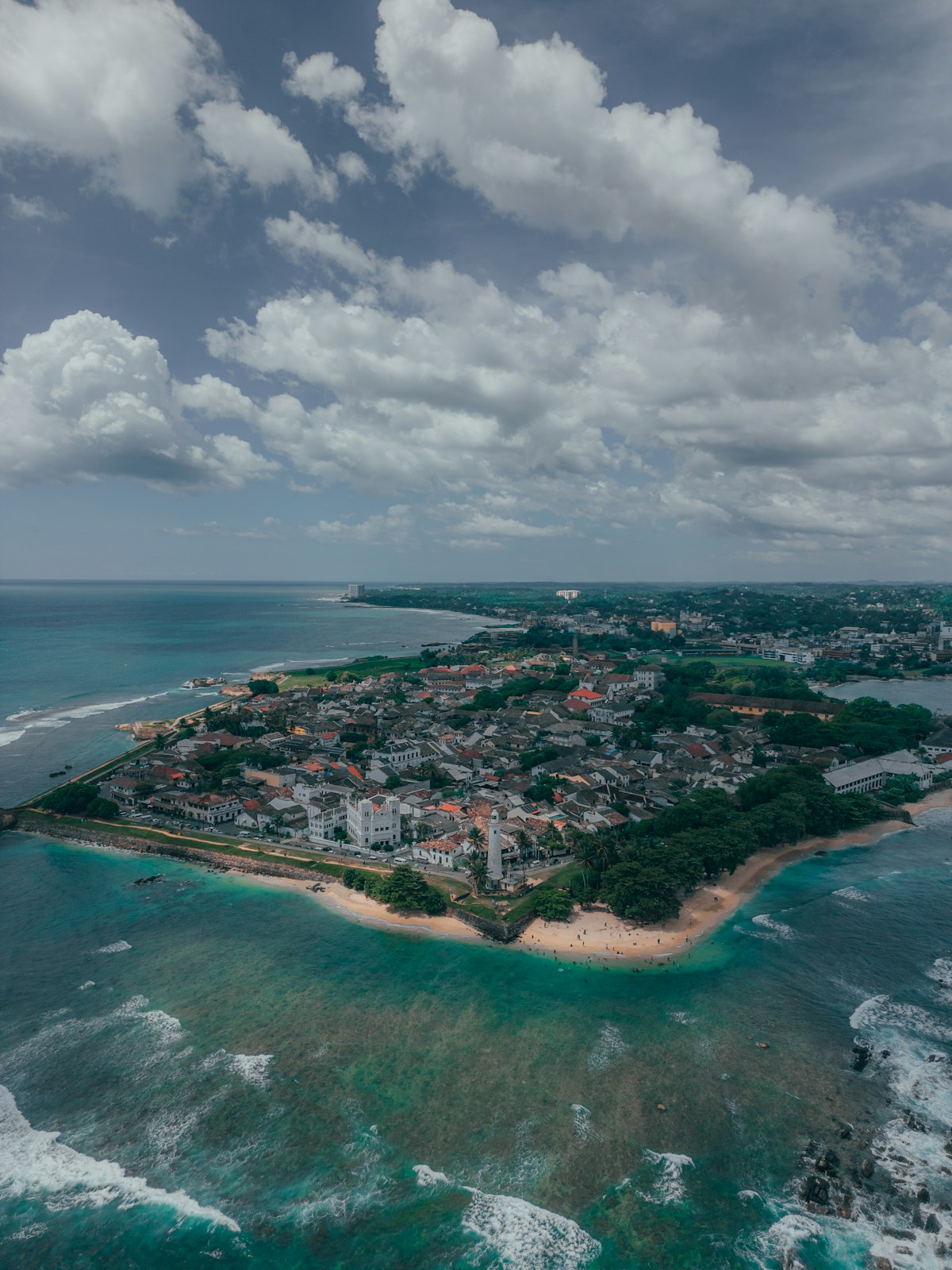
Sri Lanka has approximately 1,500 kilometres of coastline, and the variety within it is remarkable. This is not one generic stretch of tropical beach repeated endlessly. Each section of coast has a distinct character:
Unawatuna - a sheltered, palm-fringed bay near Galle with calm, swimmable water and a laid-back village behind it. Perfect for couples who want beauty without crowds.
Mirissa - the south coast's most celebrated beach, with a gentle curve of sand, beachfront restaurants serving fresh-caught seafood, and the world's best blue whale watching just offshore from November to April.
Tangalle - quieter and wilder than Mirissa, with more seclusion and some of the most beautiful boutique properties on the island. Ideal for honeymooners who want privacy.
Pasikudah - on the east coast, this shallow lagoon has some of the calmest water in the country. The east coast is at its best from May to September, making it a brilliant choice for couples travelling in the off-season for the west coast.
Nilaveli - just north of Trincomalee on the east coast, with Pigeon Island Marine National Park just offshore. Snorkelling straight off the beach, often with blacktip reef sharks visible in the shallows.
Tip
For a honeymoon itinerary, consider combining the south coast (Galle/Mirissa/Tangalle) with the hill country (Ella/Kandy) and ending on the east coast (Trincomalee/Nilaveli) if you're travelling May–September. This way you follow the dry weather as it moves around the island.
2. A Train Journey You Will Never Forget
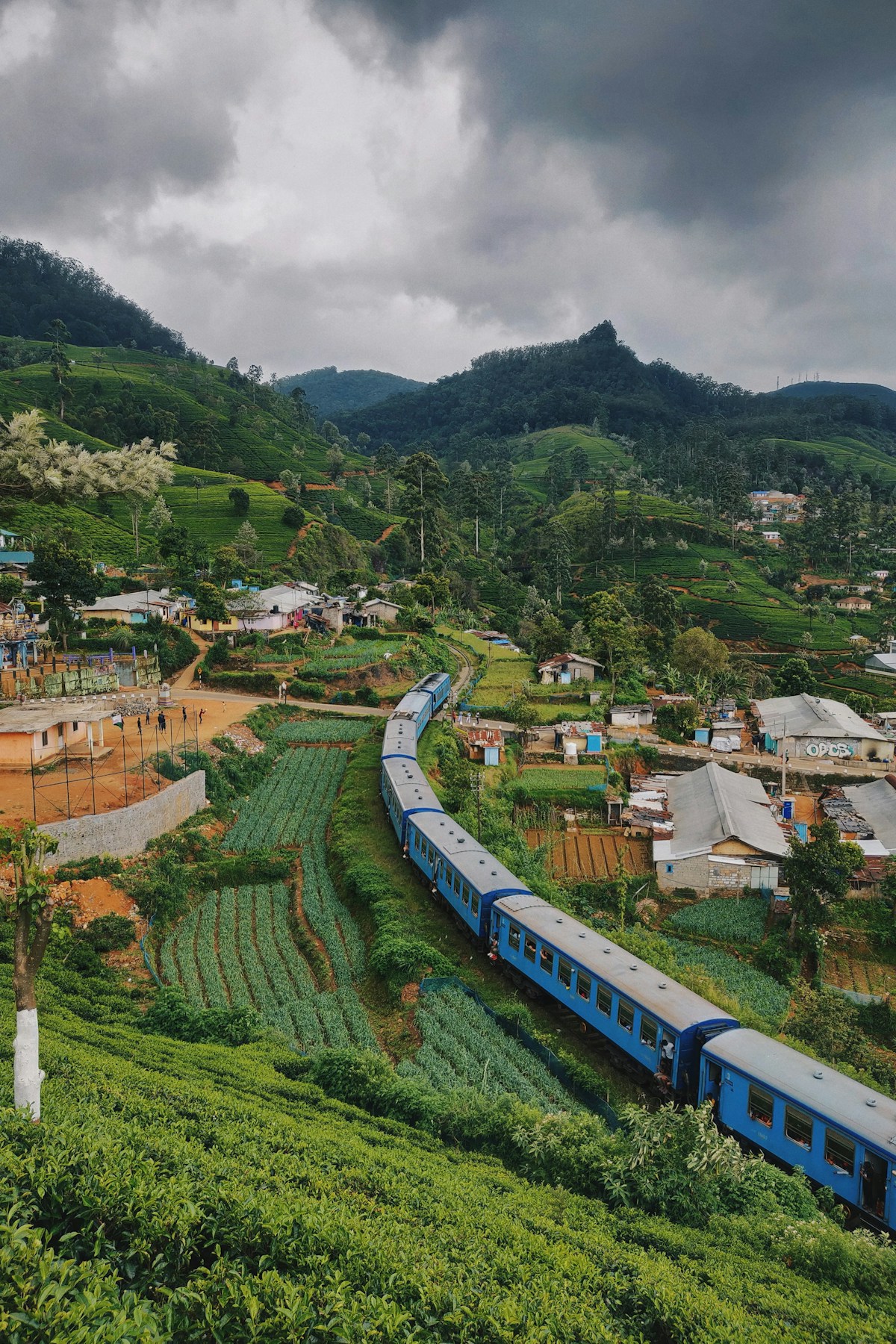
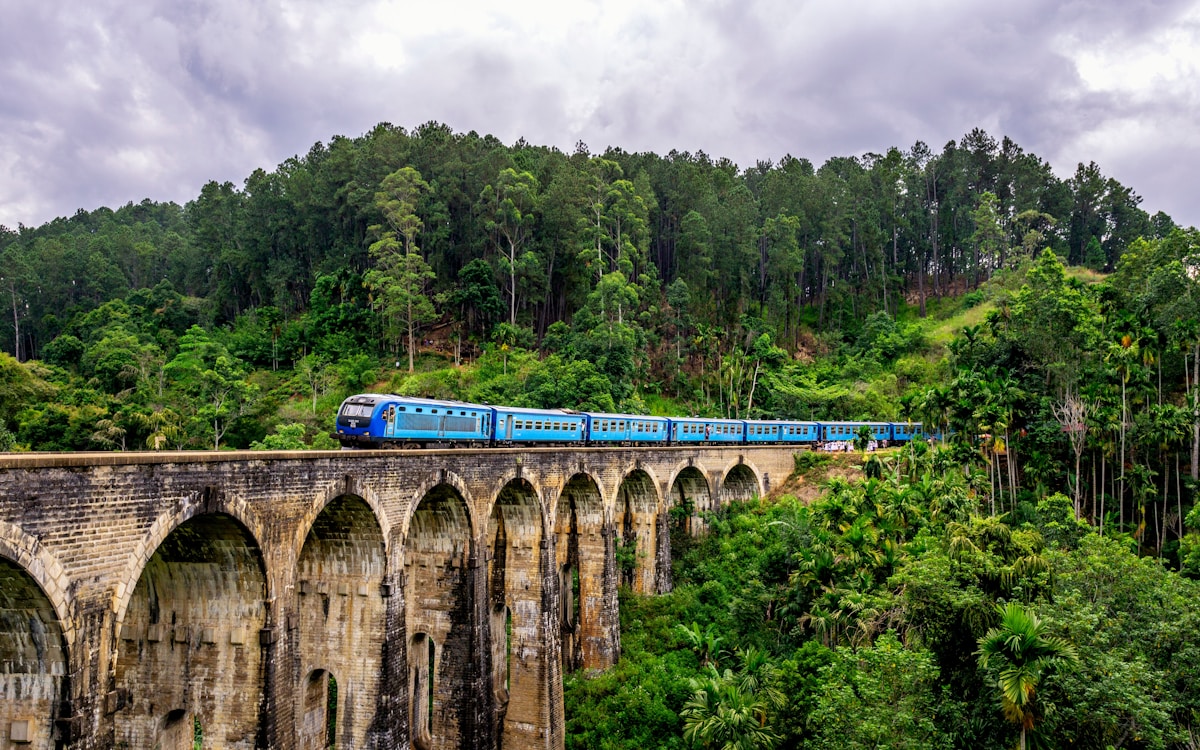
The train from Kandy through Nanu Oya to Ella is, without exaggeration, one of the most beautiful rail journeys in the world. For six hours, the train climbs through tea estates, crosses viaducts over misty gorges, threads through tunnels in the hillside, and deposits you at the Nine Arch Bridge - a colonial-era stone viaduct that appears in roughly half of all photographs taken in Sri Lanka.
Trains run twice daily in each direction. The Observation Car at the rear of the Expo Rail service has wrap-around windows and is the best seat on the island - book it at least 30 days in advance (they sell out fast). Alternatively, many couples simply stand in the open doorways of the carriage, one of those rare travel experiences that is exactly as good as the photographs suggest.
The journey passes through:
- Kandy - the cultural capital, home to the Temple of the Sacred Tooth Relic
- Hatton - gateway to Adam's Peak and the heart of the tea country
- Nanu Oya - the station for Nuwara Eliya, Sri Lanka's hill station at 1,800m
- Ella - the most photogenic town in the hill country, with the Nine Arch Bridge, Little Adam's Peak, and Ella Rock
3. Wildlife Safaris That Deliver
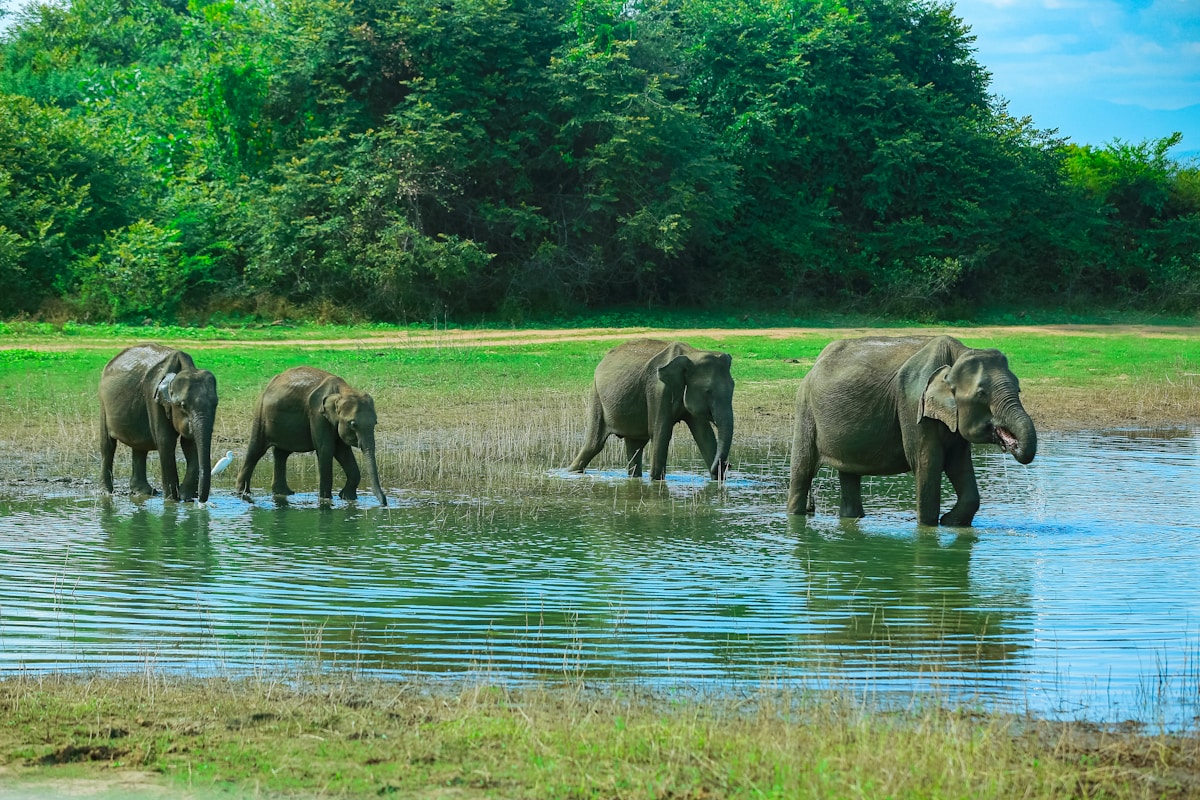
Sri Lanka has 241 endemic animal species - creatures found nowhere else on earth - and a safari here competes seriously with East Africa for sheer sighting density. The island's national parks are small enough that animals are concentrated and encounters are frequent.
Yala National Park is the most famous. It has the highest density of leopards of any national park in the world, and while sightings are never guaranteed, they are far more reliable here than anywhere else in Asia. An early-morning jeep safari in Yala - scanning the scrub for the flick of a spotted coat - is one of those genuinely primal wildlife experiences that couples remember for decades. Yala is also home to sloth bears, crocodiles, water buffalo, and hundreds of bird species.
Udawalawe National Park is the better choice for elephants. The park was established specifically as an elephant sanctuary and herds of 30–50 animals grazing in open grassland are a routine sight. No jungle searching required - this is open savannah country and the elephants are simply there, enormous and unhurried, going about their day.
Minneriya National Park, in the north-central Cultural Triangle, hosts the famous "Gathering" from July to October - hundreds of wild elephants converging on the Minneriya tank as the dry season forces them toward the water. It is the largest gathering of wild Asian elephants anywhere on earth.
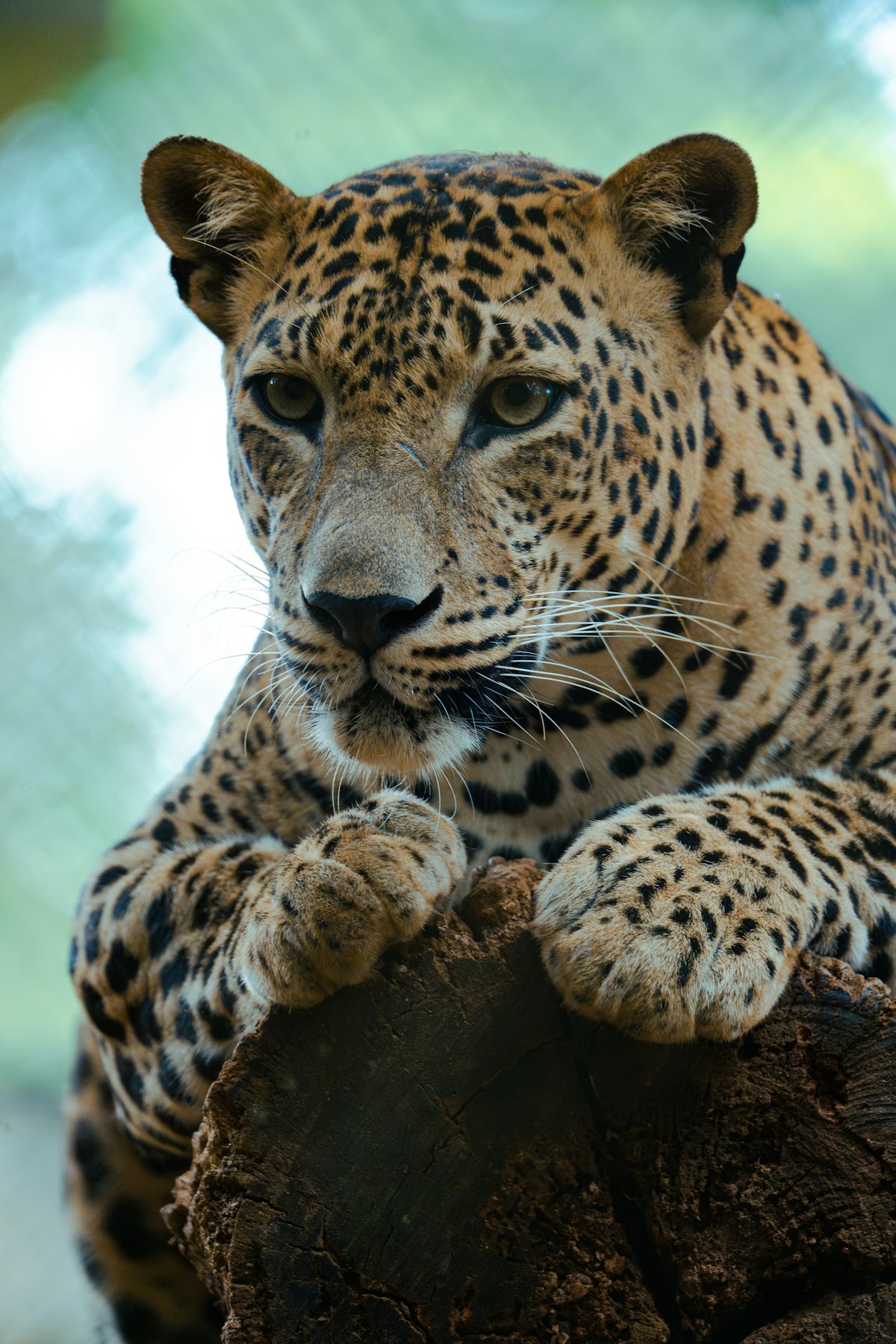
Properties near the park's gates give you first jeep access at dawn - when leopard sightings are most reliable.
Stay Near Yala National Park
Hotels near Yala
Compare prices across Booking.com, Agoda & more
Powered by Travelpayouts · We may earn a small commission at no extra cost to you.
4. Food That Will Change How You Think About Cooking
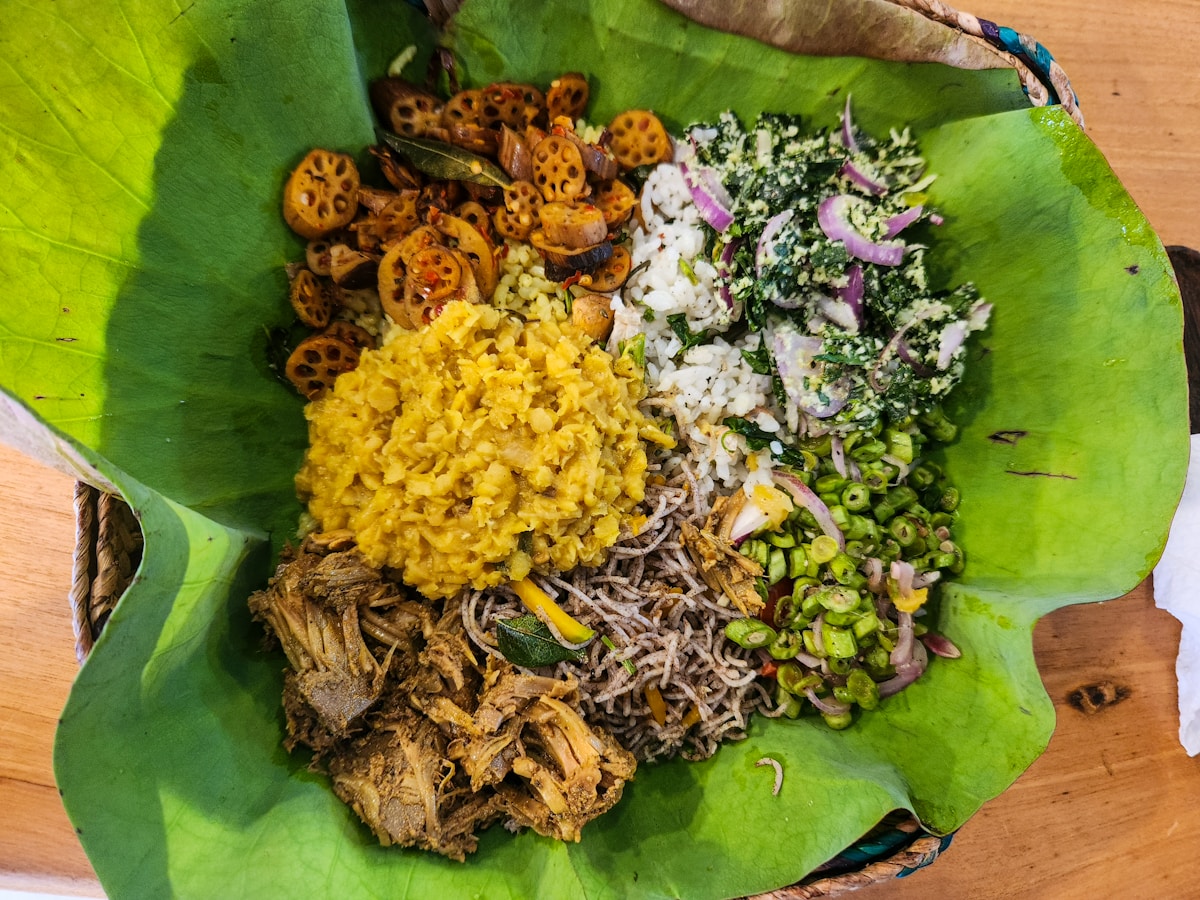
Sri Lankan food is one of the island's best-kept secrets. While Thai and Indian cuisines are globally celebrated, the Sri Lankan kitchen sits quietly in their shadow and is arguably the equal of either - deeply spiced, coconut-forward, achingly fresh, and built around a philosophy of abundance.
Rice and Curry is the foundation of Sri Lankan eating and it bears almost no resemblance to what is sold under that name elsewhere. A proper Sri Lankan rice and curry is not one curry with rice - it is a spread of six to ten separate dishes: dhal, fish curry, jackfruit curry, bitter gourd, coconut sambol, pol sambol, papadum, a green salad dressed with lime. The total might cost $3. It is extraordinary.
Beyond rice and curry:
- Kottu - shredded roti, vegetables, egg, and sometimes meat, stir-fried on a flat iron to an arresting rhythmic clatter. The street sound of Sri Lanka.
- String hoppers (Idiyappam) - delicate pressed rice noodle discs, eaten with coconut milk and curry for breakfast
- Hoppers (Appa) - bowl-shaped fermented rice and coconut milk pancakes, crisp at the rim and soft in the centre, served with a runny egg set in the base
- Lamprais - a Dutch Burgher legacy: a combination of meats, sambols, and rice wrapped in a banana leaf and baked. Only available on specific days at specific bakeries.
For honeymooners, the dining experiences that stand out are the rooftop restaurants in Galle Fort, the seafood beach grills along the south coast (fish and prawns caught that morning, grilled over coconut husks), and the cooking classes in Kandy and Colombo where local cooks walk you through the spice combinations that define the cuisine.
5. Ancient History That Puts Everything in Perspective
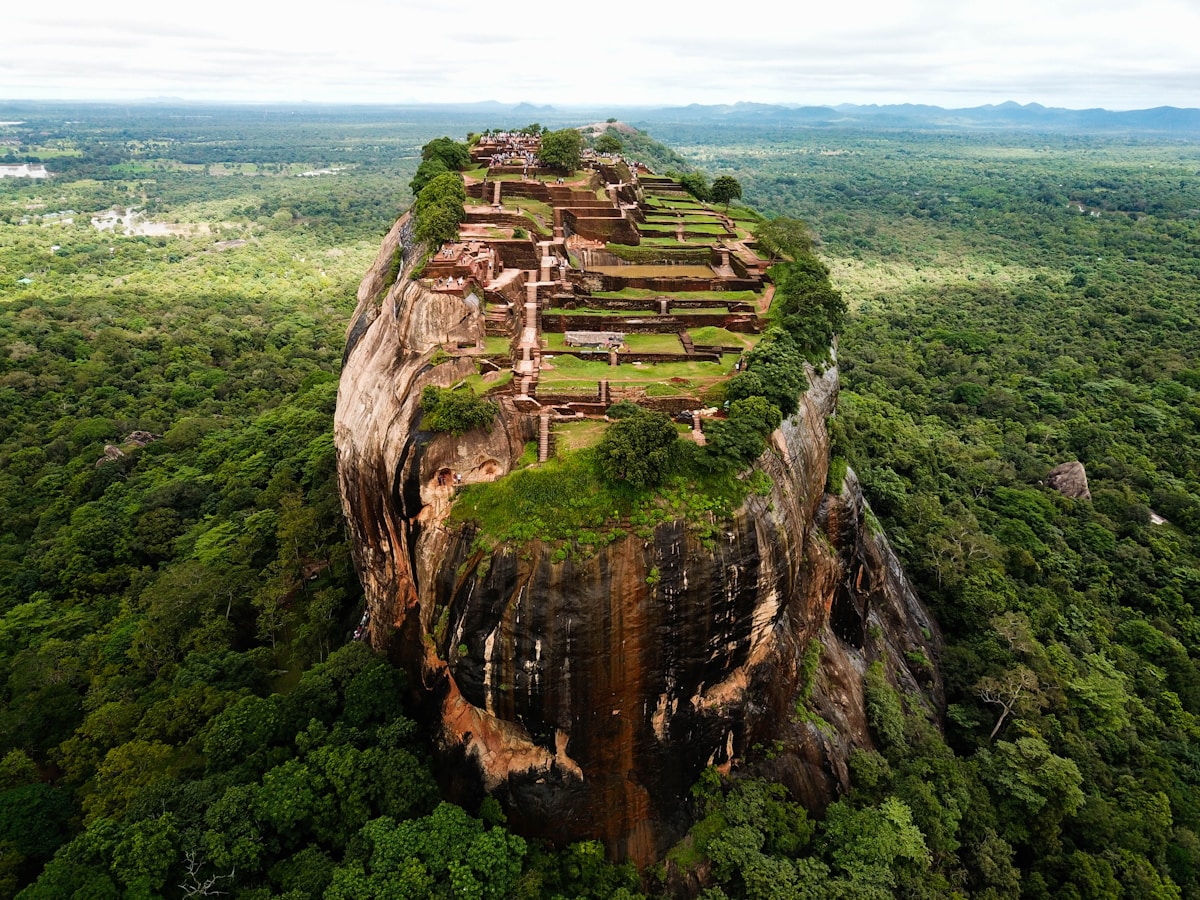
Sri Lanka has over 2,500 years of documented history and the archaeological record to match. The island's Cultural Triangle - roughly the area between Kandy, Anuradhapura, and Sigiriya - contains an astonishing concentration of UNESCO World Heritage Sites within a relatively small geographic area.
Sigiriya is the headline act. Built in the 5th century AD by King Kashyapa, who hollowed out a 180-metre granite rock and constructed a royal palace at its summit, Sigiriya is one of the most remarkable human achievements in Asia. The climb passes through the famous frescoes (celestial nymphs painted directly onto the rock face), through the Mirror Wall where ancient visitors scratched poetry, and onto the summit with its spectacular 360-degree views. The water gardens at the base, fed by a hydraulic system engineered 1,500 years ago, still fill with water after rain.
Polonnaruwa, the medieval capital, is a beautifully preserved ruined city scattered across parkland - the recumbent Buddha at Gal Vihara, cut from a single granite face, stops every visitor in their tracks.
Anuradhapura, the ancient capital for over a thousand years, contains dagobas (stupas) so large they appear on the horizon like small hills. The Sri Maha Bodhi - a fig tree grown from a cutting of the original Bodhi tree under which the Buddha attained enlightenment - has been continuously tended here since the 3rd century BC. It is the oldest historically documented tree in the world.
6. The Temple of the Sacred Tooth
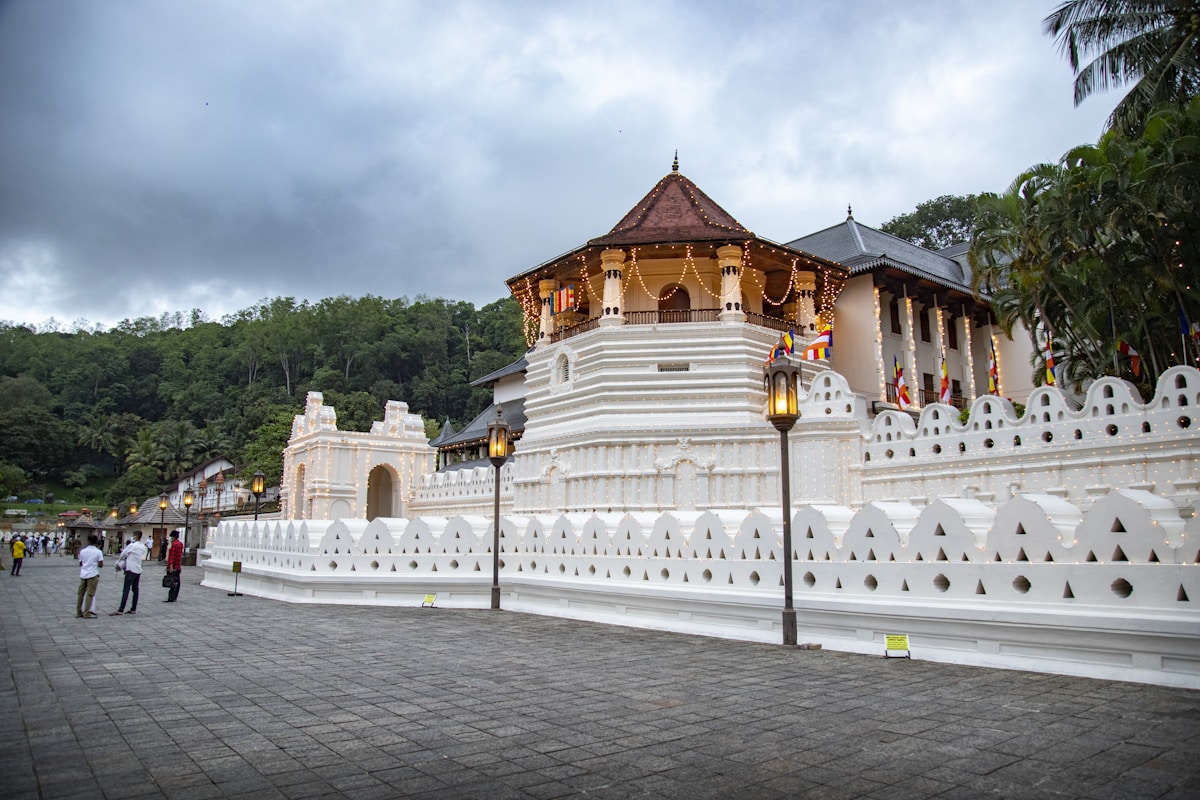
In the centre of Kandy, beside a lake the colonial-era British built for aesthetics rather than utility, stands the Dalada Maligawa - the Temple of the Sacred Tooth Relic. Sri Lanka's most sacred Buddhist site houses a tooth relic of the Buddha in a gold casket within a gold casket within a gold casket, and has done so for centuries.
The evening puja ceremony - held three times daily, most spectacularly at 6:30pm - draws worshippers and visitors in equal measure. The drumming begins from a distance and builds as you approach the main shrine room. The air is thick with incense and jasmine offerings. The casket is not opened to the public, but the act of being in the room with it - among people for whom this is a genuinely sacred moment - is one of those travel experiences that doesn't fit into any category.
For honeymooners who happen to be in Kandy during the Esala Perahera (July–August, dates vary by lunar calendar), the ten-day festival procession - with costumed elephants, Kandyan dancers, fire jugglers, and drummers moving through the streets in the dark - is one of the most extraordinary spectacles in Asia.
7. Waterfalls Everywhere
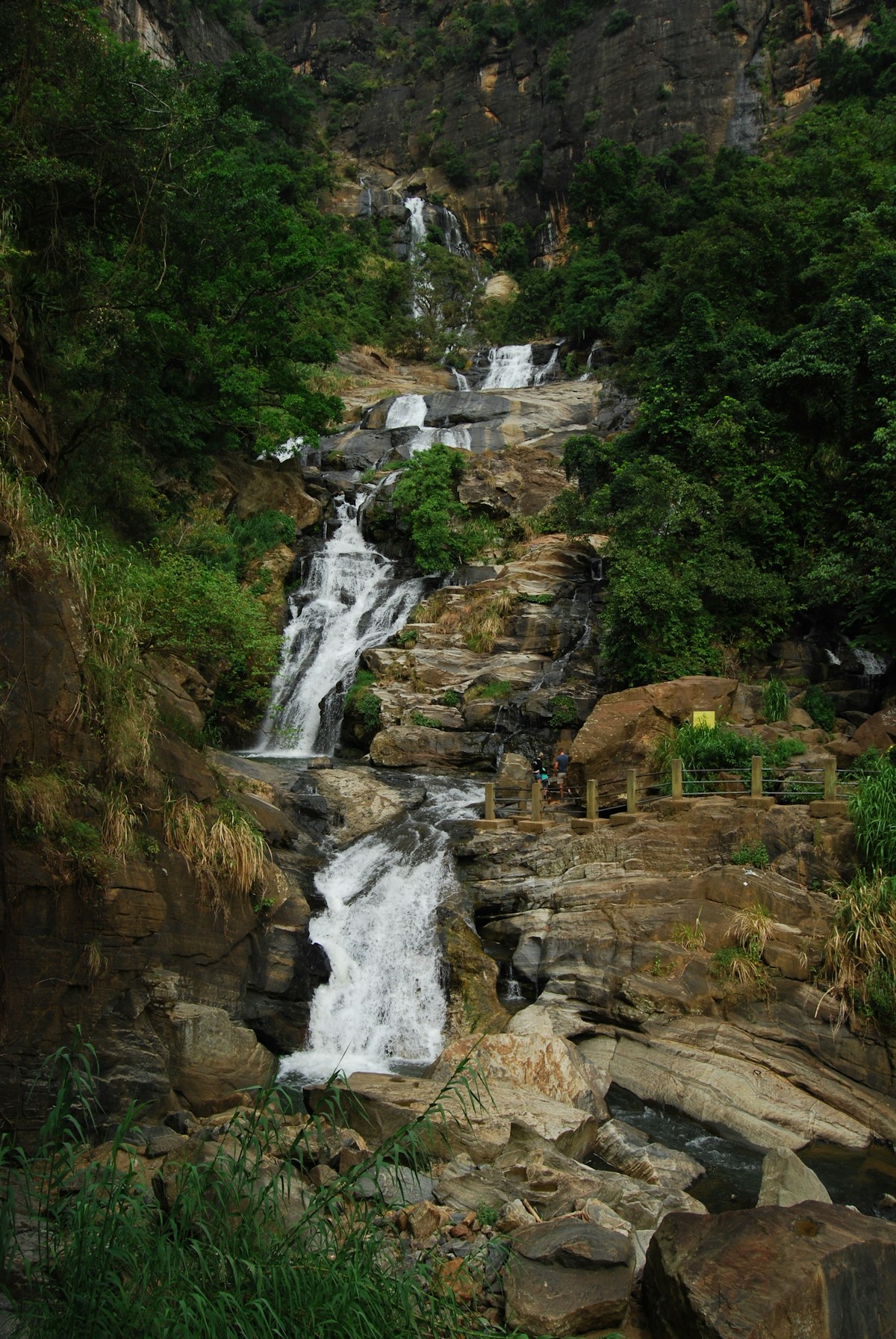
Sri Lanka has approximately 350 named waterfalls - the result of a mountainous interior receiving heavy monsoon rainfall that then drops sharply to the surrounding plains. For honeymooners, waterfalls become a recurring feature of the hill country section of any itinerary.
Diyaluma Falls (220 metres) is the one most couples seek out specifically. Above the main cascade, a series of natural rock pools carved by centuries of flowing water offer natural swimming holes with views across the valley. The hike up is moderate and takes about an hour.
Bambarakanda Falls (263 metres) is the tallest waterfall in Sri Lanka, visible from the road in a single dramatic vertical drop during the wet season.
Ravana Falls, just outside Ella, is accessible directly from the main road - a wide cascade that most visitors see briefly before continuing, but that rewards those who stay for the afternoon light.
The Knuckles Mountain Range, a UNESCO-listed landscape northeast of Kandy, combines waterfalls, cloud forest, and endemic wildlife in a setting that feels genuinely remote. Guided hikes here range from a few hours to multi-day treks with camping.
8. Tea Straight from the Source
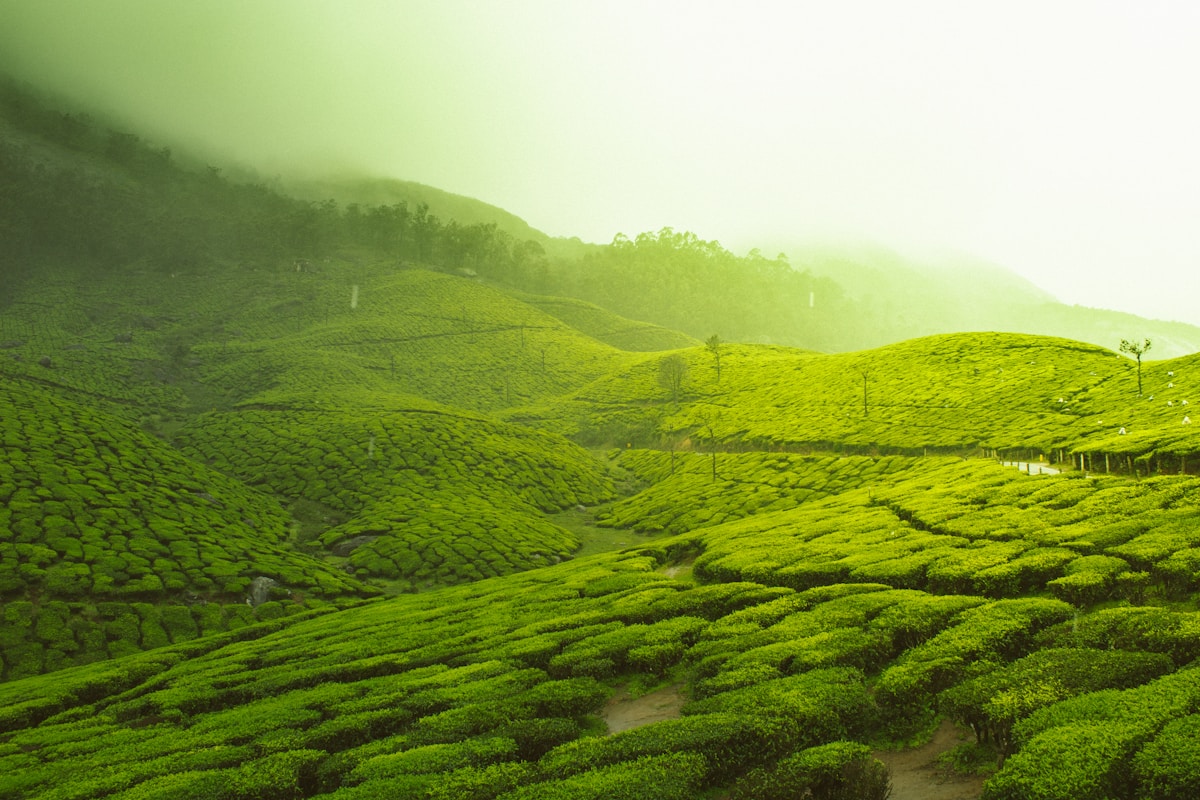
Ceylon tea - the brand name for tea grown in Sri Lanka - is one of the world's great agricultural products. The island's central highlands, at elevations between 600 and 2,400 metres, produce teas of distinct character depending on altitude: the high-grown teas of Nuwara Eliya are the most delicate and aromatic; the mid-grown teas of Kandy are fuller-bodied; the low-grown teas of the southern districts are stronger and often used in blends.
For honeymooners, the experience of visiting a working tea estate is one of the hill country's highlights. Most estates offer:
- A guided tour of the factory showing the full process from fresh leaf to packaged tea
- A walk through the plucking fields with a tea picker who can demonstrate the two-leaves-and-a-bud technique
- A tasting session comparing teas from different elevations and flush seasons
Sri Lanka also produces the world's finest Ceylon cinnamon (Cinnamomum verum) - a spice fundamentally different in flavour and chemical composition from the cassia sold as "cinnamon" in most of the world. The south coast around Negombo and Ambalangoda is cinnamon country, and small family operations will walk you through the hand-peeling process that produces the characteristic soft, multi-layered quill.
9. UNESCO World Heritage Sites - Seven of Them
Sri Lanka punches considerably above its weight in UNESCO designations for a country its size. Seven sites carry the listing:
- Sacred City of Anuradhapura - the ancient capital with massive dagobas and the world's oldest documented tree
- Ancient City of Polonnaruwa - the medieval capital with the extraordinary Gal Vihara sculptures
- Ancient City of Sigiriya - the 5th-century rock fortress and palace
- Old Town of Galle and its Fortifications - a Dutch colonial fort city on the south coast, now home to boutique hotels and restaurants within the original ramparts
- Sacred City of Kandy - the last royal capital and home of the Temple of the Tooth
- Sinharaja Forest Reserve - a biodiversity hotspot covering 11,000 hectares of primary rainforest with extraordinarily high endemism
- Central Highlands of Sri Lanka - encompassing Horton Plains (home to World's End, a 1,000-metre cliff), Knuckles, and Peak Wilderness
For honeymooners doing a classic circuit, hitting five of these seven sites in two weeks is straightforward.
10. Warmth That You Cannot Manufacture
The final reason Sri Lanka belongs at the top of any honeymoon list is the one that doesn't photograph well. Sri Lankans are, as a generalisation that holds up remarkably consistently, genuinely warm towards visitors - curious, hospitable, and delighted to show off their country.
This is not performance. It is not the manufactured hospitality of a heavily touristed destination. Conversations start spontaneously, invitations are extended, and the small interactions that make travel memorable - the guesthouse owner who spends an hour drawing a hand-drawn map of the back roads to a waterfall nobody else visits, the tuk-tuk driver who pulls over so you can properly see the kingfisher on the wire - are routine in Sri Lanka.
For a honeymoon specifically, this matters. You are not just paying for a beach and a safari. You are choosing the atmosphere in which you will spend your first trip as a couple. Sri Lanka's atmosphere is warm, unpretentious, and genuinely interested in you.
Planning Your Sri Lanka Honeymoon
Best time: November to April for the west and south coasts; May to September for the east coast. For a multi-region itinerary covering both sides of the island, March–April and September–November offer the best compromise.
Recommended duration: 12–16 days to do the island justice. A rushed 7-day trip works but leaves you wanting more.
Suggested itinerary structure:
- Days 1–2: Colombo (arrival, acclimatise, city exploration)
- Days 3–5: Galle Fort & south coast beaches
- Days 6–8: Hill country - Ella, train journey, Nine Arch Bridge, hiking
- Days 9–10: Kandy - Temple of the Tooth, cultural experiences
- Days 11–12: Cultural Triangle - Sigiriya, Dambulla, optional Polonnaruwa/Anuradhapura
- Days 13–16: East coast (Trincomalee/Nilaveli) or additional south coast time
Accommodation: Sri Lanka has exceptional boutique hotels and small luxury properties at price points significantly below comparable Maldives resorts. The Galle Fort area, the hill country around Ella and Nuwara Eliya, and the east coast have the strongest collections of romantic, design-forward properties.
Tip
Book the scenic train Observation Car (Expo Rail) at least 30 days before travel - seats sell out quickly and cannot be booked on the day. For Yala safaris in peak season (December–March), book your jeep and guide at least two weeks in advance.
Find flights, romantic hotels, and the right itinerary for your honeymoon in Sri Lanka.
Start Planning Your Sri Lanka Honeymoon
Find the best price to Colombo from your city
Search Flights →Compare prices across Booking.com, Agoda & more
Find Hotels →Bus fares, train times and transport options
Plan Transport →Powered by Travelpayouts · We may earn a small commission at no extra cost to you.
Planning your trip? Use these trusted booking platforms.
Ready to Visit Sri Lanka?
Find the best price to Colombo from your city
Search Flights →Compare prices across Booking.com, Agoda & more
Find Hotels →Bus fares, train times and transport options
Plan Transport →Powered by Travelpayouts · We may earn a small commission at no extra cost to you.
Leave a Comment
Share your thoughts, questions, or travel experiences
Keep Exploring
 Travel Tips
14 min read
Why Sri Lanka is the Smartest Long-Haul Choice for European and Australian Travellers in 2026
Read → Travel Tips
12 min read
Best Time to Visit Sri Lanka: A Month-by-Month Guide to Seasons & Weather
Read → Travel Tips
10 min read