Tip
The basics: Remove shoes before entering any temple or religious site. Cover shoulders and knees (both men and women). Never turn your back to a Buddha statue for photographs. Never point feet toward statues or sacred objects. These four rules cover 90% of situations. The rest of this guide fills in the details and cultural context.
Sri Lanka is a deeply religious country. Around 70% of the population is Buddhist, 13% Hindu, 9% Muslim, and 8% Christian. Religious sites - from the massive temple complexes at Anuradhapura to small roadside shrines - are active places of worship, not tourist attractions. The same sites that appear in every travel photograph are attended daily by local families for prayer, meditation, and ritual.
Understanding and observing local customs at these places is not bureaucratic box-ticking. It's the difference between being a visitor who adds something to the experience and one who detracts from it.
Tip
Our take: The dress code violation that causes the most friction in our experience is bare shoulders - more so than shorts. Many temples will admit men in shorts if their upper body is covered, but shirtless or sleeveless is almost universally turned away. Keep a light cotton scarf in your bag at all times.
Dress Code
The Rule
Covered shoulders and covered knees are required at all Buddhist temples, Hindu kovils, and mosques in Sri Lanka. This applies to both men and women without exception at most sites.
- Sleeveless tops, tank tops, shorts, short skirts, and minidresses are not acceptable.
- Long trousers or a skirt below the knee, combined with a top that covers the shoulders, satisfies the requirement at virtually all sites.
Practical Solutions
The sarong method: The easiest approach for travellers is to carry a light cotton sarong or scarf. It weighs almost nothing, can be wrapped as a skirt over shorts, draped as a shawl over bare shoulders, and purchased at any market in Sri Lanka for LKR 300–500.
Many popular sites (Temple of the Tooth in Kandy, Dambulla Cave Temple, Kelaniya Temple) have sarong rental available at the entrance for LKR 50–100. Don't rely on this - they run out during busy periods and the quality varies.
What to wear: Long linen or cotton trousers are ideal for the Sri Lankan heat - cool enough to wear all day, acceptable at every temple. A loose cotton shirt with sleeves satisfies the shoulder rule. Compact dress pants and a blouse work equally well.
White Clothing
At some significant temples - particularly Kataragama, Sri Pada (Adam's Peak), and on Poya (full moon) days - white clothing is the expected dress for devotees. As a visitor, you're not required to wear white, but doing so shows additional respect and will be appreciated. Wearing white to Kataragama on a festival day is a meaningful gesture.
Removing Shoes
You will remove your shoes at the entrance to every Buddhist temple, Hindu kovil, and many mosques in Sri Lanka. This is non-negotiable.
What to do:
- Remove shoes (and socks, at some sites) at the marked entrance point, usually a threshold, mat, or shoe rack
- Shoes are left outside, often on a rack or with an attendant. Theft is uncommon but keep valuables in your bag
- At large sites (Dambulla, Temple of the Tooth, Anuradhapura), there are designated shoe depositories - sometimes with a small fee (LKR 20–50)
- Some temple pathways are paved with dark stone that gets extremely hot in the midday sun - a pair of light walking socks helps in summer
Why: Buddhist and Hindu traditions maintain that shoes worn outdoors carry pollution and impurity. Entering a sacred space barefoot is a gesture of respect and equality - all stand equal before the sacred.
Behaviour Around Buddha Statues
This is where many visitors inadvertently cause offence, and where awareness matters most.
What Not to Do
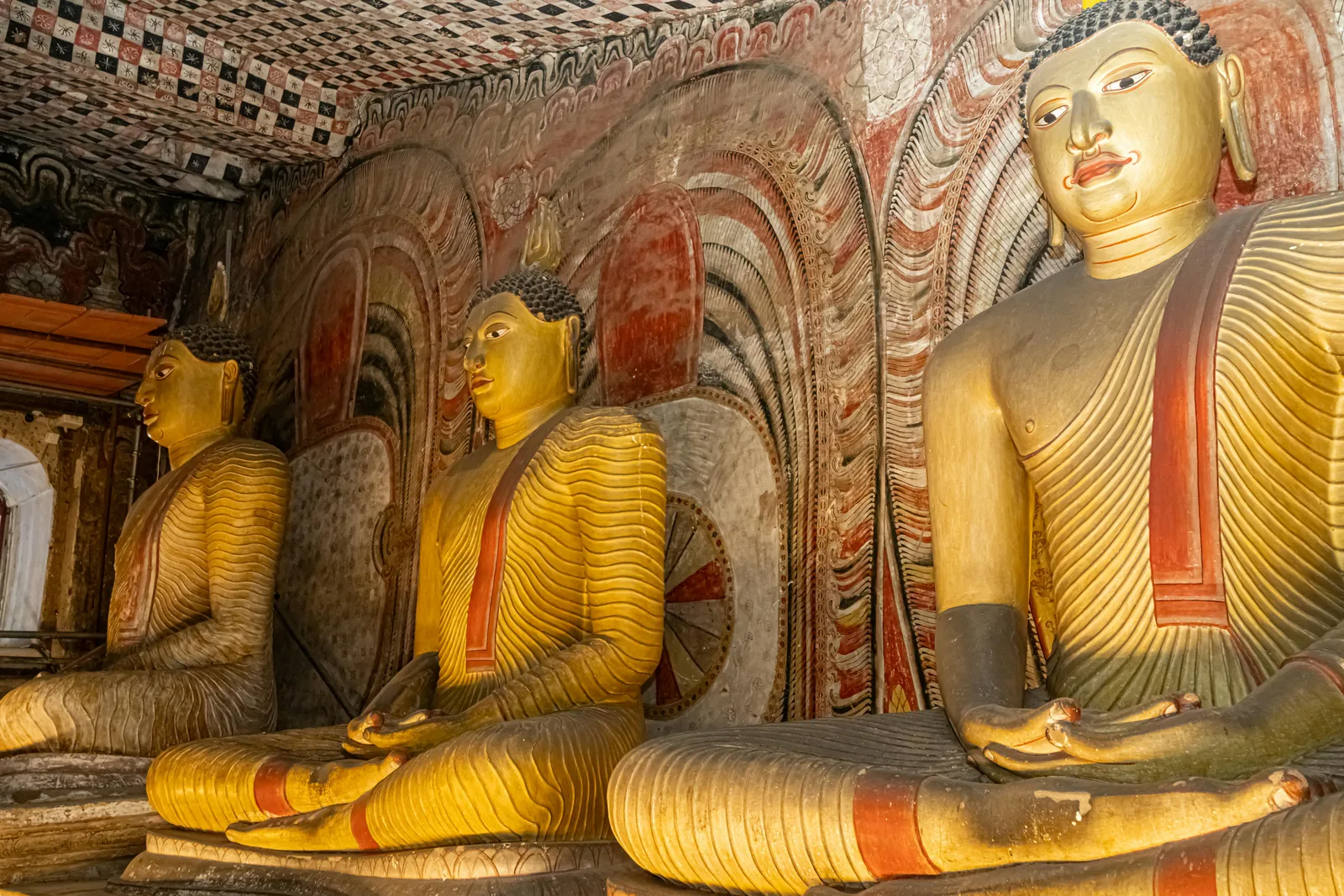
Never turn your back to a Buddha statue for a photo. This is the single most important rule at Buddhist sites. When photographing, face toward the statue or stand to the side. Asking someone to photograph you with your back to the image while you "pose" facing the camera is considered deeply disrespectful.
Never point your feet toward a Buddha statue. Feet are considered the lowest part of the body in Buddhist and Hindu cultures. When sitting in temple spaces, tuck your feet beneath you or point them away from the shrine. Cross-legged (lotus position) is always appropriate.
Don't pose casually in front of shrines. Photographs that treat a sacred statue as a backdrop - jumping photos, selfies making funny faces, overly casual poses - are disrespectful. A respectful photo (standing facing the statue, hands in prayer position, or simply standing respectfully) is always appropriate.
Don't touch statues unless invited. Many temple images are not to be touched by visitors. Follow what you observe of local practice.
What Is Appropriate
- Standing quietly before a shrine
- Sitting cross-legged in meditation or contemplation
- Lighting an incense stick or oil lamp (if offered at the site - a small donation is appropriate)
- Making an offering of lotus flowers (available at temple entrances, LKR 50–100 per bundle)
- A slight bow of the head in acknowledgment
Circumambulation
In both Buddhist and Hindu traditions, sacred structures are traditionally circumambulated (walked around) clockwise. This applies to:
- Stupas and dagobas (the dome-shaped shrines at Buddhist sites)
- The sacred Bo tree at Anuradhapura and Kelaniya
- The inner shrines at kovils
When approaching these structures, follow the local devotees. If you see everyone walking in one direction, join that flow.
Photography Rules
Photography is permitted at many Sri Lankan temples but rules vary by site and section.
Generally permitted:
- Exterior photos of temple buildings and grounds
- Photos of offerings, flowers, and decorative elements (without disrupting worshippers)
- Landscape and architectural shots
Generally restricted or forbidden:
- The inner sanctum at active Hindu kovils (particularly during puja ceremonies)
- Close-up photos of worshippers in prayer without their permission
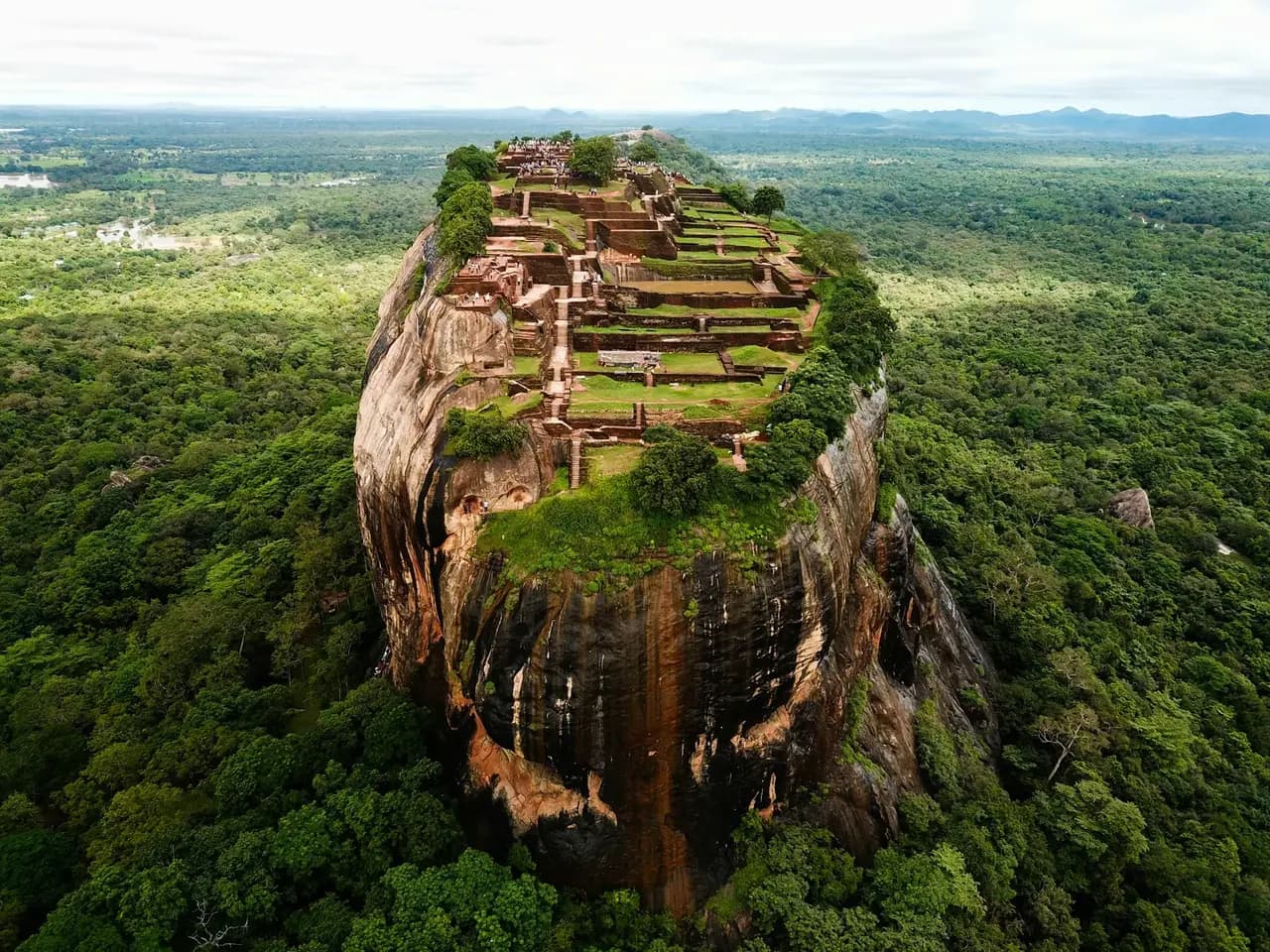
- Flash photography near ancient paintings (Dambulla frescoes, Sigiriya)
- Photography inside certain sections at the Temple of the Tooth during prayer times
The rule: When in doubt, observe what others are doing. If locals are not photographing, neither should you. If you see a sign with a camera crossed out, respect it. At most sites, a respectful approach and a moment's observation will tell you what is appropriate.
Hindu Kovil Etiquette
Sri Lanka has significant Hindu kovil (temple) culture, particularly in the north and east, and among the Tamil and some Sinhalese communities. The most visited kovils for tourists include:
- Nallur Kandaswamy Kovil (Jaffna)
- Munneswaram Temple (near Chilaw)
- Kataragama Devale (at Kataragama)
At Hindu kovils:
- Remove shoes at the designated threshold
- Men may be required to remove their shirt in the inner sanctuary (a cloth is sometimes provided)
- Do not enter the inner sanctum area unless invited by a priest
- During puja (prayer ceremonies), stand respectfully and quietly - these happen at specific times throughout the day
- Photography restrictions are strictly enforced at the inner shrine - the garbhagriha (inner chamber) is typically off-limits for cameras
Mosque Etiquette
Sri Lanka has a significant Muslim community, particularly on the west and east coasts. If visiting a mosque:
- Dress modestly (all of the above applies)
- Women should cover their hair (a scarf is sufficient)
- Remove shoes at the entrance
- Avoid visiting during the five daily prayer times (Fajr, Dhuhr, Asr, Maghrib, Isha) unless invited
- Men and women may enter by separate entrances
Poya Days
Poya is the Sri Lankan full moon holiday, observed monthly. On Poya days:
- Alcohol sales are prohibited by law (many shops and restaurants close or cannot serve)
- Devout Buddhists dress in white and visit temples in larger numbers
- Drums and offering ceremonies are more elaborate at major temples
- The atmosphere at places like Kelaniya Temple and the Temple of the Tooth is particularly special
Poya days are excellent times to witness Buddhist practice at its most visible - just be more consciously respectful, as these are significant occasions for local families.
Greetings and Common Courtesy
"Ayubowan" (ආයුබෝවන් / ஆயுபோவன்) is the traditional Sri Lankan greeting, meaning "may you live long." Palms pressed together (like a prayer gesture) accompanies it. Using this greeting when entering a temple or meeting a monk is always appreciated.
Interacting with monks: Buddhist monks in Sri Lanka are highly respected. When meeting a monk:
- Do not offer your hand for a handshake - monks often do not make physical contact with laypersons, especially across gender lines
- Women should not touch monks or hand objects directly - place items on a table or surface for the monk to receive
- Greet with a slight bow and palms together
- Speaking with monks is welcomed; they are often happy to discuss Buddhism with respectful visitors
Specific Guidance by Site Type
Buddhist Viharaya (Temples)
Buddhist temples in Sri Lanka divide into viharaya (the main shrine building), stupa or dagoba (the dome-shaped relic mound), and Bo tree (the sacred fig tree, representing the tree under which the Buddha attained enlightenment).
At the viharaya: Remove shoes at the doorstep, not inside. Do not walk between the main Buddha image and the worshippers facing it - walk along the side wall instead. Sit or kneel to match the height of the image if you wish to observe; standing over a seated Buddha image is considered disrespectful.
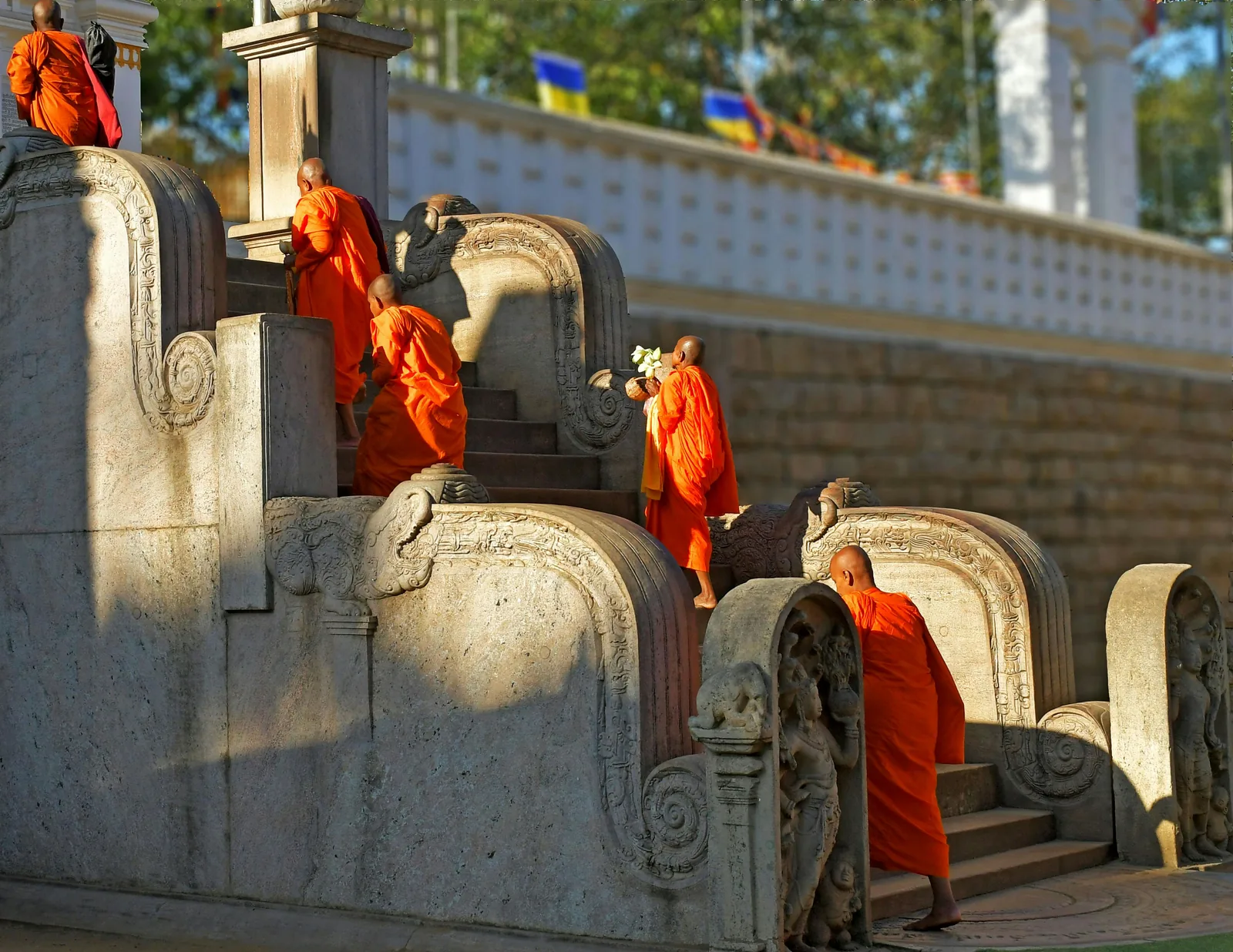
At the stupa/dagoba: Walk clockwise. Keep the stupa on your right. Do not sit on the lower platform levels of a stupa - only on the outer paths or ground.
At the Bo tree: Walk clockwise. Do not snap branches or take leaves. White cloth offerings tied to the branches are gifts left by devotees.
Hindu Kovil (Temples)
Sri Lanka's Hindu temples range from small roadside shrines to major temple complexes. The etiquette differs somewhat from Buddhist sites.
At significant kovils (Munneswaram, Nainativu, Nallur in Jaffna), men are typically required to remove their shirt as well as shoes before entering the inner courtyard. Sarongs are sometimes provided at the entrance. Photography inside the inner sanctuary (the garbhagriha, where the deity is housed) is generally not permitted. Observe what local worshippers are doing and follow.
Mosque
Sri Lanka has a significant Muslim population, particularly in the eastern province and parts of Colombo. Mosque visits require shoes removed, and women to cover their hair. Friday noon prayer is the main congregational service - visiting during this time is generally not appropriate. Outside prayer times, mosques are typically welcoming to respectful visitors.
What to Bring to Every Temple Visit
A sarong or light scarf: The single most useful item. Can serve as shoulder cover, knee cover, or hair cover depending on the site. Lightweight cotton packs to nothing. Every traveller doing a Sri Lanka circuit should have one.
Socks: For sites with long outdoor paths (Anuradhapura, Polonnaruwa), the ancient stone paths get extremely hot by 10 am. Light socks protect your feet and are generally permitted at outdoor sites.
Small notes for donations: Not obligatory, but a modest donation to temple upkeep is appreciated and normal practice. LKR 100–200 is appropriate at smaller sites; LKR 500–1,000 at major sites if you feel moved to contribute.
An open posture: The temples on the Sri Lanka heritage circuit are active religious sites, not museums. Behaving with genuine respect - not just rule compliance - is noticed and genuinely appreciated by local worshippers.
Quick Reference: Temple Etiquette Summary
| Rule | Details |
|---|---|
| Shoes | Remove at entrance to all temples, kovils, mosques |
| Dress | Shoulders and knees covered (both genders) |
| Buddha photos | Never back to image; never feet pointing toward image |
| Circumambulation | Clockwise around stupas and Bo trees |
| Photography | Ask first; no flash near frescoes; no camera at inner kovil shrines |
| Offerings | Lotus flowers, incense sticks, oil lamps - welcome at most Buddhist sites |
| Poya days | White clothing appreciated; more formal atmosphere |
| Monks | No handshake; women avoid direct hand contact |
Temple Etiquette FAQs
What should I wear to visit temples in Sri Lanka? Covered shoulders and covered knees - for both men and women. Long trousers and a shirt with sleeves is the most practical solution for the Sri Lankan heat. Carry a sarong for flexibility; it can be wrapped as a skirt or shoulder cover as needed.
Can I wear shorts at Sri Lankan temples? Not as a rule. Some small neighbourhood temples are more relaxed, but all significant sites (Temple of the Tooth, Dambulla, Sigiriya, Anuradhapura, Polonnaruwa) require covered knees. Some sites have sarongs for loan at the entrance.
Do I need to remove my socks as well as shoes? Some sites require bare feet (not just shoeless); others permit socks. Follow what you observe others doing. At outdoor temple paths that get very hot, light socks may be more comfortable and are usually permitted.
Is photography allowed inside Sri Lankan temples? It depends on the site and section. Exterior photography is almost always permitted. Inner shrines at Hindu kovils are typically off-limits. Flash photography near ancient paintings (Dambulla) is restricted. When in doubt, ask the attendant or follow what locals are doing.
Can women visit Hindu kovils during menstruation? Traditionally, some kovils restrict entry for menstruating women to the inner sanctuary. This varies by site and is generally not enforced on foreign visitors, but it is worth being aware of as a cultural norm.
What is the dress code at Adam's Peak? The climb to Adam's Peak (Sri Pada) is a pilgrimage as much as a trek. Covered legs and shoulders are expected. White clothing is worn by many Sri Lankan pilgrims. The temple at the summit has formal dress requirements - shorts will not be permitted inside the shrine.
What should I know about Poya day? Poya (full moon holiday) happens monthly. Alcohol is not sold. Temples are busier and more devotional in atmosphere. Dress more conservatively than usual and be more quietly respectful. It's actually one of the better times to visit a major temple if you want to see genuine religious practice.
Related Guides
- Why Sri Lanka is the Smartest Long-Haul Choice for European and Australian Travellers in 2026
- Why Sri Lanka Is the Honeymoon Destination Modern Couples Are Choosing Over the Maldives
- Sri Lanka Insider Travel Tips: What Locals Know That Most Guides Won't Tell You
- How Much Does a Month in Sri Lanka Cost? A Solo Traveler's Budget Guide (2026)
Advertisement
Flights, hotels and tours - all in one place.
Plan Your Sri Lanka Trip
Find the best price to Colombo from your city
Search Flights →Compare prices across Booking.com, Agoda & more
Find Hotels →Bus fares, train times and transport options
Plan Transport →Powered by Travelpayouts · We may earn a small commission at no extra cost to you.
Leave a Comment
Share your thoughts, questions, or travel experiences