
Tip
The short version: Europe is suffering its worst heatwave in recorded history this July, with temperatures above 40°C across Spain, Germany, France, and the Czech Republic. Sri Lanka offers two completely different escapes - a cool mountain retreat (Nuwara Eliya sits at 18–22°C year-round) and a sunny, breezy east coast beach season (Arugam Bay and Trincomalee are at their best in July). Return flights from London start around £700; from European capitals, €450–€600.
July 2026 has broken records across Europe. Spain recorded its second-hottest June in history, with over 1,000 heat-related deaths. Berlin's tram tracks buckled under temperatures that have never been registered there before. Slovakia, the Czech Republic, and the Netherlands simultaneously reported all-time highs, with heat indices affecting more than 130 million people above 35°C. Meteorologists are calling it the new normal - extreme summer heat as the default, not the exception.
If you're one of the tens of millions looking for somewhere to go that isn't a furnace, Sri Lanka is worth considering seriously. Not because it's cold - it isn't - but because it offers two distinct climate zones in July that directly answer what European travellers are actually looking for: cool mountain air and clean ocean breezes. And unlike the last-minute flight-price chaos that grips the Mediterranean in a heatwave summer, Sri Lanka remains relatively affordable and accessible throughout July and August.
Why Sri Lanka Works in July (And Most Guides Don't Tell You This)
The standard advice about Sri Lanka is "visit between November and April, avoid the monsoon." That advice applies to the south and west coasts, where the southwest monsoon brings heavy rain from May through September. It does not apply uniformly across the island.
Sri Lanka has two monsoon systems running in opposite directions. When the southwest monsoon is soaking Galle and Mirissa, the east coast is in full dry season - sunny, calm-sea conditions, and temperatures kept comfortable by the ocean breeze. Meanwhile, the central highlands (Nuwara Eliya, Ella, Haputale) sit above 1,500 metres and maintain cool temperatures year-round regardless of which monsoon is active.
For European travellers fleeing July heat, these two zones are the answer:
| Zone | Typical July Temperature | Conditions | Best For |
|---|---|---|---|
| Nuwara Eliya (1,868m) | 18–22°C day / 10–13°C night | Misty mornings, occasional drizzle | Cool walks, tea estates, colonial town |
| Ella (1,040m) | 21–25°C | Mostly clear, green valleys | Hiking, scenery, cafés |
| Arugam Bay (east coast) | 28–32°C | Dry, sunny, sea breeze | Surfing, beach, seafood |
| Trincomalee (east coast) | 28–32°C | Clear, calm seas | Snorkelling, diving, beaches |
| Colombo / south coast | 29–33°C | Humid, occasional heavy rain | Skip in July unless transiting |
The Hill Country: Sri Lanka's Natural Air Conditioning
The central highlands are Sri Lanka's most overlooked asset for July travel. Nuwara Eliya, at nearly 1,900 metres above sea level, is the highest city on the island - and it stays cool enough that you'll want a jacket in the evenings. The British called it "Little England" and built it accordingly: neat colonial bungalows, a race track, a golf course, a post office that looks like it was lifted from the Home Counties, and tea estates that carpet every slope in green.
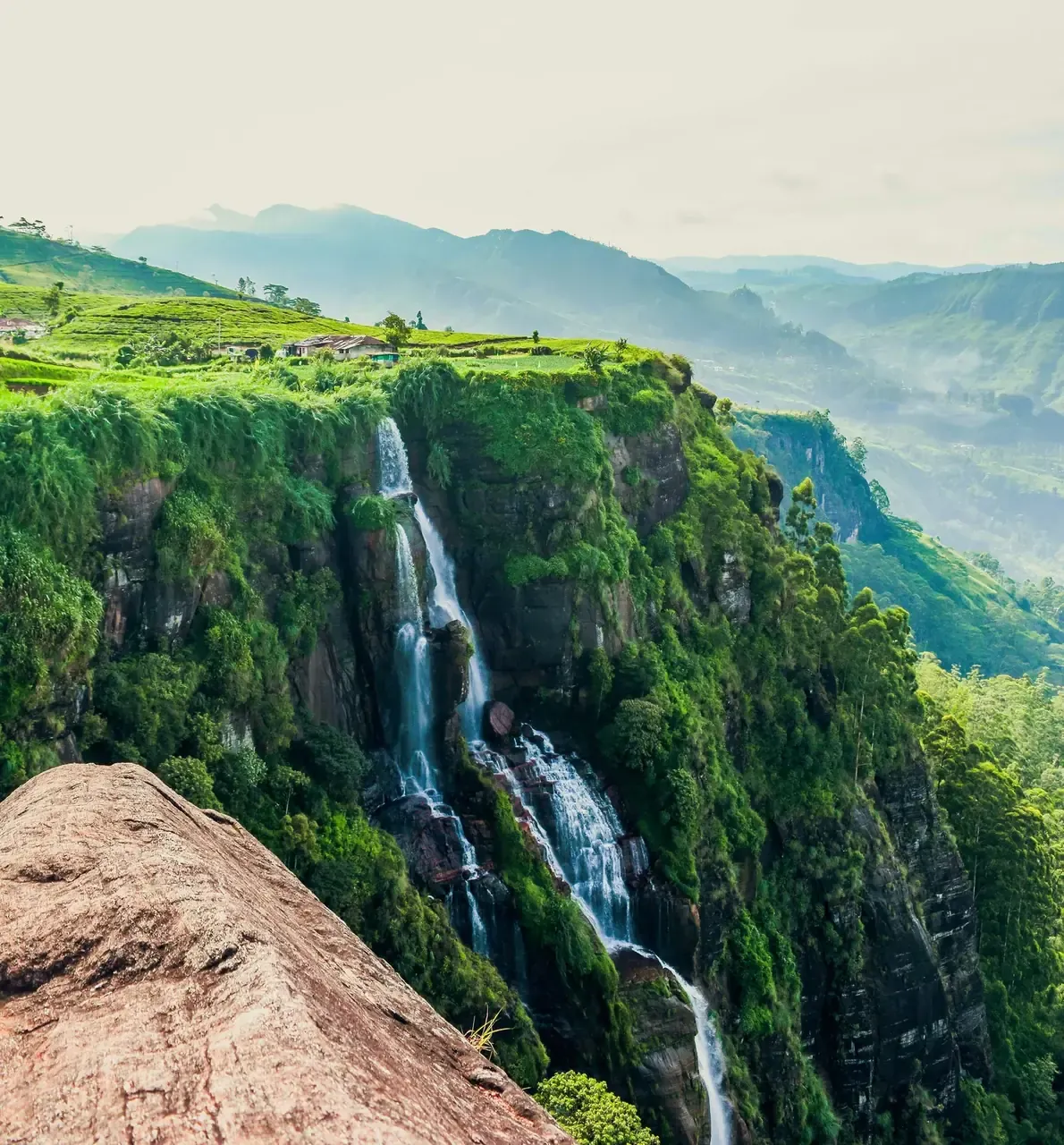
Nuwara Eliya: Temperatures That Feel Like a European October
When London and Paris are posting 38°C and Spaniards are being advised not to leave their homes, Nuwara Eliya is sitting at 20°C with mist rolling across the hills at dawn. The town itself is small and colonial - a morning walk around Gregory Lake takes an hour, and the main street has bakeries, a market, and a post office worth photographing. But the real draw is the surrounding countryside.
What to do here in July:
- Tea estate tours: The Bogawantalawa Valley and Pedro Tea Estate are within easy reach. Most estates run 45-minute factory tours (LKR 500–800) followed by a tasting - try single-estate orange pekoe picked the same morning
- Horton Plains: A 45-minute drive from Nuwara Eliya, this plateau national park sits at 2,100m and offers a spectacular cliff called World's End - a sheer 870m drop into the southern lowlands. Enter before 9am (LKR 4,000 foreign visitor fee); clouds roll in by midday
- Gregory Lake rowing and cycling: Pedal around the lake perimeter or take out a rowboat - the kind of afternoon that feels impossible when it's 40°C at home
- Victoria Park: A genuine colonial botanical garden in the middle of town, busy with endemic birds in July (it's migration season)
See the full Nuwara Eliya guide for practical details.
Ella: The Cooler, Hikers' Alternative
Ella sits about 600 metres lower than Nuwara Eliya but maintains comfortable temperatures in the low-to-mid 20s throughout July. It's the most Instagram-recognised town in Sri Lanka - Nine Arch Bridge, Ella Rock, Little Adam's Peak - and in July the famous views are at their greenest, with clouds drifting through the valley in photogenic ways.
What to do here in July:
- Ella Rock hike: A solid 3–4 hour return hike through jungle and tea estates to a viewpoint above the clouds. Start by 7am to beat the heat (even here, midday gets warm). See the Ella guide for the exact trail
- Nine Arch Bridge at dawn: The famous colonial viaduct sits best in the early morning light. It's a 15-minute walk from town; arrive by 7am before tour groups
- Ravana Falls: 25 metres of waterfall a short tuk-tuk ride from Ella town - the volume is highest after June rains
The Kandy–Ella Train: The Best Way to Arrive
If there's one thing that separates a hill country trip from every other holiday you'll take, it's the train from Kandy to Ella. Six hours through ascending highland landscapes - tea estates, cloud forest, waterfalls visible from the window - in a carriage with the door open and a cool breeze coming through. It's one of the most celebrated train journeys in the world, and in July the scenery is at its most lush and green.
Note
Train booking tip: Book 2nd class reserved seats (around LKR 300–500 per person) well in advance at the official railway website or via a reputable agent - the carriage seats are comfortable and reserved. The observation car (1st class) is pricier and often full. Left side of the train heading Kandy→Ella gets the valley views; right side gets mountain faces. Both are worth it. Full details in the Kandy to Ella train guide.
The East Coast: Sunny, Breezy, and at Peak Season in July
While the hill country offers cool temperatures, the east coast offers the opposite proposition: sunshine guaranteed, calm seas, and the kind of beach conditions that the Mediterranean is usually promising but not always delivering.

Arugam Bay: The Surf Town at Its Best
Arugam Bay is Sri Lanka's surf capital, a relaxed lagoon-shaped bay on the southeast coast where the surf breaks are world-class from April to October. July is peak season - consistent 1–3 metre swells on the main break (Point), warm water (28°C), and temperatures that stay comfortable because the bay sits on the cooler Indian Ocean side with an easterly breeze. It's warm, but not Europe-in-July warm.
The town itself is small, unpretentious, and genuinely pleasant: a strip of surf shops, open-air restaurants serving fresh tuna and jumbo prawns, guesthouses right behind the beach, and no high-rise hotels. The pace is slow in the best possible way.
What to do:
- Surf lessons for beginners on the smaller breaks (around USD 25–35/session including board)
- Whale watching boat trips from nearby Okanda (blue whales and sperm whales regularly sighted July–September)
- Elephant spotting: Lahugala Kitulana National Park is 15 minutes from town and has Sri Lanka's highest elephant density
- Pottuvil Lagoon kayaking at sunrise - one of the undiscovered highlights of the bay
Full details: Arugam Bay surfing guide.
Trincomalee and Passikudah: The Beaches You Didn't Know Existed
Trincomalee is Sri Lanka's great undiscovered east coast city - a deep natural harbour, ancient Hindu temples, colonial-era fortifications, and beaches that genuinely compete with anything in the Maldives. Nilaveli and Uppuveli beaches, north of Trinco town, have white sand, shallow turquoise water, and in July, absolute calm. Pigeon Island National Park (a short boat ride from Nilaveli) has coral and reef fish that rival anything in Thailand.
Passikudah, further south, is a shallow horseshoe bay where the water is so calm and clear in July that it looks edited. No waves, no current, zero drama - just exceptionally swimmable water in a setting that costs a fraction of a comparable Maldives beach.
July diving and snorkelling: Water visibility in both locations reaches 20–30 metres in July, with whale shark and reef shark sightings common around Pigeon Island.
See the full Trincomalee guide for beach specifics, dive operators, and where to stay.
Getting There from Europe: Flights and Costs in July 2026
All international flights land at Bandaranaike International Airport (CMB), 30 minutes north of Colombo. Most east coast itineraries connect via Colombo and then travel 4–6 hours by road or domestic flight. Most hill country itineraries transit Colombo and take the train from Kandy (2.5 hours from Colombo by intercity express).
Flights from Europe to Colombo (CMB)
Flights to Sri Lanka
Find the best price to Colombo from your city
Powered by Travelpayouts · We may earn a small commission at no extra cost to you.
Return flights from major European cities to Colombo in July 2026 typically route via the Gulf (Emirates, Qatar, Etihad) or via Sri Lankan Airlines direct from London:
| Departure City | Typical Return Fare (July) | Typical Journey Time |
|---|---|---|
| London (LHR) | £700–£900 | 10.5 hrs direct (Sri Lankan Airlines) or ~13 hrs via Gulf |
| Paris (CDG) | €500–€750 | ~13 hrs via Gulf hub |
| Berlin (BER) | €450–€650 | ~13 hrs via Gulf hub |
| Amsterdam (AMS) | €500–€700 | ~13 hrs via Gulf hub |
| Frankfurt (FRA) | €480–€680 | ~13 hrs via Gulf hub |
Booking note: Sri Lankan Airlines operates the only direct service from London to Colombo (around 10.5 hours). All other European departures connect via Dubai, Doha, or Abu Dhabi. The Gulf connection adds 2–3 hours but often reduces cost significantly.
A Practical 12-Day Itinerary for European Escapees
This route is designed to give you both climate zones - cool highlands first, east coast sunshine second - without requiring a car or complex logistics.
Days 1–2: Arrive Colombo → Kandy Arrive CMB, transfer directly to Kandy (2.5 hours by intercity train or 3 hours by taxi). Recover from the flight in Kandy's cooler hill air. Visit the Temple of the Tooth at 7am before the crowds.
Days 3–4: Kandy → Nuwara Eliya 3-hour drive through tea country. Gregory Lake walk, colonial town exploration, Horton Plains day trip on Day 4. Cool evenings - pack a light layer.
Days 5–6: Nuwara Eliya → Ella by train Take the scenic train from Nanu Oya (Nuwara Eliya's station) to Ella - 3 hours through the most beautiful section of the hill country line. Hike Little Adam's Peak on arrival afternoon. Ella Rock on Day 6 morning.
Days 7–8: Ella → Arugam Bay 5-hour drive (or car hire) from Ella down to the coast - the road passes Yala's buffer zone, good for seeing roadside wildlife. Arrive Arugam Bay, settle in, watch the sunset over the lagoon. Surf or take a whale watching trip on Day 8.
Days 9–11: Arugam Bay → Trincomalee 4-hour drive north along the coast. Nilaveli beach, Pigeon Island snorkelling, Koneswaram Temple (perched on a cliff above the harbour - remarkable at sunset). Day 11: Passikudah for the best swimming beach.
Day 12: Trincomalee → Colombo → Home Direct buses or taxi to Colombo (5 hours). Transit hotel if needed, or fly home same day from CMB.
What a 12-Day Trip Actually Costs
Sri Lanka continues to offer significantly better value than comparable Mediterranean or Southeast Asian alternatives:
| Category | Budget per day (USD) | Mid-range (USD) | Upscale (USD) |
|---|---|---|---|
| Accommodation | $15–30 | $50–100 | $150–400+ |
| Meals (3 per day) | $10–15 | $20–40 | $50–100+ |
| Transport | $5–10 | $20–40 | $60–120 (private driver) |
| Activities | $5–15 | $20–50 | $50–150 |
| Daily total | ~$35–70 | ~$110–230 | $300–770 |
A 12-day trip in the mid-range category (good guesthouses/boutique hotels, local restaurants plus occasional nicer meals, private driver for some legs) typically costs £1,400–£2,200 per person including flights from the UK, or €1,200–€2,000 from mainland Europe. More detailed breakdowns are in the Sri Lanka travel cost guide.
Practical Notes for July Travel
Packing: The hill country requires one warm layer for evenings (10–13°C overnight in Nuwara Eliya). The east coast is classic tropical packing - lightweight, UV protection, reef-safe sunscreen for snorkelling. Rain gear is useful even in July; afternoon showers can appear in the hills without much warning.
Monsoon reality check: July is wet on the southwest coast (Colombo, Galle, Mirissa, Unawatuna, Hikkaduwa). These areas are not part of this itinerary for that reason. The hill country gets occasional rain but not the persistent monsoon that affects the coast - most days are fine for outdoor activities, and rain usually comes in short afternoon bursts.
Health: No vaccinations are specifically required for Sri Lanka, but Hepatitis A, Typhoid, and Tetanus are recommended. Malaria prophylaxis is not needed for the main tourist circuit (Colombo, hill country, south coast, east coast) but is sometimes recommended for jungle areas. See the Sri Lanka health guide for full details.
Visa: From May 2026, citizens of 40 countries - including the UK, all EU member states, Australia, Canada, and the US - receive a free Electronic Travel Authorisation (ETA) on arrival. The ETA is valid for 30 days, extendable to 90 days. No application or fee required. Apply at eta.gov.lk before departure for ease, or complete on arrival. Full details in the Sri Lanka visa guide.
Book East Coast Tours & Water Activities
Pigeon Island snorkelling, whale watching, and east coast day tours - live prices and availability.
Frequently Asked Questions
Is Sri Lanka too hot in July for European visitors? The hill country (Nuwara Eliya, Ella) is genuinely cool - 18–25°C, which most Europeans find comfortable or even chilly at night. The east coast is warm (28–32°C) but with a consistent sea breeze that makes it feel much lighter than the still, humid heat of a European heatwave. Colombo and the south coast are humid and occasionally rainy in July and are best avoided or used only as transit.
Which part of Sri Lanka is best in July? For cooler temperatures: Nuwara Eliya and Ella in the hill country. For beach and sunshine: Arugam Bay, Trincomalee, Nilaveli, and Passikudah on the east coast. Both are at their best in July for different reasons.
Does it rain a lot in Sri Lanka in July? On the southwest coast and parts of the interior, yes - the southwest monsoon is active. On the east coast, July is peak dry season. In the hill country, occasional afternoon showers are common but most mornings and many afternoons are clear.
How long does it take to fly from Europe to Sri Lanka? Sri Lankan Airlines operates a direct flight from London Heathrow to Colombo in approximately 10.5 hours. From other European cities, flights connect via Dubai, Doha, or Abu Dhabi, adding 2–3 hours - total journey time is typically 12–14 hours.
Do I need a visa for Sri Lanka from Europe? As of May 2026, EU citizens and UK passport holders enter on a free ETA for up to 30 days (extendable to 90). Apply online at eta.gov.lk before you travel. No fee, no embassy visit required.
Is Sri Lanka safe in July 2026? Sri Lanka has recovered well from its 2022 economic crisis and is stable and safe for tourists. The east coast and hill country regions have no specific safety concerns. Standard travel precautions apply - see the Sri Lanka safety guide.
Is Sri Lanka good value compared to European summer destinations? Significantly so. A mid-range two-week trip including flights from the UK comes in at roughly £1,500–£2,200 per person - comparable to a week in a Santorini or Amalfi hotel at current prices, and offering considerably more variety.
Related Guides
- Best Time to Visit Sri Lanka: Month-by-Month Breakdown
- Nuwara Eliya Guide 2026: Tea Estates, Horton Plains & Little England
- Ella, Sri Lanka: The Complete Guide 2026
- Arugam Bay Surfing Guide 2026: Season, Breaks & Where to Stay
- Trincomalee Guide 2026: Beaches, Diving & the East Coast
- Kandy to Ella Train: The Complete Guide (Booking, Seats & Views)
- Sri Lanka Travel Cost Guide 2026: Budget, Mid-Range & Luxury
Advertisement
Flights, hotels and tours - all in one place.
Plan Your Sri Lanka Trip
Find the best price to Colombo from your city
Search Flights →Compare prices across Booking.com, Agoda & more
Find Hotels →Bus fares, train times and transport options
Plan Transport →Powered by Travelpayouts · We may earn a small commission at no extra cost to you.
Leave a Comment
Share your thoughts, questions, or travel experiences