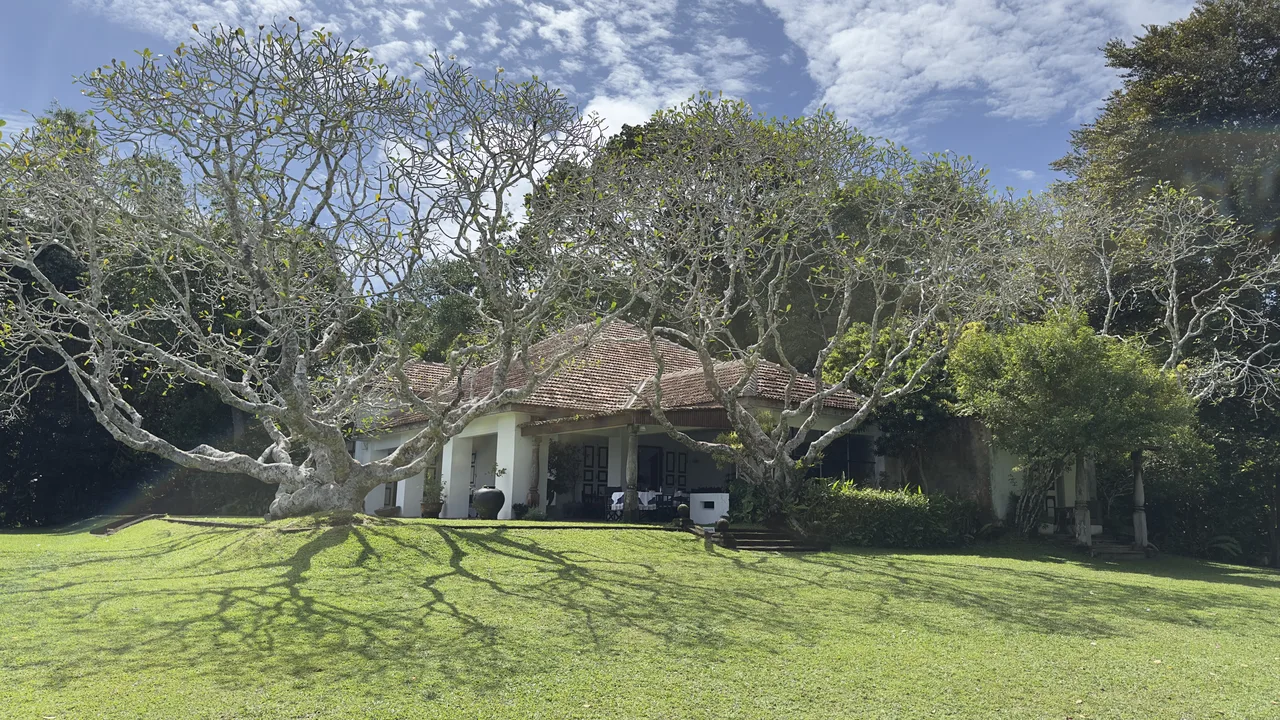
Somewhere between Colombo and Galle, where the road curves inland past a chain of brackish lagoons, a low gate opens onto a 25-acre world that changed the course of Asian architecture. A rubber estate purchased by a restless young lawyer in 1948 became, over five decades, one of the most extraordinary garden landscapes in Asia. That lawyer was Geoffrey Bawa. And the estate was Lunuganga.
Bawa went on to design the Sri Lanka Parliament Building, the Heritance Kandalama Hotel, and dozens of the most celebrated buildings in South Asia. But Lunuganga remained his laboratory, his self-portrait, and ultimately his burial place. For anyone interested in architecture, landscape design, or Sri Lanka's cultural life, a visit here belongs on the itinerary.
Lunuganga is 2 hours south of Colombo. Train or car both work well.
Getting to Bentota
Getting to Bentota
Bus fares, train times and transport options
Powered by Travelpayouts · We may earn a small commission at no extra cost to you.
Tip
Our take: Lunuganga is best visited on a weekday afternoon when tour groups have cleared. The golden-hour light on Dedduwa Lake and the absolute silence in the upper garden terrace are what Bawa intended the estate to feel like. Arriving at 3 pm and staying until closing gives you both.
A Bored Lawyer Buys a Rubber Estate
The story of Lunuganga begins with restlessness and inherited money.
Geoffrey Bawa was born in Colombo on 23 July 1919 into Sri Lanka's anglicised elite. His family background was unusually mixed: Arab and British on his father's side, Dutch Burgher and Sinhalese on his mother's. He was educated in England, qualified as a lawyer at Cambridge in 1944, and returned to Ceylon expecting to practise law.
He lasted a year at a Colombo law firm before boredom took hold. After losing both parents young and inheriting a comfortable sum, he spent years travelling the Far East, Europe, and America. Then, on the cusp of his thirtieth birthday in 1948 and in the same year Ceylon won independence from Britain, he saw an advertisement for an abandoned rubber estate on the southwest coast.
He paid 20,000 rupees for it on the spot.
The estate sat on a small peninsula jutting into Dedduwa Lake, a brackish coastal lagoon south of Aluthgama. Bawa named it Lunuganga, meaning "salt river" in Sinhala. His original plan was modest: clear the rubber trees, restore the old bungalow, and create a garden. He had in mind something in the tradition of Italian Renaissance gardens he had seen on his travels.
The problem was that he knew almost nothing about architecture or landscape design.
Note
Lunuganga's transformation from rubber estate to world-class garden took 50 years of continuous work. Bawa described it as "a garden within a larger garden" because it borrows the surrounding lake and distant hills as part of its composition.
How a Garden Turned a Lawyer into an Architect
Working on Lunuganga exposed the gaps in Bawa's knowledge. He knew what he wanted the spaces to feel like but could not translate the feeling into construction. At the age of 34, he made a radical decision. He enrolled as a student at the Architectural Association in London.
He earned his diploma in 1956 and became an Associate of the Royal Institute of British Architects in 1957. He returned to Sri Lanka at 38, a fully qualified architect with ideas that combined modernist spatial thinking with a deep understanding of tropical climate, local materials, and the vernacular architecture of Sri Lanka and South India.
That combination became his signature, and it eventually became the foundation of a movement: Tropical Modernism.
What is Tropical Modernism?
Bawa is widely credited as the original proponent of Tropical Modernism, a design approach that fuses the form-making ambitions of 20th-century Modernism with sensitivity to local landscape, climate, and culture.
In practice, this means:
- Buildings that disappear into their surroundings. Bawa routinely used existing rock formations, hillsides, and waterways as structural and visual elements. His buildings do not dominate a site; they grow from it.
- The dissolving of inside and outside. Open courtyards, overhanging verandahs, deep eaves, and water channels bring landscape into every interior. Standing inside a Bawa building, you rarely feel entirely indoors.
- Water as architecture. Reflection ponds, moats, flooded courtyards, and lake views are used not as decoration but as structural elements that define space and light.
- Local materials, honest construction. Clay roof tiles, laterite stone, rough timber, terracotta, handmade frescoes. Nothing imported that could be sourced locally.
- Sequence and procession. Bawa insisted that architecture could only be understood by moving through it. His buildings reward the walk from entrance to innermost space with a carefully choreographed sequence of compression and release, shade and light, closed and open.
The Major Works: A Sri Lanka Architecture Trail
Bawa's influence is embedded in the built landscape of Sri Lanka. An itinerary built around his key works gives a compelling structure to any visit.
Sri Lanka Parliament Building, Sri Jayawardenepura Kotte (1982)
Invited by President J.R. Jayewardene in 1979 to design a new seat of government, Bawa produced one of his most ambitious works. The Parliament sits on an artificially created island in the Diyawanna Oya marshland outside Colombo, accessible only by a causeway.
An asymmetric cluster of colonnaded pavilions surrounds a central chamber. Each pavilion sits under its own umbrella roof of patinated copper sheeting. Traditional wood and stone columns echo the great viharas and dagobas of ancient Lanka. The overall effect is of a grand palace floating on still water. It received a Heritage Award for Outstanding Architectural Design in the Tradition of Local Vernacular Architecture.
Heritance Kandalama, Dambulla (1994)
Considered by most critics and architects to be Bawa's masterpiece, the Kandalama Hotel was designed to be nearly invisible. Built into the sheer face of a hillside rock above Kandalama Lake, the building is camouflaged by foliage carefully selected to grow down over the rooftop and merge into the surrounding jungle. On approach, you see only trees.
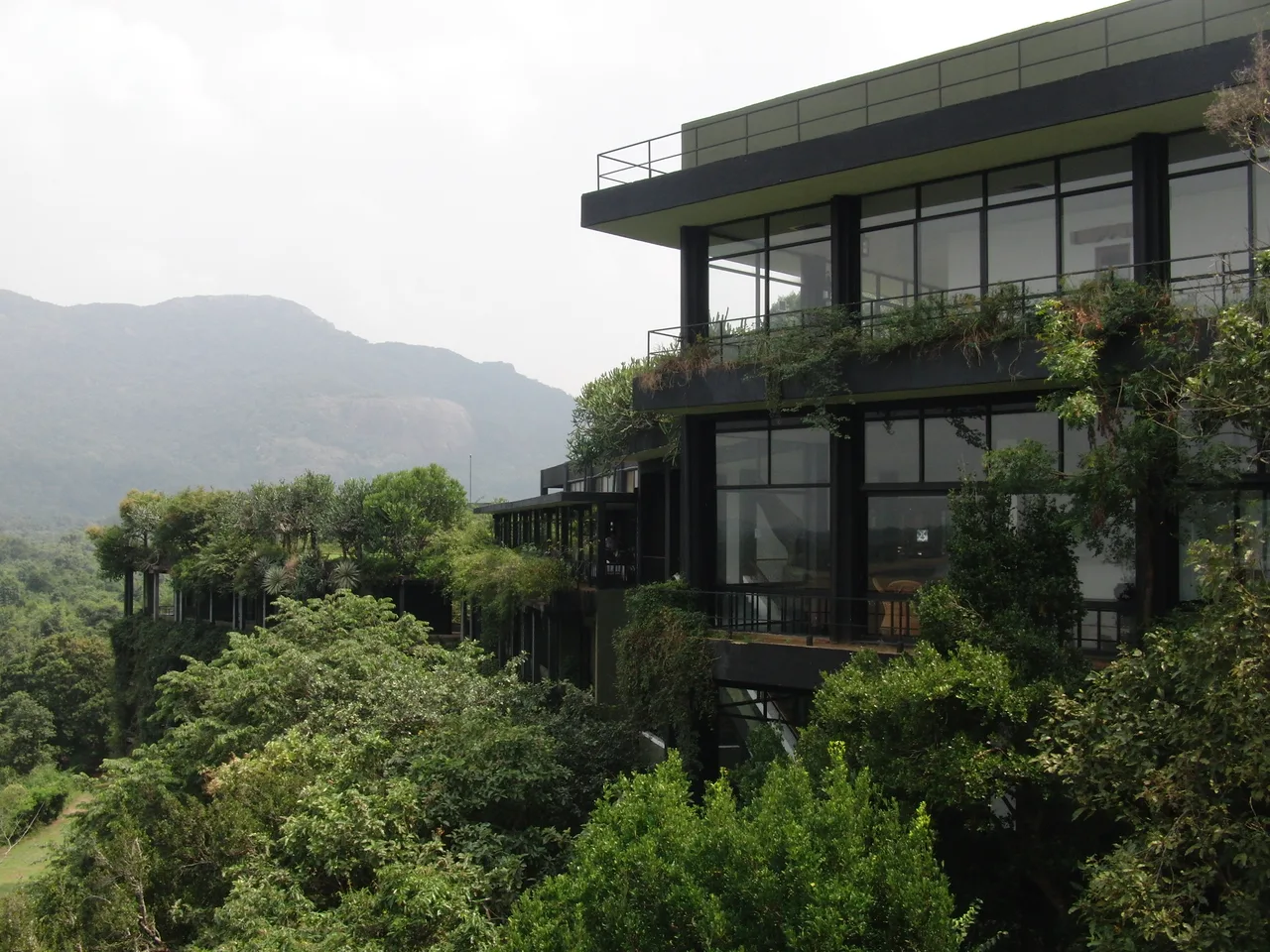
The building uses natural ventilation, rainwater harvesting, green roofs, and passive cooling, placing it decades ahead of the eco-luxury conversation. To stay overnight at Kandalama is to experience what Bawa understood: that great architecture should feel inevitable, as if the building was always meant to be exactly there.
Seema Malaka, Colombo
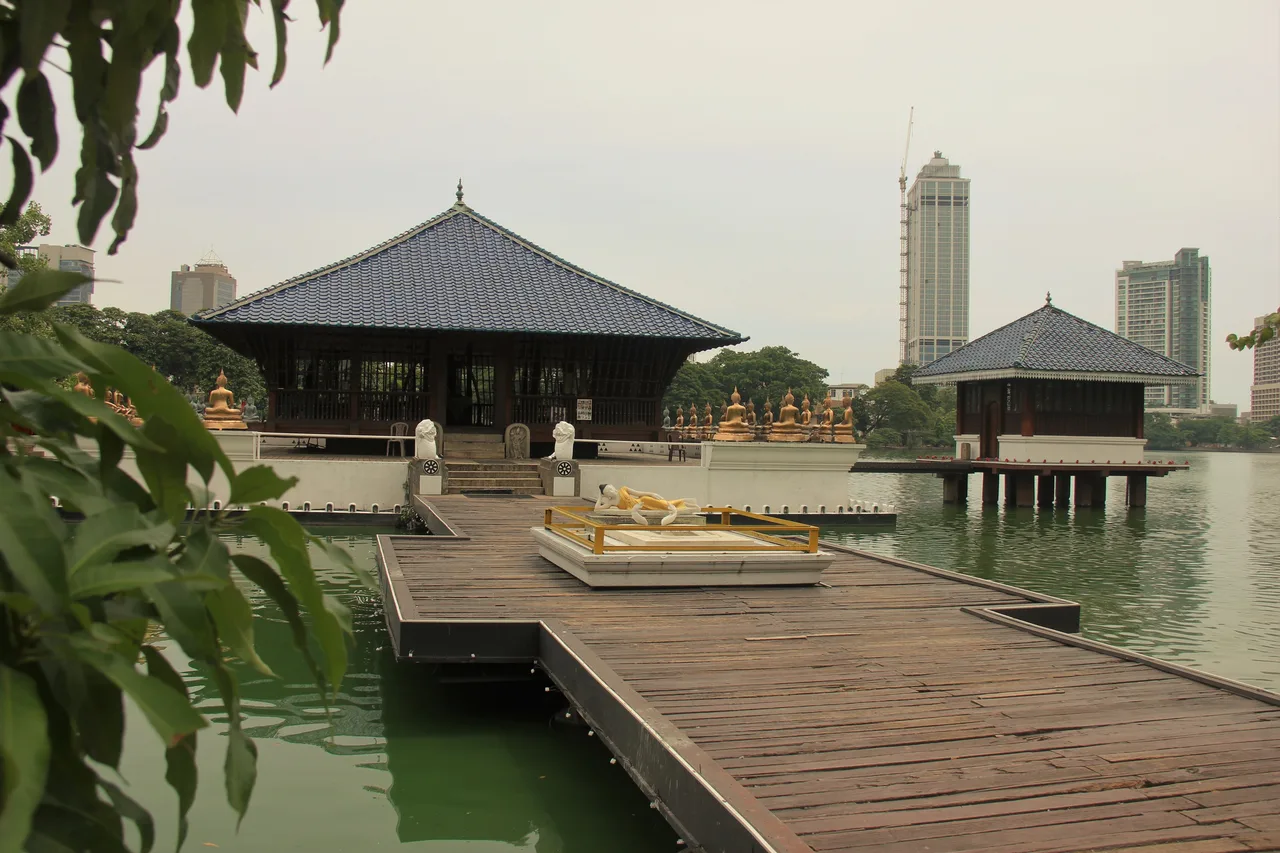
On Beira Lake in central Colombo, a series of low timber platforms extend over the water as a floating Buddhist meditation temple. There are no solid walls; the lake and sky are the walls. Monks sit beneath the overhanging eaves while the city traffic moves invisibly on the embankment behind. It is one of Bawa's most serene and most visited works, and one of the few buildings in Colombo worth crossing the city to see.
Number 11, 33rd Lane, Colombo
Bawa's personal home and studio, acquired in 1959 as a single terraced house and expanded over 40 years into a labyrinthine composition merging four adjacent row houses. Rooms, courtyards, staircases, and galleries accumulate without any obvious plan, yet every transition feels exactly right.
Now managed by the Geoffrey Bawa Trust as a museum, Number 11 is open to guided tours. It is filled with art and artefacts from his travels: salvaged architectural fragments from South Indian temples, works by painter Donald Friend, sculptures by Laki Senanayake, Chinese water tanks from the Portuguese colonial period. The line between domestic, studio, and gallery space is deliberately blurred. A visit here is essential context for understanding Lunuganga.
Heritance Ahungalla (formerly Triton Hotel), Ahungalla (1981)
A landmark five-star beach resort designed around a central courtyard occupied entirely by a still reflection pond. Traditional Buddhist temple architecture, Dutch fort structures, and Sinhalese vernacular elements combine into a plan of quiet structural elegance. The overhanging upper floors and the stillness of the internal water garden make it one of the most photographed Bawa interiors.
Tip
To experience Bawa's range in a single trip, stay one night at Heritance Kandalama (Dambulla), drive the road south to visit Lunuganga (Bentota), and end in Colombo with a guided tour of Number 11. This loose route follows the spine of Sri Lanka and adds considerable depth to a standard beach-and-temples itinerary.
Lunuganga: The Garden in Detail
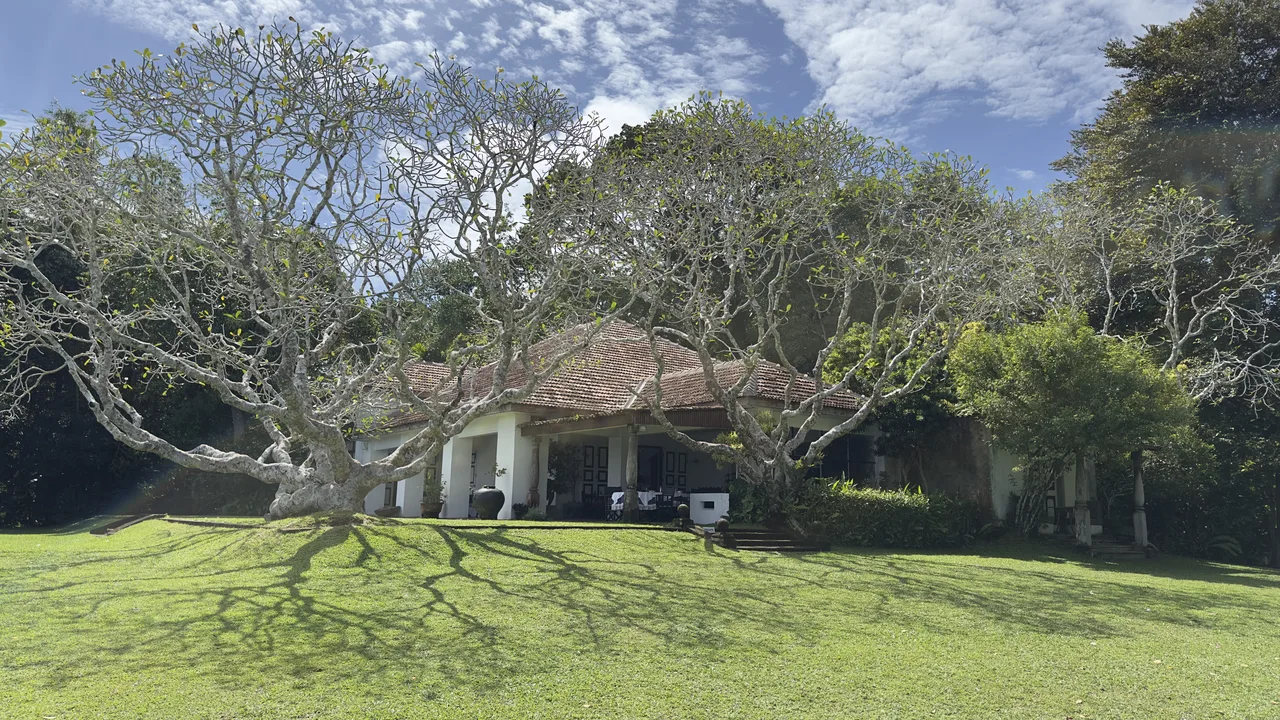
While Bawa's commercial buildings draw the architecture press, it is Lunuganga that holds the deepest layer of his personality. He worked on it for 50 continuous years, using it as a testing ground for ideas later applied at larger scale in his client projects.
The design concept draws from Italian Renaissance gardens, English landscape tradition, Japanese garden art, and the ancient water gardens of Sri Lanka, then synthesises all of these into something wholly original and tropical. Bawa described the estate as "a garden within a larger garden" because it borrows the surrounding lake, the distant hills, and the sky as part of its composition. The boundaries between the designed landscape and the wider natural one are kept deliberately porous.
The layout follows a principle of garden rooms: distinct spaces each with their own atmosphere, focal point, and planting scheme, connected by covered walkways, grass paths, and stone terraces.
The Red Terrace
Named for its surface of warm laterite stone, the Red Terrace is Bawa's favourite outdoor dining spot and the social heart of the estate. It looks out over the water garden and the shimmer of Dedduwa Lake beyond. A long refectory table with mismatched chairs, a vine-covered pergola, the sound of birdsong and water. Lunch here is still served for day visitors and overnight guests.
Cinnamon Hill
A central terrace with a sweeping vista in two directions over the lake. To create it, Bawa had a hill levelled and its summit removed so that a specific view from the bungalow would open up. At the summit stands an ancient Moonamal tree, and near it a large Ming vase brought from a trading house in Colombo. The original tree has since been replaced, but the vase remains.
Geoffrey Bawa's Resting Place
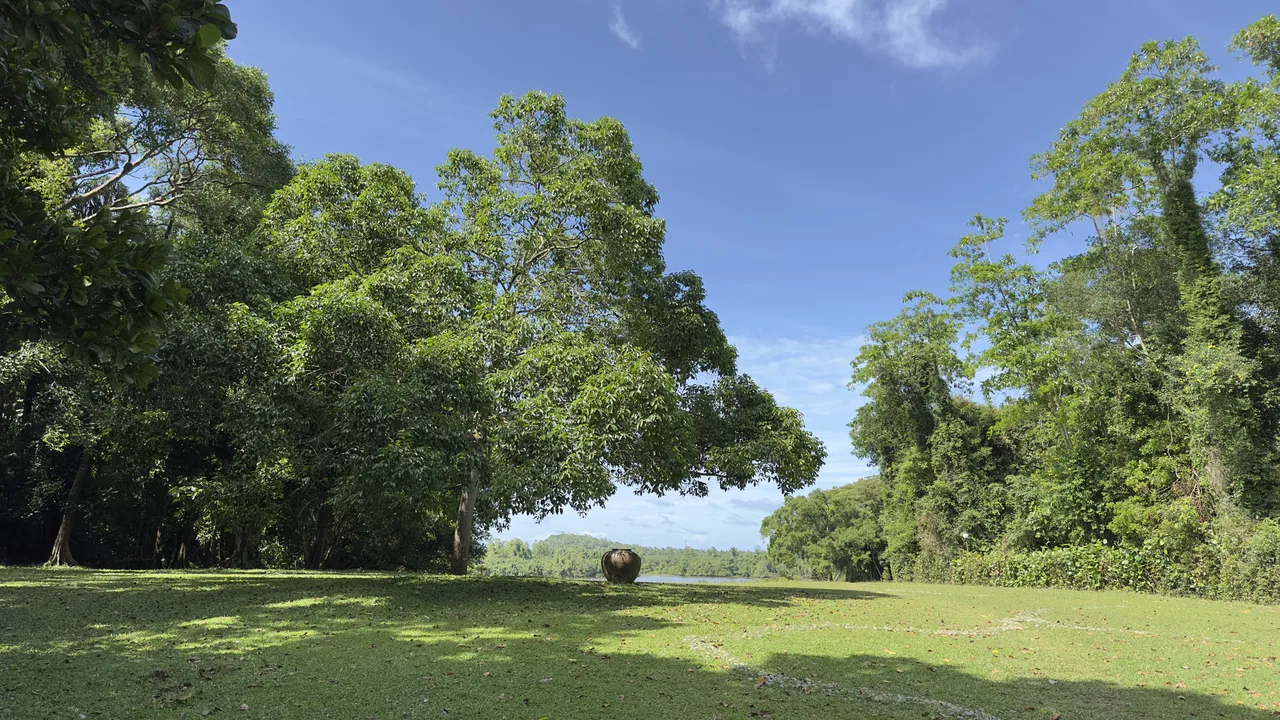
Bawa chose Cinnamon Hill as his burial place. A simple flat stone marker sits beneath the trees, unornamented and without ceremony. To stand here after walking the garden he spent half a century building is one of the more quietly moving experiences available in Sri Lanka.
The Gate House and Donald Friend
Near the entrance, the Gate House carries a large mural by Donald Friend, an Australian painter and one of Bawa's closest collaborators and friends. Friend lived at Lunuganga for several years during the 1960s, and his work is scattered throughout the estate. The Gate House mural is a vivid figurative piece, tropical in palette and tone.
Art and Objects
Lunuganga is as much a collection as it is a garden. Bawa filled every terrace and interior with objects gathered on his travels: stone urns from Italy, Chinese water tanks from Sri Lanka's Portuguese colonial period, hand-carved sculptures by architect assistants, fragments of South Indian temple stonework. Nothing was placed carelessly. Each object has a relationship to its site, to the light at a particular time of day, and to the views it frames or disrupts.
How to Visit Lunuganga
Getting There
Lunuganga is located near Bentota on the Dedduwa Lake, approximately 2 hours south of Colombo by road. Take the Southern Expressway (E01) toward Galle and exit at Aluthgama/Bentota.
By train, the Coastal Line from Colombo Fort reaches Aluthgama station in about 2 hours. A tuk-tuk from the station to the estate takes 10 to 15 minutes.
The estate pairs naturally with a beach stay in Bentota, which is one of Sri Lanka's main beach resort areas. Brief Garden, the equally remarkable garden of Bawa's brother Bevis, is also nearby.
Guided Day Tours
| Detail | Info |
|---|---|
| Tour times | 11:00 a.m., 2:00 p.m., 3:00 p.m. daily |
| Standard admission | USD 20 (foreign visitors) / LKR 3,500 (local adults) |
| Children under 7 | Free |
| Private guided tour | USD 50 per person (max 10), includes refreshments |
| Booking | geoffreybawa.com/tours |
Tours last approximately 60 to 90 minutes on foot. Payment accepted in cash or card in USD or LKR. The terrain involves steps, inclines, and uneven surfaces throughout.
Overnight Stays
Lunuganga operates as a boutique heritage guesthouse with 9 rooms, many occupying uniquely designed outbuildings scattered across the grounds. Every room is furnished and preserved exactly as Bawa intended. Overnight rates are approximately USD 400 to 500 per night, including breakfast, afternoon tea, complimentary drinks, and a private guided garden tour.
The Geoffrey Bawa Suite occupies his former bedroom, with a private pool and views over the water garden. It is the most sought-after room in the estate.
The guesthouse is operated by Teardrop Hotels.
Bentota has excellent hotels from boutique to resort. Pair with Lunuganga for an unforgettable cultural stay.
Stay Near Lunuganga
Hotels near Bentota
Compare prices across Booking.com, Agoda & more
Powered by Travelpayouts · We may earn a small commission at no extra cost to you.
The Legacy
Geoffrey Bawa suffered a massive stroke in 1998, ending his active career. He died in Colombo on 27 May 2003, aged 83.
Three years before his death, he received the Aga Khan Award for Architecture's Chairman's Award, one of the highest honours in world architecture, given for lifetime achievement. The citation described him as "the timeless choreographer of space."
His influence on Sri Lankan architecture is total. A generation of architects trained under him or in his orbit, and the tropical-modernist language he developed has become the dominant vocabulary of high-quality hotel and residential design across South and Southeast Asia. You see it in how villas are built in Bali, how resorts are designed in southern India, how urban houses in Colombo are opened to courtyard and sky.
The Geoffrey Bawa Trust now manages Lunuganga, Number 11, and his archive. Both properties are accessible to visitors and both reward extended time and serious attention.
If Sri Lanka has a single figure whose work encapsulates what is most distinctive and most original in the country's cultural life, it is Geoffrey Bawa. And if you want to understand that work at its most personal, the place to start is a low gate near Bentota, and a garden that began with a bored lawyer and a rubber estate.
Combine a Lunuganga visit with flights, accommodation and transport across Sri Lanka.
Plan Your Sri Lanka Trip
Find the best price to Colombo from your city
Search Flights →Compare prices across Booking.com, Agoda & more
Find Hotels →Bus fares, train times and transport options
Plan Transport →Powered by Travelpayouts · We may earn a small commission at no extra cost to you.
Related Guides
- Maduwanwela Walawwa: Sri Lanka's Most Magnificent Royal Manor
- Sri Lanka's Traditional Masks: The Art, the Ritual and Where to Find Them
- Angampora: Sri Lanka's Ancient Martial Art That Survived a Colonial Ban
Advertisement
Flights, hotels and tours - all in one place.
Plan Your Sri Lanka Trip
Find the best price to Colombo from your city
Search Flights →Compare prices across Booking.com, Agoda & more
Find Hotels →Bus fares, train times and transport options
Plan Transport →Powered by Travelpayouts · We may earn a small commission at no extra cost to you.
Leave a Comment
Share your thoughts, questions, or travel experiences