
Tucked between Embilipitiya and Rakwana in the Sabaragamuwa Province, an extraordinary piece of Sri Lanka's royal history stands quietly overlooking a forgotten valley. Maduwanwela Walawwa is a grand manor house that once commanded 83,000 acres of land, housed 121 rooms, and sheltered the most powerful chieftain in southern Sri Lanka. It is one of the island's most overlooked yet genuinely spectacular heritage sites.
This is not a reconstructed tourist attraction. It is the real thing: an ancient royal residence with original furniture, a functioning courthouse, a sacred well beneath a centuries-old Kumbuk tree, and stories that stretch from the era of Kandyan kings all the way to the British colonial period.
Getting to Maduwanwela Walawwa requires planning. It's 207 km from Colombo.
Getting to Ratnapura
Bus fares, train times and transport options
Powered by Travelpayouts · We may earn a small commission at no extra cost to you.
Tip
Our take: Maduwanwela Walawwa is one of the most consistently undervisited heritage sites in Sri Lanka. The 18th-century architecture and the estate's connection to Kandyan-era politics make it genuinely interesting, but most itineraries skip it entirely in favour of more famous sites. That is exactly why it is worth stopping.
What is a Walawwa?
Before arriving at Maduwanwela, it helps to understand what a walawwa actually is. The word, roughly translating as "manor" or "mansion", refers to the grand residences of Sri Lanka's hereditary chieftains and high-ranking nobility under the Kandyan kingdom. These were not merely large houses. A walawwa was a seat of local government, a courthouse, a symbol of royal authority, and a self-contained community.
The owners of walauwas, including the Disawas, Rate Mahatmayas, and Mudaliyars, held enormous power. They collected taxes, dispensed justice, and answered directly to the king. Their homes reflected this authority: vast complexes of interconnected rooms, inner courtyards (meda midulas), and lands that stretched to the horizon.
Note
Walawwa literally means "manor house" in Sinhala. These historic residences were the administrative and judicial centres of their regions, not merely family homes.
The History of Maduwanwela Walawwa
The story of Maduwanwela Walawwa begins in the late 17th century during the reign of King Vimaladharmasuriya II (1687–1707 AD).
An ancestor of the Maduwanwela family is said to have earned an extraordinary land grant from the king: 54,000 acres of the Panamura estate, gifted in return for delivering the head of a Portuguese general. This was the foundation on which the dynasty, and eventually the walawwa, would be built.
The first structure on the current site was erected by Maduwanwela Maha Mohottala around 1700 AD. Over the following two centuries, successive generations of the Maduwanwela family expanded, renovated, and embellished it. By its peak in the 1900s, the walawwa comprised:
- 121 rooms spread across multiple wings
- 21 inner courtyards (meda midulas), open-air gardens set within the walls
- 3 stone arches and watchtowers at the perimeter
- A full courthouse with seating for 100 people, where the Disawa dispensed justice
- Surrounding lands of 82,000 to 83,000 acres across the Kolonne, Panamura, Walakada, and Kempane regions
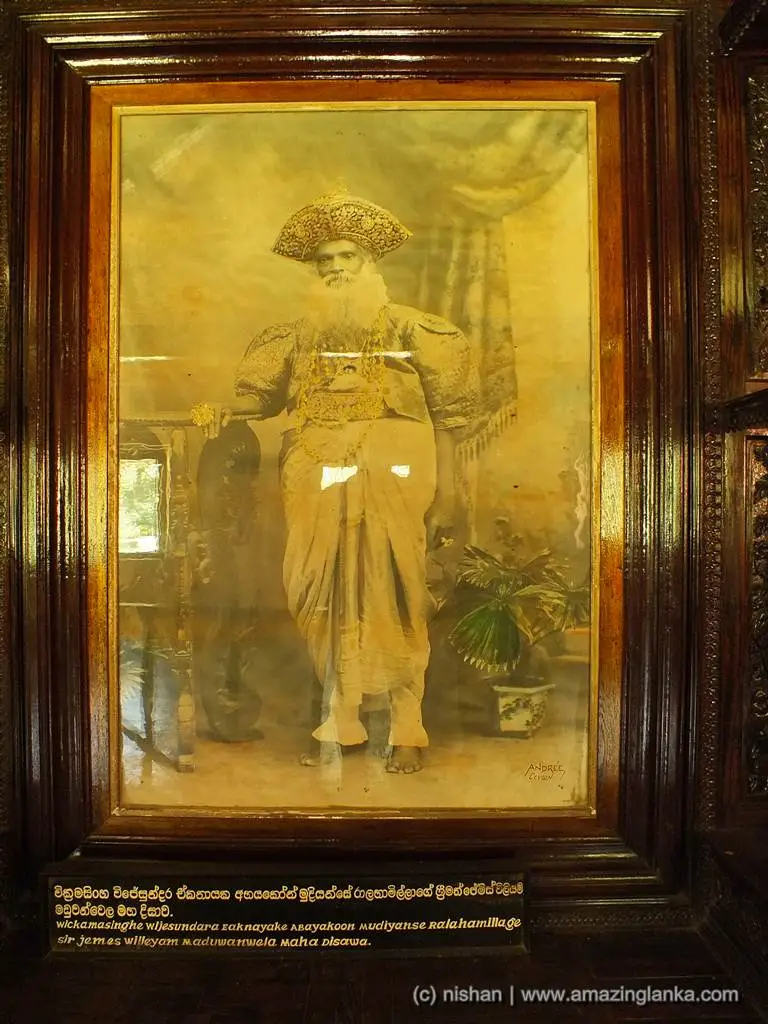
The final chapter of the walawwa's family era was written by Maduwanwela Maha Disawe (1844–1930), Sir James William Maduwanwela, who completed the final major renovation in 1905, laying the terracotta roof tiles that still survive in excellent condition today.
A man of extraordinary wealth, he built his fortune through timber trading, gem mining, and elephant kraals, including the famous Panamure Elephant Kraal. He inherited 83,000 acres, married twice, and died without a male heir. His estate passed to his nephew, Sir Francis Molamure.
In 1974, the Maduwanwela Walawwa was taken over by the Sri Lankan state through the Land Reform Commission and placed under the administration of the Department of Archaeology, which converted it into a protected museum.
Maduwanwela is best visited as an overnight trip from Colombo or Ratnapura.
Stay in the Sabaragamuwa Region
Hotels near Ratnapura
Compare prices across Booking.com, Agoda & more
Powered by Travelpayouts · We may earn a small commission at no extra cost to you.
What to See at Maduwanwela Walawwa
Though the years have reduced the original 121 rooms to 43 rooms across 7 remaining inner courtyards, what remains is astonishing.
The Rooms and Courtyards
Walk through the labyrinthine corridors and you step into different eras. Some rooms retain original period furniture: dark carved-wood chairs, four-poster beds, and colonial writing desks. Others display artefacts from the Maduwanwela family's centuries-long rule.
The meda midulas (inner courtyards) are the walawwa's most atmospheric feature: open sky above, ancient clay tiles underfoot, and a stillness that makes it easy to imagine the chieftain receiving supplicants here centuries ago.
The Courthouse
The most historically significant structure within the walawwa is its courthouse, a formal chamber where the Maduwanwela Disawa administered justice over his vast domain. Original seating for 100 people remains, along with preserved punishment equipment from the colonial era. It is a sobering reminder of the absolute authority these chieftains held.
An oath sworn at this courthouse was considered legally binding within the community, a tradition that reportedly continued long after independence.
The Kumbuk Tree and Sacred Well
In the garden stands an ancient Kumbuk tree (Terminalia arjuna) of extraordinary size, beneath which lies a well called "Kumbuke Linda". This well is remarkable: local tradition holds that the Kumbuk tree's roots purify the water, and the well was essential to the walawwa's self-sufficiency for centuries.
Tip
Visitor Tip: Arrive early in the morning when the inner courtyards catch the best light for photography. The late afternoon light on the terracotta roof tiles is equally beautiful. Avoid weekends when local school groups visit.
The Name: Why "Maduwanwela"?
The name itself has a story. "Maduwan" in Sinhala means buffalo, the Sinhala word for wild buffalo. The Maduwanwela area was once rich in buffalo, and the estate and family took their name from this abundance. The name translates roughly as "the flat land of the buffalo."
How to Get to Maduwanwela Walawwa
The walawwa is located in Kolonna, Ratnapura District, approximately 207 km from Colombo.
By Private Car or Taxi (Recommended)
The easiest route:
- Take the Colombo–Ratnapura highway (A004)
- Continue through Ratnapura toward Embilipitiya
- At the Udawalawa junction, turn right onto the Ranchamadama road (approximately 1.5 km from junction)
- Head toward Panamura Junction
- Continue toward Kolonna. The walawwa will be on your left.
Journey time: approximately 3.5 to 4 hours from Colombo.
A private driver or tuk-tuk from Embilipitiya (20 km away) is the most practical option.
By Bus from Colombo
Take a bus from Colombo (Bastian Mawatha) toward Embilipitiya or Kolonna. Several services depart daily. From Embilipitiya, hire a tuk-tuk to Maduwanwela (approximately 20–25 km, 30–40 minutes).
Most international visitors fly into Bandaranaike International Airport (CMB) in Colombo.
Flying to Sri Lanka?
Flights to Sri Lanka
Find the best price to Colombo from your city
Powered by Travelpayouts · We may earn a small commission at no extra cost to you.
Practical Information
| Detail | Information |
|---|---|
| Location | Kolonna, Ratnapura District, Sabaragamuwa Province |
| Distance from Colombo | 207 km |
| Open | Tuesday to Sunday |
| Managed by | Department of Archaeology, Sri Lanka |
| Entry fee | Nominal fee payable at entrance |
| Best time to visit | December to April (dry season) |
| Photography | Permitted throughout grounds |
| Accessibility | Mostly flat, accessible for most visitors |
Important
Note on preservation: The walawwa and its grounds have suffered from encroachment by neighbouring residents. The Department of Archaeology has undertaken renovation works. When you visit, please respect the boundaries and help preserve this extraordinary piece of Sri Lankan history.
Combine Your Visit: Nearby Attractions
Maduwanwela is perfectly positioned for a multi-day Sabaragamuwa circuit.
Udawalawe National Park is just 30 km away and one of Sri Lanka's finest wildlife reserves for elephant sightings.
Sinharaja Forest Reserve is a UNESCO World Heritage rainforest, 60 km northwest.
Ratnapura, known as the City of Gems, is 90 km north. The district produces Sri Lanka's finest blue sapphires, rubies, and cat's eyes, and the Ratnapura Gem Museum is well worth a visit.
Embilipitiya is the nearest town for accommodation, restaurants, and transport connections.
Sri Lanka's Walawwa Heritage: Broader Context
Maduwanwela is one of approximately a dozen significant walauwas still standing in Sri Lanka, though the majority are in various states of decay, private occupation, or restricted access. The Kandyan period (1469–1815) produced a remarkable architectural tradition that is now largely invisible to the standard tourist circuit.
Other significant walauwas:
- Sinharaja Walawwa (Sinharaja area): Close to the UNESCO rainforest; privately owned, limited access.
- Atabage Walawwa (Ratnapura district): A smaller but well-preserved example of the Sabaragamuwa tradition.
- The Walauwas of Kandy: Several survive in modified form as government offices or institutions; the architecture is visible but the domestic character is lost.
The Department of Archaeology manages only a small number of these properties as public heritage sites. Maduwanwela is the most intact and most accessible of the publicly managed walauwas in Sri Lanka, which is a strong argument for visiting it while it is still maintained.
Why are so few walauwas preserved? The 1972 Land Reform Act, which transferred large estates to the state, also transferred or redistributed many walawwa properties. Without the original families as custodians, and without sufficient state resources for active preservation, many have deteriorated. Maduwanwela's placement under the Department of Archaeology in 1974 - despite the imperfect resources available - saved the most important parts.
Photography at Maduwanwela Walawwa
The walawwa is genuinely photogenic in ways that most heritage sites in Sri Lanka are not:
The meda midulas (inner courtyards): Shooting from ground level across the courtyard with the terracotta roof tiles above creates strong architectural lines. Early morning and late afternoon light falls directly into the open-sky courtyards.
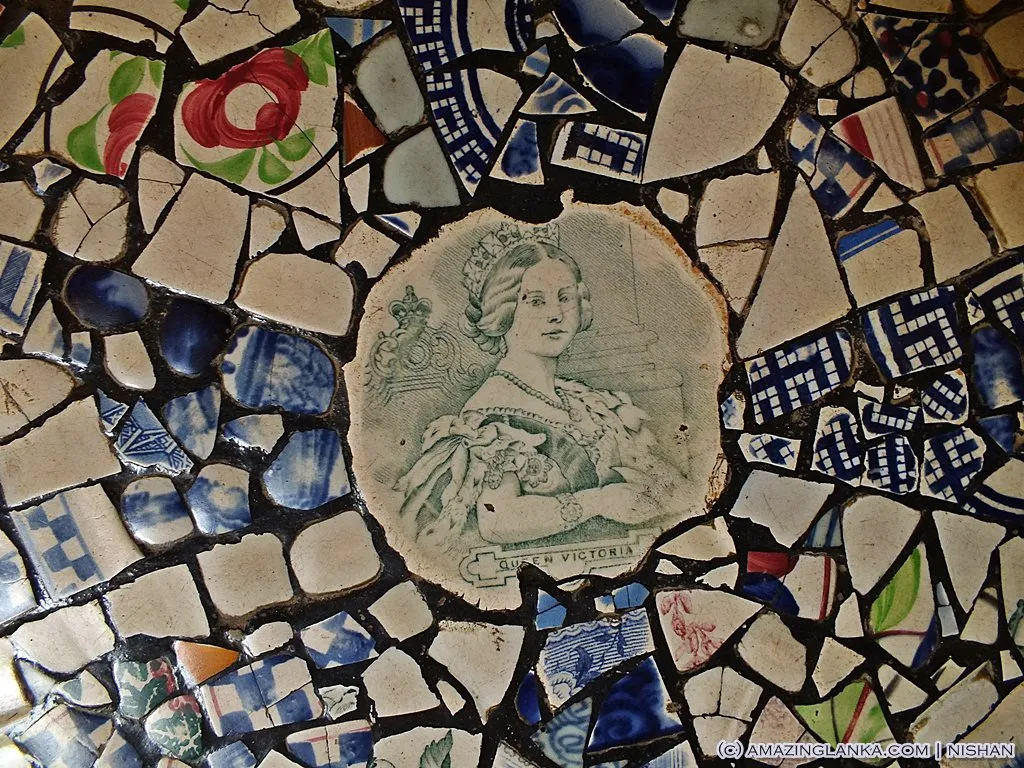
The mosaic floor rooms: The broken-porcelain mosaic tiles - floors inlaid with fragments of European crockery in geometric patterns - are extraordinary close-up. A macro or standard prime lens at 50mm captures the detail better than a wide shot.
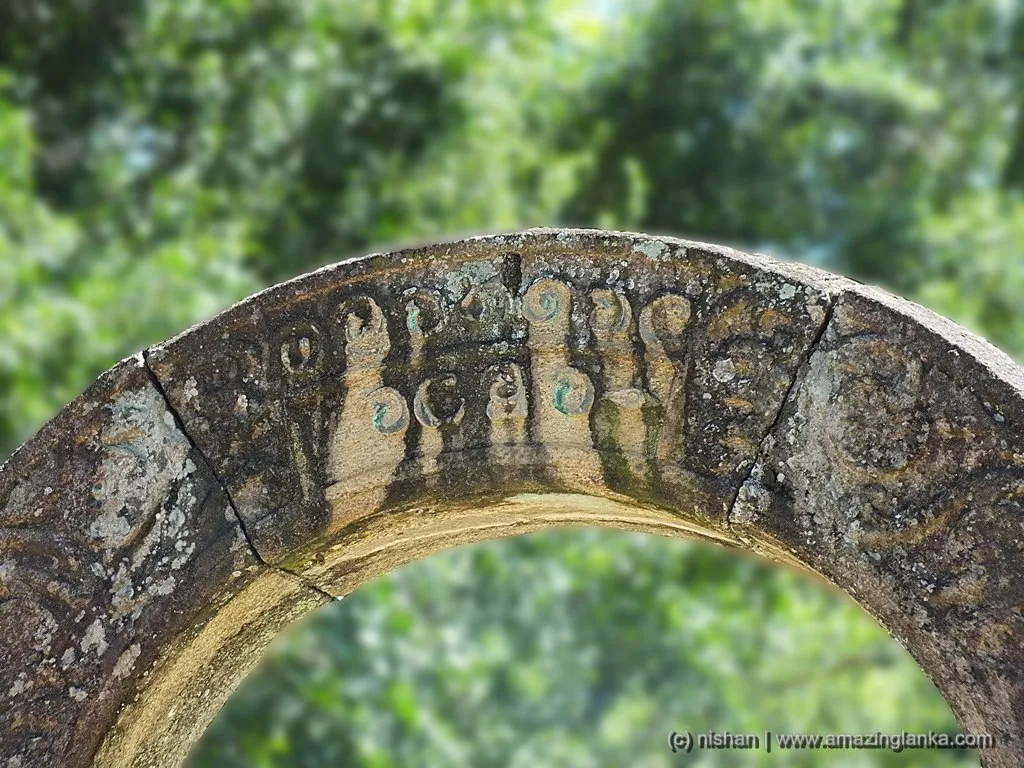
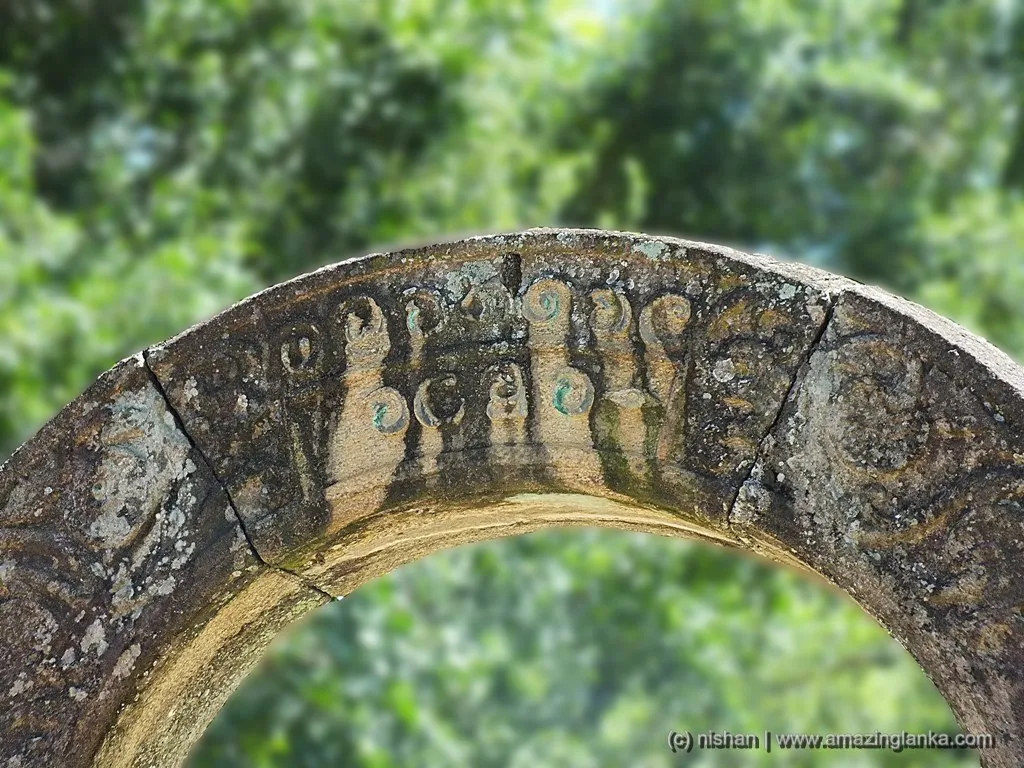
The stone arches: Three original stone arches with Sinhala inscriptions from the 18th century. The worn letters are most legible in raking light (late afternoon, sun low and angled).
The Kumbuk tree: The ancient tree with its massive trunk and the sacred well beneath it is best photographed before 9 am when the light enters the garden area. Afternoon shade makes it darker and more atmospheric for different effect.
Photography is permitted throughout the grounds. Ask permission before photographing the site's custodians or workers.
Why Maduwanwela Walawwa Deserves More Visitors
Sri Lanka's heritage circuit tends to cluster around the Cultural Triangle (Sigiriya, Dambulla, Polonnaruwa) and the southern coast. Maduwanwela receives a fraction of the visitors those sites see. That is precisely what makes it so special.
Here you will not find crowds. You will find silence, history, and the rare privilege of walking through a 300-year-old royal estate that feels entirely unlocked, as if the Maha Disawa himself has simply stepped out for a moment and might return at any time.
This is the Sri Lanka that most tourists never find. The walawwa stands as a living archive of Kandyan nobility, colonial complexity, and a family dynasty that shaped southern Sri Lanka for more than two centuries.
Frequently Asked Questions
Is Maduwanwela Walawwa open to the public? Yes. The walawwa is managed by the Department of Archaeology and open Tuesday to Sunday. Entry requires a nominal fee payable at the entrance. It is not heavily publicised as a tourist attraction, which means visitor numbers are low - this works in your favour for a quiet, uncrowded experience.
How long does a visit take? Plan for 1.5 to 2 hours for a thorough visit including the courtyards, the courthouse, the Kumbuk tree, and the main rooms. A quick walk-through takes 45 minutes. If you have a genuine interest in Sri Lankan heritage, give it 2 hours.
Do I need a guide? A guide adds significant value at Maduwanwela because the architectural and historical details are not well-labelled in English. Ask at the entrance whether a guide is available (fees are usually LKR 500–800). The guards sometimes have family connections to the estate and will share stories not found in any guidebook.
Is it possible to visit Maduwanwela and Udawalawe on the same day? Yes - Udawalawe National Park is 30 km from the walawwa. A morning at Maduwanwela (arrive around 8:30 am) followed by an afternoon Udawalawe safari (gate opens 2 hours before sunset) is a full but manageable day. Arrange a private vehicle for this combination.
Is Maduwanwela suitable for children? The walking is easy and the scale of the building - 121 rooms, inner courtyards, watchtowers - is genuinely impressive to children. The courthouse with its preserved punishment equipment may need some contextual introduction. The Kumbuk tree and well are usually popular with younger visitors.
What should I bring to Maduwanwela? Comfortable walking shoes (some floors are uneven), sunscreen for the outdoor courtyard sections, and a camera. Cash for the entry fee and guide tip - cards are unlikely to be accepted. Water, as there are no facilities selling refreshments on site. The nearest town for food is Embilipitiya (20 km).
External references:
- Maduwanwela Walawwa on Sinhala Wikipedia
- Maduwanwela Walawwa on English Wikipedia
- Department of Archaeology, Sri Lanka
Ready to visit Maduwanwela and explore the Sabaragamuwa Province?
Plan Your Sabaragamuwa Journey
Find the best price to Colombo from your city
Search Flights →Compare prices across Booking.com, Agoda & more
Find Hotels →Bus fares, train times and transport options
Plan Transport →Powered by Travelpayouts · We may earn a small commission at no extra cost to you.
Related Guides
- Angampora: Sri Lanka's Ancient Martial Art That Survived a Colonial Ban
- Sri Lanka's Traditional Masks: The Art, the Ritual and Where to Find Them
- Geoffrey Bawa and Lunuganga: Sri Lanka's Greatest Architect and His Garden of Dreams
Advertisement
Flights, hotels and tours - all in one place.
Plan Your Sri Lanka Trip
Find the best price to Colombo from your city
Search Flights →Compare prices across Booking.com, Agoda & more
Find Hotels →Bus fares, train times and transport options
Plan Transport →Powered by Travelpayouts · We may earn a small commission at no extra cost to you.
Leave a Comment
Share your thoughts, questions, or travel experiences
Keep Exploring
 Culture
9 min read
Sri Lanka's Traditional Masks: The Art, the Ritual and Where to Find Them
Read → Heritage
12 min read
Geoffrey Bawa and Lunuganga: Sri Lanka's Greatest Architect and His Garden of Dreams
Read → Culture
10 min read