Tip
Quick answer: Trincomalee's standout combination is Nilaveli Beach (one of Sri Lanka's finest stretches of sand), Pigeon Island snorkelling (the best coral reef on the east coast), and world-class diving on the HMS Hermes - a WWII aircraft carrier wreck. Whale shark season runs May–October. Stay 3–4 nights: Trinco is an unhurried destination where the beaches, the marine life, and the colonial fort reward time. It pairs naturally with Arugam Bay on an east coast leg.
Trincomalee is Sri Lanka's great under-visited destination - a natural harbour city on the northeast coast with a colonial fort on a sea-cliff, ancient Hindu temples, arguably the island's finest white-sand beaches, and a marine environment that includes one of the largest known aggregations of whale sharks in the Indian Ocean.
The city has historically been overshadowed by Sri Lanka's more accessible south coast - the journey from Colombo is long - but travellers who make the effort find a destination that combines heritage, wildlife, and beach quality in a way that few places on the island can match. The east coast dry season (May–September) gives Trincomalee its best weather while the south and west coasts are in monsoon, making it a logical complement to the standard tourist circuit.
Tip
Our take: We visited Trincomalee in July - the height of east coast season - and found it genuinely beautiful and dramatically less crowded than the south coast in December. The Fort Frederick viewpoint at sunset over Swami Rock is one of the best views on the island.
The Beaches
Nilaveli Beach
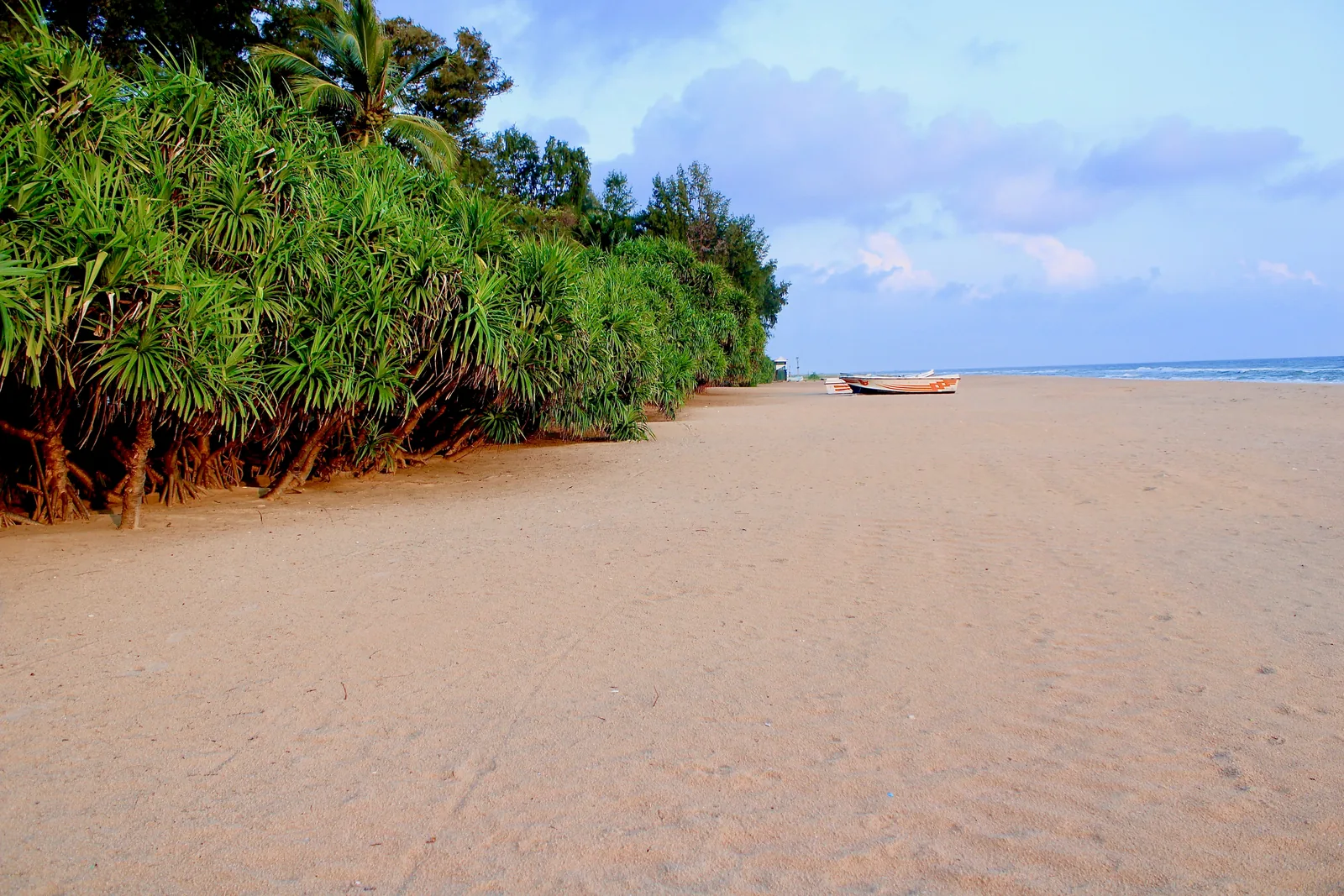
16 km north of Trincomalee town, Nilaveli is consistently ranked among the finest beaches in Sri Lanka. The beach stretches for approximately 4 km - wider and longer than Mirissa or Unawatuna - with fine white sand, shallow turquoise water, and the calm conditions produced by the sheltered orientation of the coast during the dry season.
Development at Nilaveli is lighter than on the south coast: the beach road has a modest line of guesthouses and a handful of restaurants, but the beach itself retains an unhurried quality. In high season (June–August) the beach fills with Sri Lankan domestic tourists as well as international visitors; outside these months it can be almost empty.
Swimming: Excellent from May through September, when the northeast coast is in its dry season and waters are calm. The gradual slope of the beach makes it safe for families. From October, the northeast monsoon brings choppy seas and periodic rain - not ideal for swimming.
Whale shark watching: Nilaveli is the primary departure point for whale shark snorkelling trips. See the dedicated section below.
Uppuveli Beach
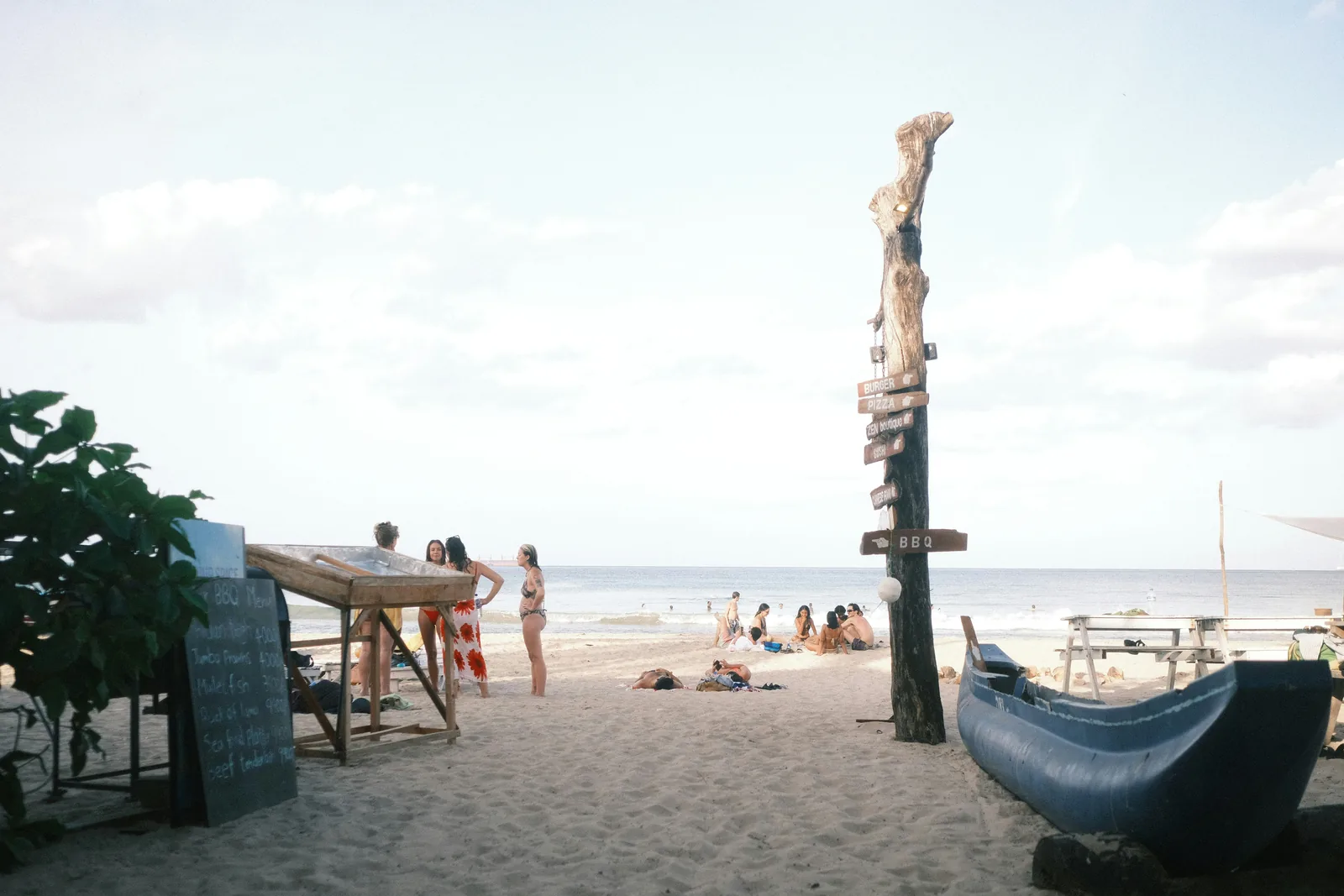
5 km north of Trincomalee town - closer than Nilaveli, with a slightly more active beach village. The accommodation concentration is higher here, restaurants are within walking distance of the beach, and the atmosphere is slightly livelier. The beach is good but shorter and narrower than Nilaveli; the water quality is similar.
Commonwealth War Cemetery: On the road between Trincomalee town and Uppuveli, the war cemetery contains the graves of Allied servicemen killed in the Indian Ocean theatre during the Second World War - including those lost during the Japanese raid of April 1942 that sank HMS Hermes (the dive site described below). Well-maintained and sobering; worth a short stop.
Marble Beach
8 km south of Trincomalee town, within the Trincomalee naval base area. Access requires a civilian permit (obtainable at the base entrance). The beach earned its name from the smooth, marble-white sand that lines a sheltered cove. The protected access keeps crowds low; the naval base location means the surrounding water is particularly clean.
Practical note: The permit system means Marble Beach is not accessible without advance planning - check current access arrangements with your hotel. The beach is closed on certain days. For those who make it, it is one of the least-visited quality beaches on the east coast.
Pigeon Island National Park
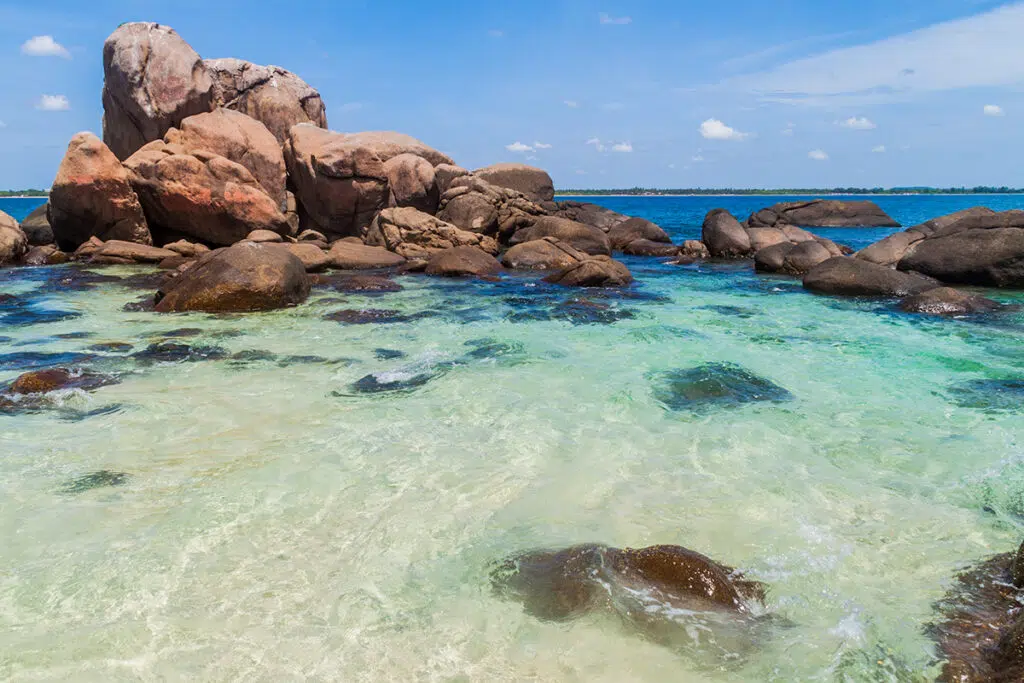
3 km offshore from Nilaveli, Pigeon Island is a marine national park and one of the best snorkelling destinations in Sri Lanka. The coral reef fringing the island supports a dense population of reef fish, sea turtles, and blacktip reef sharks - the sharks are small (1–1.5 metres) and non-aggressive, making encounters thrilling rather than dangerous.
What you'll see: Staghorn and table coral fields (partially recovered from bleaching events but still extensive), parrotfish, triggerfish, butterflyfish, and the reef sharks that are Pigeon Island's signature wildlife. Sea turtles are regularly encountered on the southern reef.
Boat trips: Boats depart from Nilaveli Beach from around 7:30 am. The crossing takes 20–25 minutes. Shared boat trips cost LKR 2,500–3,500 per person including snorkel equipment; private boat hire from LKR 5,000. Spend 60–90 minutes at the island for two or three snorkel sessions on different reef sections.
Admission: LKR 1,500 national park fee for foreign visitors, paid on arrival at the island.
Diving: Pigeon Island is also suitable for beginner and intermediate scuba divers - the shallow reef (8–18 metres) offers easy certification dives and fun-dives with good visibility (typically 15–20 metres in the dry season). Several dive operators in Nilaveli and Uppuveli offer guided dives.
Best time: May–September. Visibility is highest June–August when the monsoon cloud has cleared. The park is technically open year-round but northeast monsoon conditions (October–January) make the crossing rough and visibility poor.
Whale Shark Season
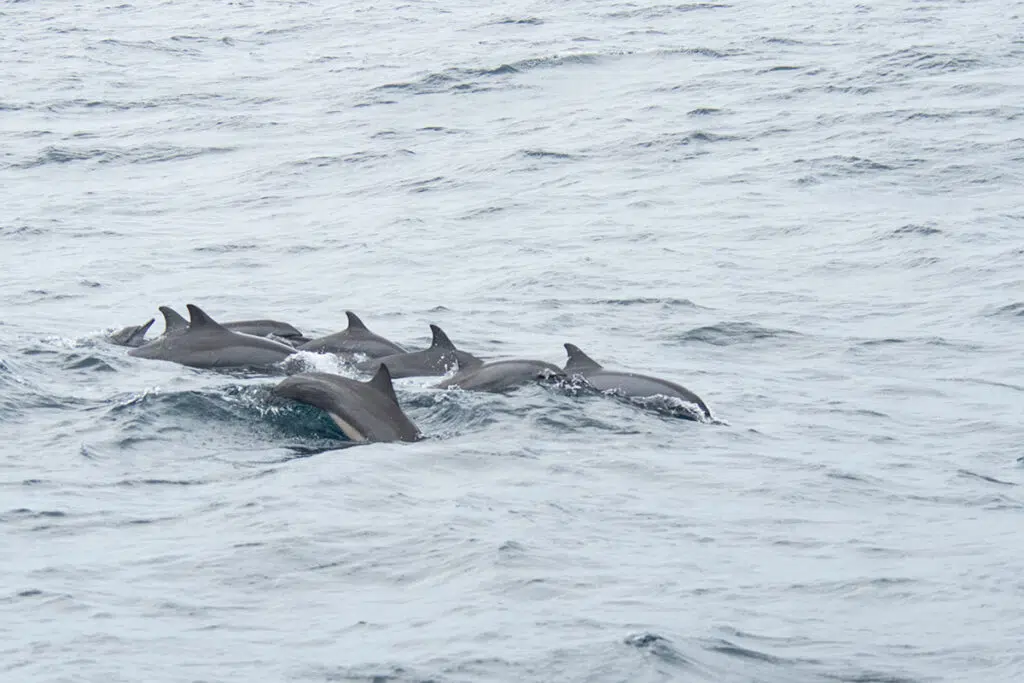
Trincomalee's offshore waters host one of the most predictable whale shark aggregations in the Indian Ocean from May to October, with peak sightings in June–September. The whale sharks gather in productive water about 30–40 minutes offshore, feeding on the rich plankton blooms generated by the northeast monsoon current system.
What the experience is like: Snorkelling with whale sharks in open water is a different experience from the structured approach used for reef encounters. The sharks - typically 6–10 metres long, juvenile males - cruise slowly at or near the surface. Swimmers enter the water a short distance ahead of the shark and allow it to pass; encounters last 2–5 minutes per individual, with multiple sightings possible on a half-day trip.
Tours: Half-day whale shark trips depart from Nilaveli from around 6:30 am. Operators use small speedboats (6–10 passengers). Cost: LKR 5,000–7,000 per person including snorkel equipment. Book through your guesthouse or directly from operators on Nilaveli Beach - same-day booking is usually possible outside peak weeks.
Sighting rate: High during the peak months (July–August), when encounter rates of 80–90% are common. Lower in May, June, and September. No guarantee - whale sharks are wild animals in open water - but Trincomalee is considered one of the most reliable whale shark destinations in Asia.
Responsible snorkelling: Use operators who brief passengers not to touch, ride, or closely approach the sharks. Fins should not be used when swimming directly alongside - the slipstream created by fin kicks can disturb the animals. Keep sunscreen to a minimum (reef-safe if possible).
HMS Hermes - The Wreck Dive
Sri Lanka's most celebrated dive site, and one of the great wreck dives in Asia. HMS Hermes was the world's first purpose-built aircraft carrier - commissioned in 1924, sunk by Japanese air attack on 9 April 1942, 10 km off Trincomalee in approximately 52 metres of water.
The wreck lies on its starboard side, largely intact. The flight deck, the island superstructure, gun turrets, and the aircraft elevators are all recognisable after eight decades on the seabed. The wreck has become an artificial reef; the ship is covered in soft corals, sea fans, and encrusting growth, with large schools of batfish and snapper around the hull, and moray eels in the tighter spaces.
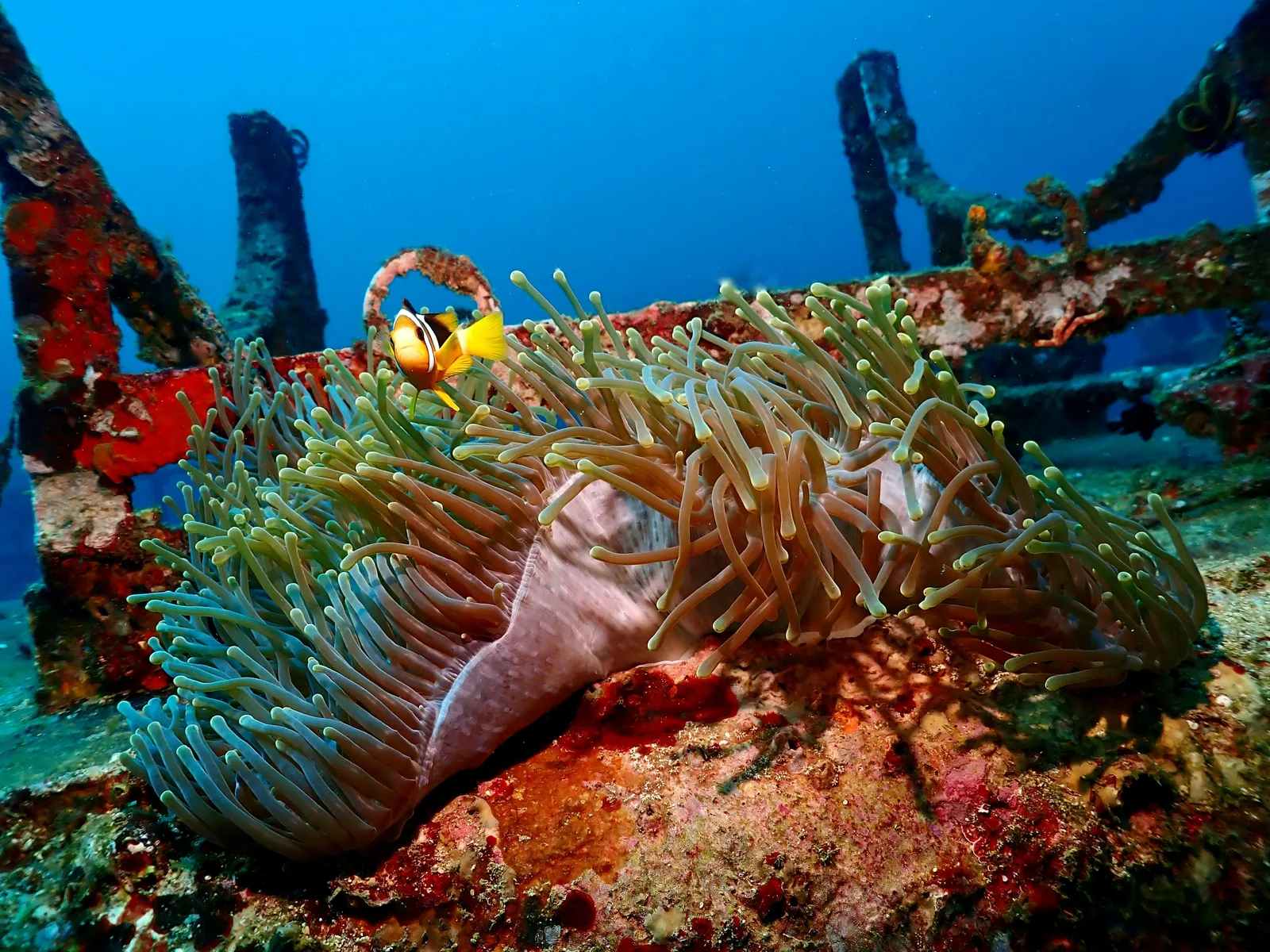
Dive profile: 48–52 metres to the seabed; the shallowest sections (flight deck edge) at around 35 metres. This is an advanced dive - recommended for divers with at least 50 logged dives and open-water certification to the Advanced level or equivalent. A nitrox qualification is useful for bottom time extension.
Dive operators: Several operators in Nilaveli and Uppuveli run Hermes trips in the season (May–September). Expect to pay LKR 10,000–15,000 per dive including equipment; the additional cost of a speciality wreck dive briefing is standard at responsible operators. The crossing from Trincomalee harbour takes 45–60 minutes.
Other dive sites: The Trincomalee area has additional sites including coral pinnacles at 18–28 metres off Pigeon Island, soft coral walls in the harbour approaches, and a second WWII-era wreck (a smaller vessel) at 30 metres near the harbour entrance.
Fort Frederick and Koneswaram Temple
Fort Frederick
The colonial fort stands on Swami Rock - a headland jutting into the sea at the eastern entrance to Trincomalee harbour. The fort's history layers four colonial occupations: originally built by the Portuguese in 1623, captured and rebuilt by the Dutch in 1639, taken by the British in 1795, and used continuously by Sri Lanka's military since independence. The walls still display Dutch and Portuguese-era stonework.
The interior of the fort complex is accessible to civilians and contains the sacred Hindu temple that draws thousands of pilgrims. A deer park within the walls is a legacy of centuries of temple care - spotted deer graze on the grounds.
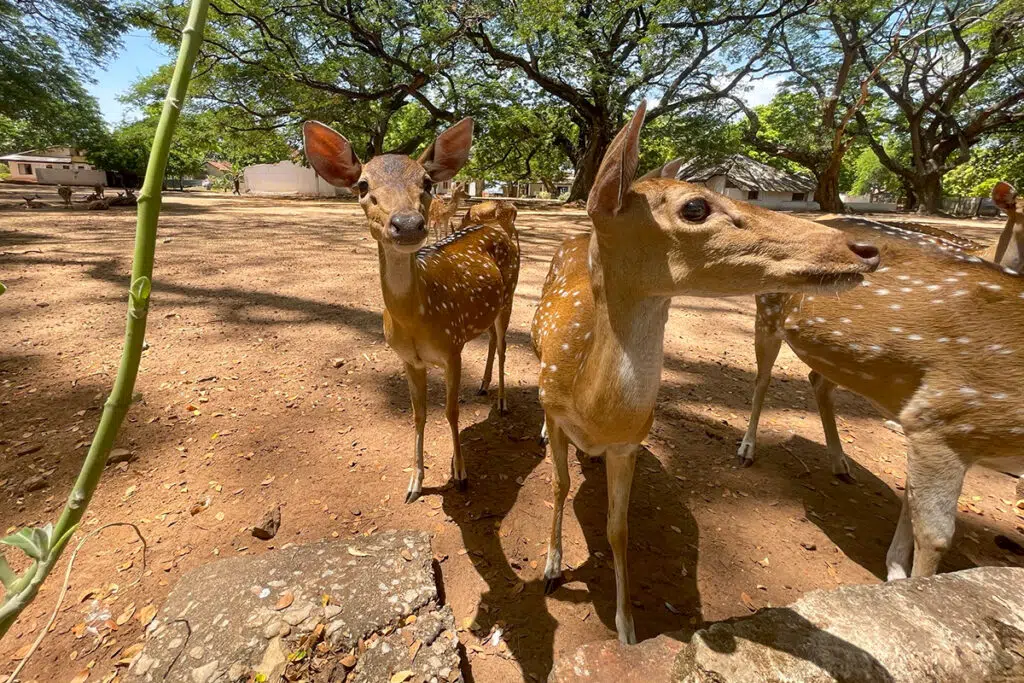
Access: Free entry to the fort grounds. Open 7 am–5 pm daily (military checkpoint at the entrance - bring ID).
Koneswaram Temple (Thirukoneshwaram)
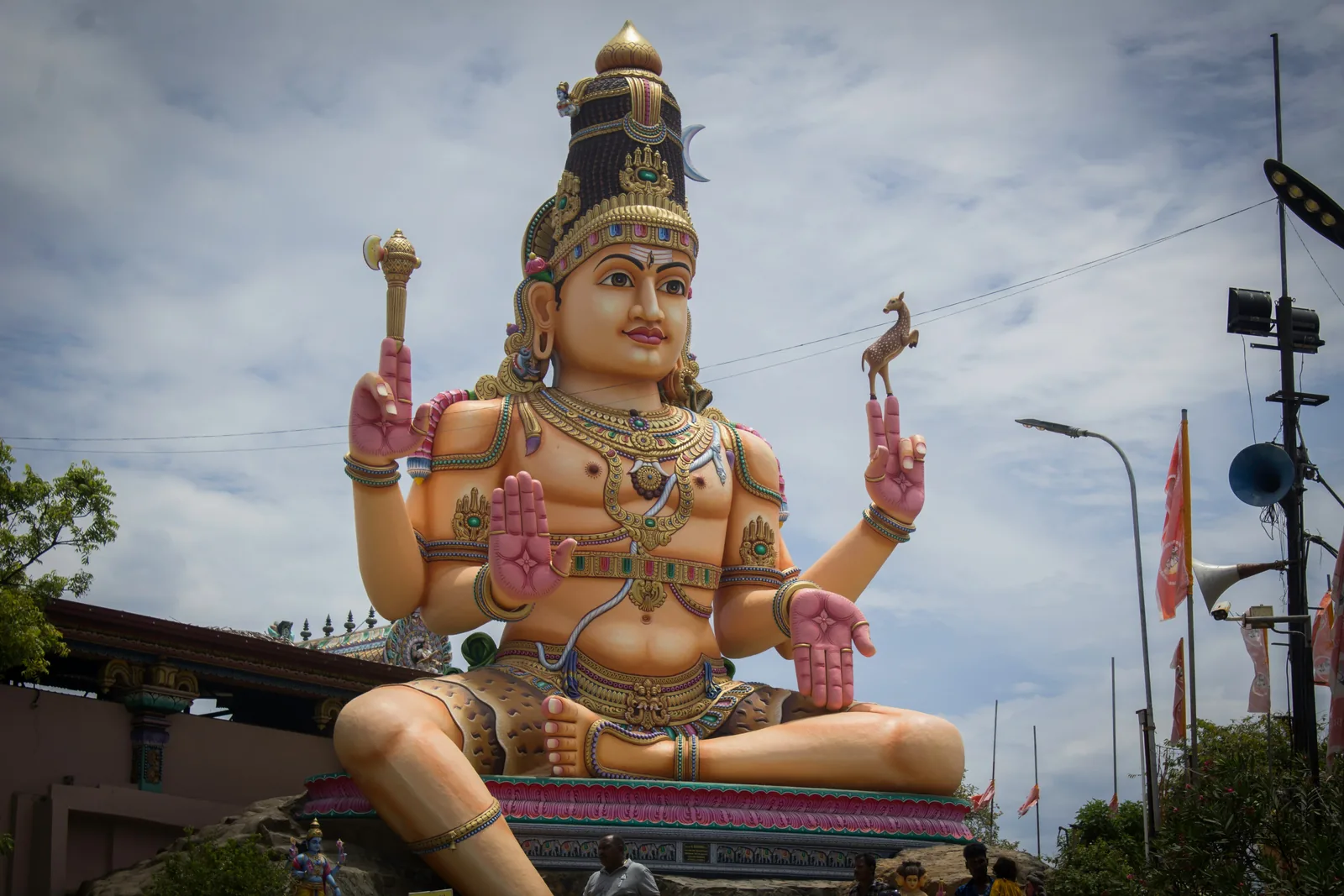
At the tip of Swami Rock, dramatically positioned on the sea-cliff with the Indian Ocean on three sides, Koneswaram is one of the most significant Hindu shrines in Sri Lanka - historically considered one of the Pancha Ishwarams (the five holiest Shaivite temples on the island). The temple was demolished by the Portuguese in 1622 and its stones used to build Fort Frederick; it was painstakingly restored in the 20th century after temple relics were recovered from the sea below the cliff face.
Lover's Leap: A point on the cliff edge below the temple where, according to local tradition, a Dutch official's daughter fell to her death after her father forbade her relationship with a Sri Lankan man. The view from the cliff - the harbour to the west, the open ocean to the east - is one of the most dramatic viewpoints in Trincomalee.
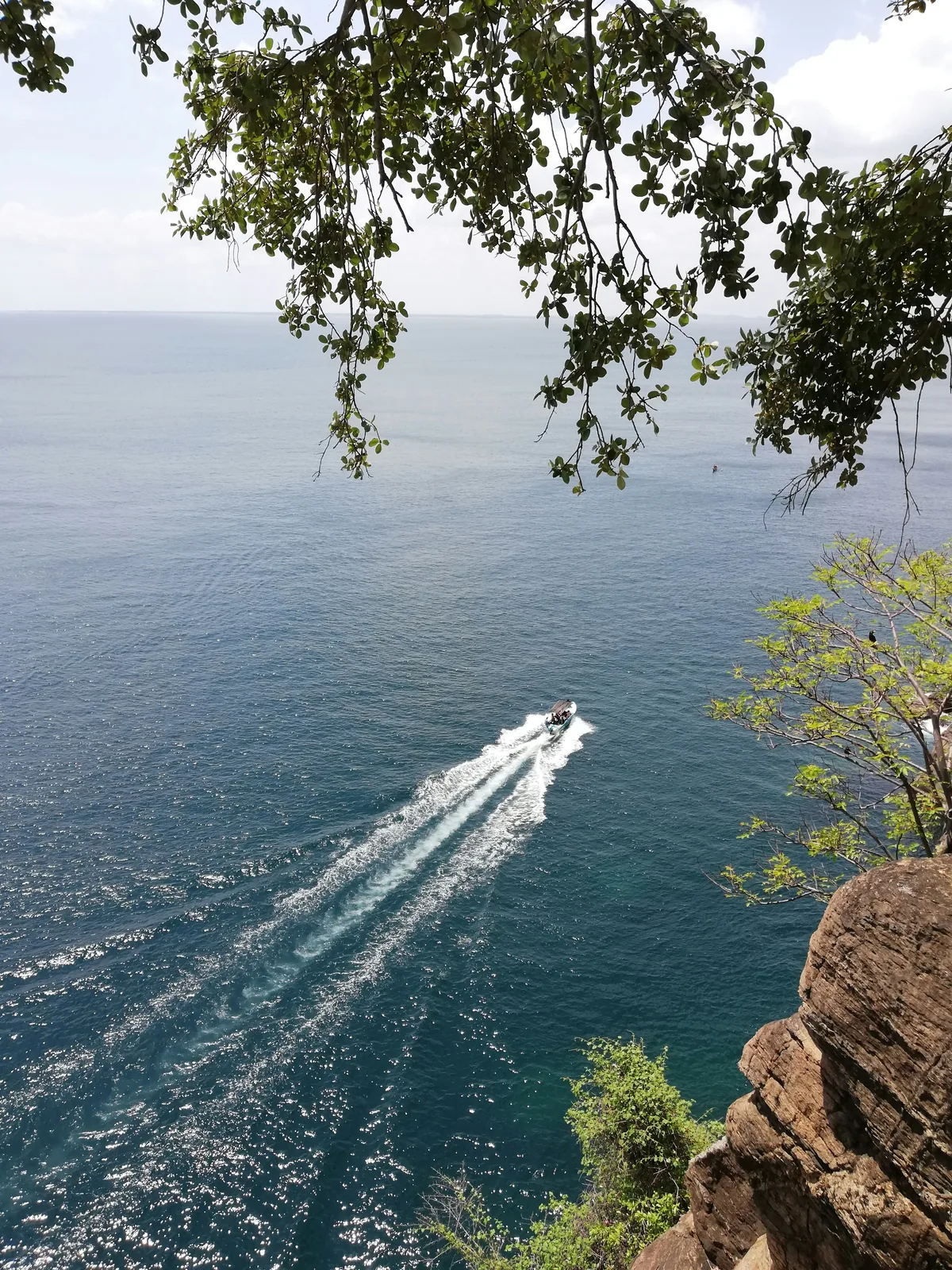
Visiting: Dress code applies (cover shoulders and knees; shoes off inside the temple). The temple is an active place of worship; respectful dress and behaviour are expected. A small admission fee is sometimes charged for foreign visitors.
Where to Eat in Trincomalee
The restaurant scene is concentrated in Nilaveli and Uppuveli rather than Trincomalee town. Fresh seafood - crab, lobster, barracuda, and tuna caught in the harbour - dominates all menus.
Chaaya Blu Trincomalee Restaurant - the restaurant of one of the coast's premium hotels serves fresh seafood and Sri Lankan cuisine in an open-air dining room facing the beach. Non-guests can eat here; worth booking for the setting.
Welcome Restaurant (Nilaveli) - long-established family restaurant on the Nilaveli beach road; reliable fish curry, kottu roti, and fresh grilled fish at local prices (LKR 400–800 per dish). The preferred lunch option for budget travellers.
Coconut Beach Restaurant - beach-facing café near Nilaveli's mid-section; fresh thambili (king coconut), short eats, and simple fish meals. Good for an early breakfast before a whale shark trip.
Trincomalee town market - the central market near the bus station has the best selection of street food in the area: fish kottu, hoppers, and fresh fruits. Worth a morning visit alongside the harbour fish market where the overnight catch comes in.
Where to Stay in Trincomalee
Hotels in Trincomalee & Nilaveli
Check availability & prices on Booking.com
Powered by Booking.com · We may earn a small commission at no extra cost to you.
Nilaveli Beach has the highest concentration of quality accommodation on the east coast outside Arugam Bay - the strip from the beach road to the shore contains everything from budget guesthouses to boutique resorts.
Luxury: Chaaya Blu Trincomalee (on Nilaveli Beach) is the coast's leading full-service resort - beachfront infinity pool, diving centre, and a reliable restaurant. The premium option for those who want comfort without travelling to the south coast.
Mid-range: Pigeon Island Beach Resort, Palm Beach Resort, and several independently run boutique guesthouses on Nilaveli Beach road, from $35–80/night. Most have small restaurants and can arrange whale shark and diving trips directly.
Budget: Family guesthouses on the roads behind Nilaveli Beach from LKR 2,500–4,500/night. Typically simple rooms with ceiling fans, shared or en-suite bathrooms, and a family who will sort your whale shark booking at local prices. The best value option for most travellers.
Uppuveli: Closer to town (15 minutes to Fort Frederick by tuk-tuk), slightly lower prices, similar beach quality. Good alternative if Nilaveli properties are booked out in peak season.
Getting to Trincomalee
Trincomalee is the most remote of Sri Lanka's major destinations from Colombo - the journey is long regardless of method, and planning is essential.
By train from Colombo (7–8 hours): Direct trains run from Colombo Fort station to Trincomalee on the Northern Line via Habarana. The Eustace de Silva Mawatha Express (morning departure) is the recommended service. Book in advance; second-class reserved seats are comfortable and significantly cheaper than private hire. The final section through the Vanni lowlands is flat and less scenic than the hill country line - the journey is worthwhile for the destination, not the scenery.
By car from Colombo (250 km, 4.5–5.5 hours): Via the A6 through Habarana and Habarana Junction. Private hire costs LKR 18,000–22,000 from Colombo. The fastest practical option for those with luggage and flexible timing.
From Kandy (180 km, 3.5–4 hours): Via the A9 highway north through Habarana. Private hire or intercity bus from Kandy bus station (change at Habarana). A natural route for those doing Kandy → Cultural Triangle → east coast.
From Arugam Bay (200 km, 3.5–4 hours): The east coast road connects the two - through Batticaloa and then north. Road quality varies; some sections are well-maintained coastal highway, others slower. Most travellers doing both destinations go Trincomalee → Arugam Bay (north to south), following the east coast in the same direction as the dry season calendar.
From Sigiriya and the Cultural Triangle (90 km, 2 hours): The most convenient approach for travellers doing the standard circuit. Habarana Junction is equidistant between Sigiriya and Trincomalee - Trinco makes an excellent final stop after the Cultural Triangle before the return to Colombo or a flight home.
Best Time to Visit Trincomalee
May–September is the primary season - the east coast's dry season, when the southwest monsoon keeps the west coast in rain while Trincomalee has clear skies, calm seas, and optimal conditions for beaches, whale sharks, Pigeon Island, and the Hermes dive. June, July, and August are peak months.
January–April is a secondary shoulder season for the beaches - the northeast monsoon has passed, conditions are calm, and the coast is quiet. Whale sharks and the Hermes dive are not reliably operated outside the May–September window. Good for the temples and fort without the beach.
October–December: The northeast monsoon brings rain, rough seas, and choppy conditions. Most Nilaveli and Uppuveli properties reduce hours or close for maintenance. Not recommended.
Book Trincomalee Tours & Water Activities
Snorkelling at Pigeon Island, whale watching, and Trincomalee bay boat tours.
Trincomalee: Frequently Asked Questions
Is Trincomalee worth the long journey from Colombo? Yes, if you allocate 3–4 nights. The combination of Nilaveli Beach, Pigeon Island snorkelling, whale shark encounters, and the Hermes dive is not replicated anywhere else in Sri Lanka. Travellers who rush through in a day miss the point entirely.
When is the best time to see whale sharks in Trincomalee? June–August for the highest encounter rates. The season runs May–October; May and September–October are good but less reliable. The whale sharks are juvenile males, typically 6–10 metres, and the aggregations are driven by plankton blooms associated with the northeast monsoon current.
Is Pigeon Island good for beginners? Yes - the snorkelling reef at 1–6 metres depth is excellent for non-divers and beginners alike. The blacktip reef sharks visible from the surface are small and non-aggressive. For scuba diving, Pigeon Island's shallow sections (8–18 metres) are suitable for Open Water certified divers.
Can I visit Fort Frederick and Koneswaram Temple without a guide? Yes. The fort is self-navigable; signage is adequate for the key points. The temple has volunteer guides who will explain the iconography and history for a small donation. Allow 2–2.5 hours for the fort, temple, and Lover's Leap viewpoint combined.
What is the HMS Hermes dive experience like? Advanced and rewarding. The wreck lies at 48–52 metres - the largest ship sunk in combat by air power during the Second World War. It is largely intact, with the flight deck, aircraft elevators, and gun turrets recognisable. Significant marine growth covers the hull. Bottom time is limited by depth; a 30–40 minute dive at depth is typical.
How does Trincomalee compare to Arugam Bay? Trincomalee is more diverse: better beaches (Nilaveli vs Arugam Bay's functional surf beach), more impressive diving, and more cultural sights (Fort Frederick, Koneswaram). Arugam Bay has superior surfing and a more relaxed, focused surf-town atmosphere. The two pair well on a two-week east coast itinerary.
Is Trincomalee safe? Yes. Following the end of the civil conflict in 2009, the east coast has been peaceful and visitor-friendly. The military presence around Fort Frederick and the naval base is normal rather than threatening. Standard travel precautions apply.
Related Guides
- Escaping the European Heatwave: Why Sri Lanka is Your Perfect July Sanctuary
- Arugam Bay Surfing Guide 2026: Sri Lanka's Best Surf & East Coast Beach
- Mirissa Beach Sri Lanka Guide 2026: Whale Watching, Surfing & Where to Stay
- Anuradhapura Sri Lanka Guide 2026: Ancient City, Sacred Sites & What to See
- Nuwara Eliya Sri Lanka Guide 2026: Tea Country, Gregory Lake & Things to Do
Advertisement
Flights, hotels and tours - all in one place.
Plan Your Sri Lanka Trip
Find the best price to Colombo from your city
Search Flights →Compare prices across Booking.com, Agoda & more
Find Hotels →Bus fares, train times and transport options
Plan Transport →Powered by Travelpayouts · We may earn a small commission at no extra cost to you.
Leave a Comment
Share your thoughts, questions, or travel experiences