Tip
Quick answer: Colombo rewards a full day minimum - Gangaramaya Temple, a walk along Galle Face Green, and the Pettah market cover the essential range. Base yourself in Colombo 3 (Kollupitiya) or Colombo 7 (Cinnamon Gardens) for proximity to restaurants and the seafront. Most visitors pass through Colombo at the start or end of a trip; the 10-day Sri Lanka itinerary dedicates 1 night here.
Colombo is Sri Lanka's commercial capital - a city of 752,000 people in the metro area that functions as the country's business, cultural, and transport hub. It is not a traditional tourist destination in the way Kandy or Galle Fort are, but it rewards visitors who spend time with it: the layered colonial architecture, the extraordinary Buddhist and Hindu temples, the city's food scene, and the sea views along Galle Face are all genuinely worthwhile.
Most international visitors arrive at Bandaranaike International Airport, 35 km north of the city, and either overnight in Colombo before continuing north or stop here at the end of a circuit. Either approach works. This guide covers what to prioritise in 1–2 days.
Tip
Our take: Colombo needs at least a full day - not the standard 3-hour layover tour most itineraries allow. Pettah market, Galle Face Green at sunset, Beira Lake by boat, and dinner in a colonial villa are four completely different versions of the same city. Most travellers who give it proper time wish they had given it more.
Colombo's Neighbourhoods
Understanding Colombo's neighbourhood structure makes navigation easier. The city is numbered - Colombo 1 through Colombo 15 - with the highest-numbered areas furthest from the colonial core.
Colombo 1 - Fort District: The administrative and commercial centre. The President's House, the Old Parliament Building, the Grand Oriental Hotel (colonial-era landmark), and the central railway station are all here. Most government offices are in this district. The waterfront is being redeveloped as Port City Colombo.
Colombo 11 - Pettah: Immediately adjacent to Fort, Pettah is Colombo's oldest market district. A maze of streets specialising in different goods - textiles, electronics, spices, jewellery, hardware. Loud, crowded, and genuinely fascinating. The Jami Ul-Alfar Mosque (Red Mosque) - a red-and-white striped building of extraordinary visual impact - is here.
Colombo 2 - Slave Island / Beira Lake: The area around Beira Lake, including the iconic Seema Malaka meditation temple (designed by Geoffrey Bawa, floating on the lake). The name "Slave Island" dates to the Dutch colonial period.
Colombo 3 - Kollupitiya: The most useful neighbourhood for visitors. Galle Road restaurants and cafés, the Crescat Boulevard shopping centre, and direct access to Galle Face Green. Most international hotels and guesthouses are here.
Colombo 7 - Cinnamon Gardens: The city's most affluent neighbourhood, named for its 18th-century cinnamon gardens. Wide tree-lined streets, the Viharamahadevi Park (Colombo's largest public park), the National Museum, the Town Hall, and the Lionel Wendt gallery. A quieter, more pleasant residential area than most of central Colombo.
Colombo 4 - Bambalapitiya and beyond: The southern suburbs along Galle Road extending toward Mount Lavinia. Budget guesthouses, local restaurants, and the beginning of the coastal highway south.
Top Things to Do in Colombo
Gangaramaya Temple
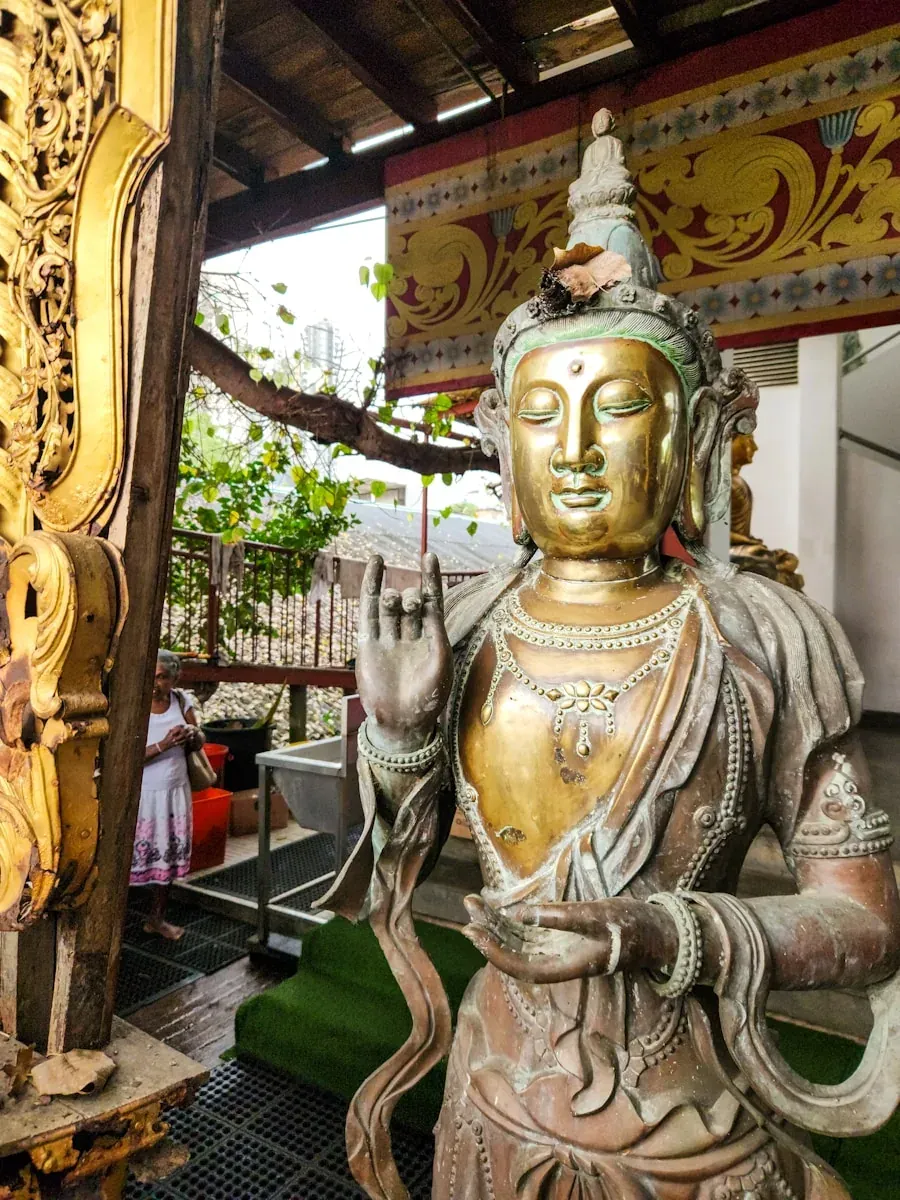
The most visited temple in Colombo and one of the most eclectic Buddhist sites in Sri Lanka. Founded in the late 19th century, Gangaramaya has expanded over generations into a complex of halls filled with an extraordinary accumulation of donated objects: antique furniture, vehicles, elephant tusks, jewellery, statues from across Asia, and collections of religious art from Sri Lanka, Myanmar, Thailand, and China.
The main Bo tree, said to be a sapling from the sacred Bo tree in Anuradhapura, is a significant pilgrimage site. The reclining Buddha statue is the largest in Colombo. The Viharamahadevi Hall houses a daily schedule of puja ceremonies.
Opening hours: Daily 6 am–10 pm. Admission: LKR 300 for foreign visitors. Dress modestly (cover shoulders and knees); remove shoes before entering.
Navam Perahera - in February, Gangaramaya hosts one of Colombo's largest festivals: two nights of elephant processions, drummers, dancers, and fire performers around Beira Lake. One of the great Sri Lankan festival experiences, comparable to Kandy's Esala Perahera.
Galle Face Green
A 500-metre oceanfront promenade extending south from Colombo Fort - the largest open space in Colombo and the city's communal living room. In the late afternoon and evening, thousands of Colombo residents come to fly kites, eat street food, and watch the sun set over the Indian Ocean.
Street food on Galle Face: The evening vendor row is one of the best places in Colombo to try local snacks - isso vadai (prawn lentil fritters), kottu roti, corn on the cob, and thambili (king coconut). Prices are local; budget LKR 100–300 per item.
The colonial-era Galle Face Hotel, open since 1864, sits at the northern end of the promenade. The Sunday brunch and the veranda are both worth a visit for the atmosphere.
Seema Malaka Temple
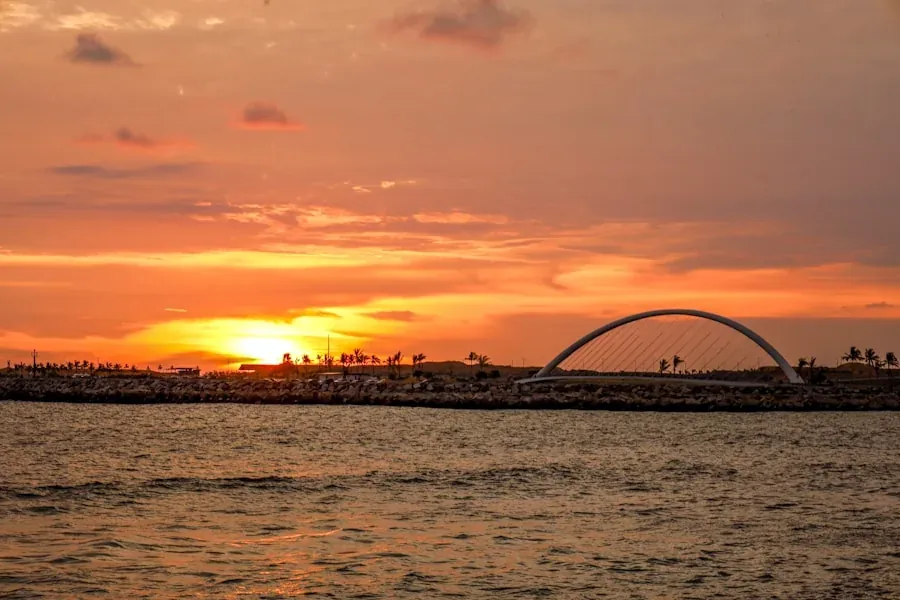
Designed by Sri Lanka's most celebrated architect, Geoffrey Bawa, and completed in 1978. Seema Malakaya is a Buddhist meditation platform that appears to float on Beira Lake, connected to the shore by a series of narrow walkways. The architecture is extraordinary: a series of low, open halls with columns rising from the water, surrounded by Buddha statues brought from across Asia.
Visit in the early morning or late afternoon when the light is on the water and the crowds are smaller. Dress modestly; shoes must be removed at the causeway.
See the full story of Geoffrey Bawa and Lunuganga - his country estate outside Colombo is a day-trip destination in itself.
The Lotus Tower
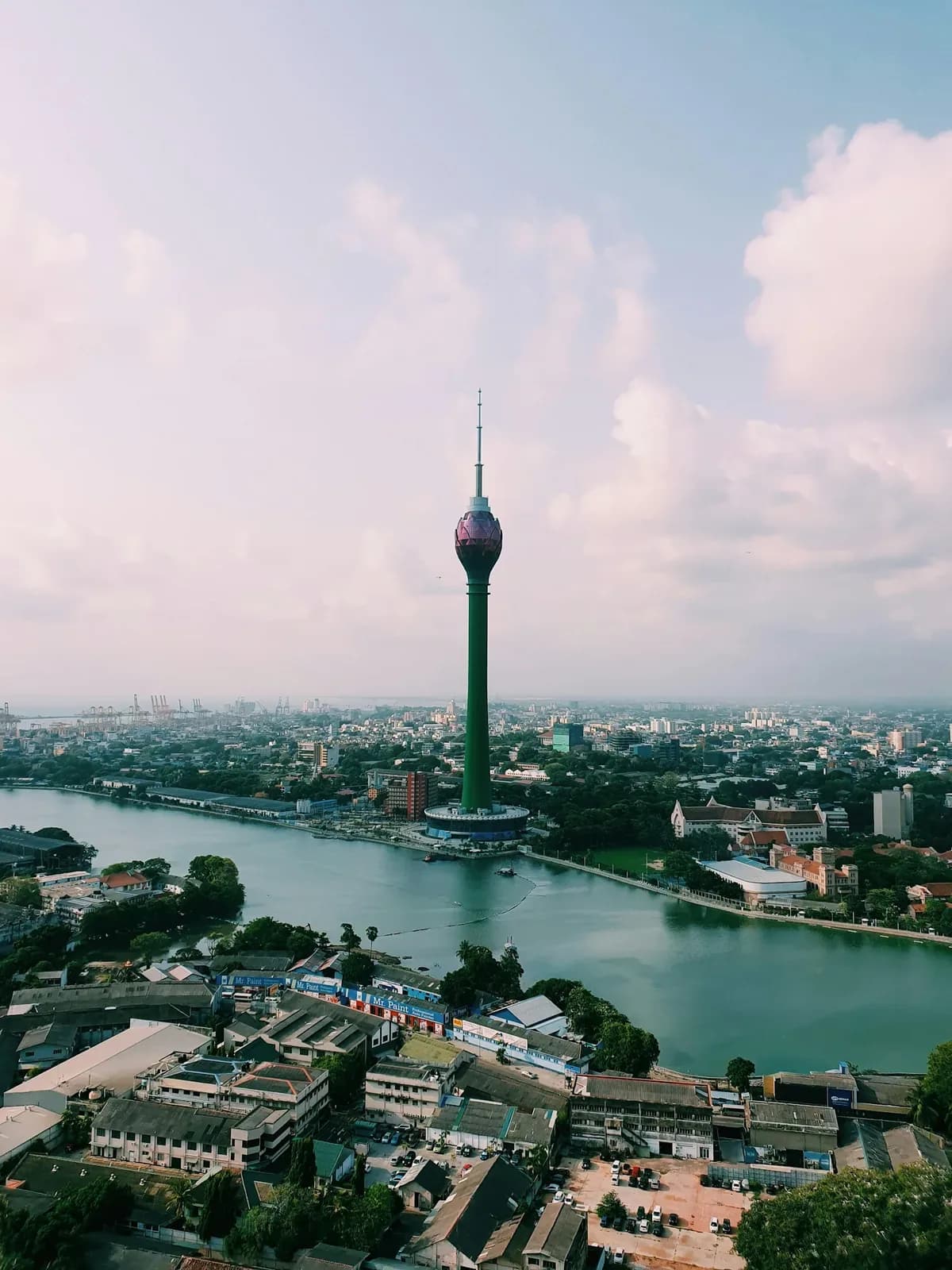
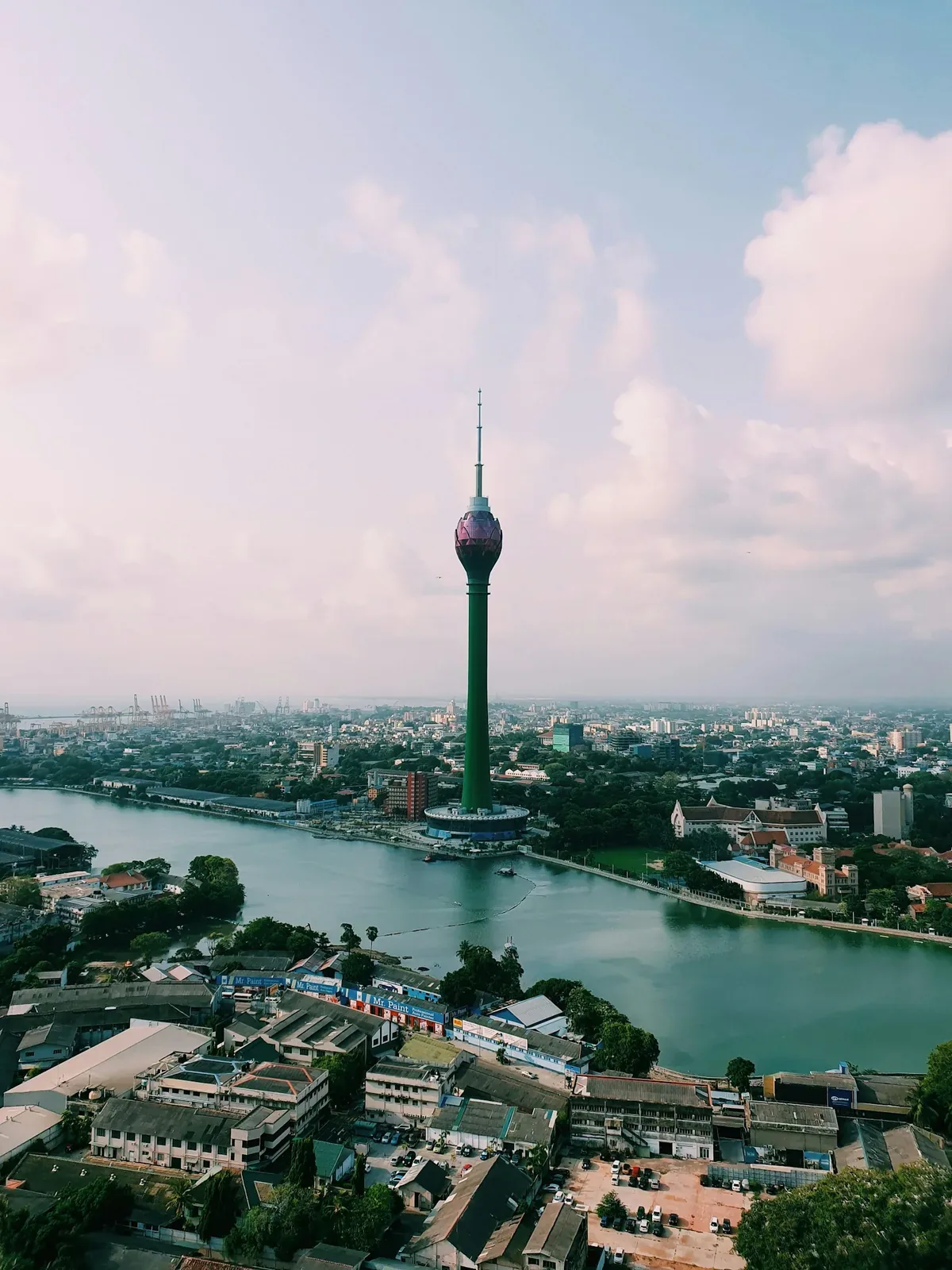
Sri Lanka's tallest structure (350 m) and the tallest telecommunications tower in South Asia. The observation deck on the 17th floor offers a panoramic view of Colombo - on clear days you can see the full extent of the city and the coast in both directions.
Observation deck admission: LKR 1,000 for foreign visitors. Open Tuesday–Sunday, 10 am–8 pm. The tower is in Colombo 10, accessible by tuk-tuk from the Fort area.
Pettah Market
The old market district immediately east of the Fort. Pettah is one of South Asia's great bazaars - a dense grid of streets each specialising in different goods. Not a curated shopping experience but an authentic commercial district where you will find the city functioning at full intensity.
The Jami Ul-Alfar Mosque (Red Mosque) on Second Cross Street is the most photographed building in Pettah - an 1909 confection of red-and-white horizontal stripes that reads more as a candy-striped fantasy than a mosque, yet is fully functional and one of Colombo's most visually striking buildings.
Pettah's street food: The area around the bus station and market has the densest concentration of Sri Lankan street food in the city - fresh kottu roti, short eats, and thambili vendors on every corner.
National Museum of Colombo
Sri Lanka's principal museum, in a colonial-era building in Cinnamon Gardens (Colombo 7). The collection covers Sri Lanka's history from prehistoric times through the colonial period, with strong sections on the Anuradhapura and Polonnaruwa kingdoms and a significant collection of traditional regalia from the Kingdom of Kandy.
Opening hours: Saturday–Thursday, 9 am–5 pm (closed Fridays). Admission: LKR 700 for foreign visitors. Allow 2 hours for the full collection.
Viharamahadevi Park
Colombo's largest public park, adjacent to the National Museum. An open green space with a large seated Buddha statue, flowering trees, and walking paths. Popular with families in the evenings. The Town Hall - Colombo's most impressive colonial-era civic building - faces the park from the north.
Where to Eat in Colombo
Colombo has Sri Lanka's most diverse restaurant scene, from local rice-and-curry restaurants charging LKR 300 to upscale restaurants charging $30–50 per person.
Ministry of Crab (Colombo 1) - the most celebrated restaurant in Sri Lanka. Sri Lankan crab cooked in multiple styles, from butter garlic to black pepper. Reservations essential; book weeks ahead in peak season.
Nihonbashi (Colombo 3) - Sri Lanka's best Japanese restaurant, consistently on regional best-restaurant lists.
Nuga Gama at Cinnamon Grand (Colombo 3) - outdoor village-style restaurant serving traditional Sri Lankan food in a theatrical setting. A good introduction to authentic local cuisine in a comfortable environment.
Commons Coffee House (Colombo 7) - the best café in the city for working or meeting; excellent coffee, good lunch menu, in a garden setting in Cinnamon Gardens.
Budget rice and curry: Look for local restaurants on side streets off Galle Road in Colombo 3 and 4. A full meal of rice, three curries, and papadum costs LKR 250–400.
Where to Stay in Colombo
Hotels in Colombo Sri Lanka
Check availability & prices on Booking.com
Powered by Booking.com · We may earn a small commission at no extra cost to you.
Colombo 3 (Kollupitiya) is the best base for most visitors - central, walkable, and well-served by restaurants and the seafront. The Cinnamon Grand and Taj Samudra are the city's leading international hotels; mid-range guesthouses and boutique hotels are available from $40–80/night.
Colombo 7 (Cinnamon Gardens) is quieter and more residential - a better choice if you prefer a leafy neighbourhood to the commercial strip. Slightly further from the main sights but well-connected by tuk-tuk.
Mount Lavinia (10 km south) - the beach suburb of Colombo, centred on the iconic Mount Lavinia Hotel (the former colonial Governor's mansion). A good option if you want beach access while staying near the city.
Getting Around Colombo
Tuk-tuks: The easiest way to get around. Most drivers in tourist areas use meters (legal requirement) - insist on the meter or agree a price upfront. Expect LKR 200–500 for short journeys within the city.
PickMe / Grab: Both ride-hailing apps operate in Colombo and are cheaper than hailing tuk-tuks off the street. PickMe requires a Sri Lankan phone number or can be booked through a hotel.
City bus: The cheapest option. Local buses cover most of the city for LKR 20–50, but routes are complex for first-time visitors.
Walking: Colombo 3 and 7 are walkable for shorter distances. The heat (28–34°C year-round) makes longer walks uncomfortable in the middle of the day.
Day Trips from Colombo
Negombo (35 km north, 45 minutes) - a beach and fishing town close to the airport. Popular for pre- and post-flight nights. The old fishing harbour and market are worthwhile.
Lunuganga (90 km south, 2 hours) - Geoffrey Bawa's country estate and garden, one of Asia's great private gardens. Book in advance for garden visits. See Geoffrey Bawa & Lunuganga guide.
Galle Fort (120 km south, 1.5–2.5 hours) - the UNESCO World Heritage fort town on the south coast. Can be done as a day trip from Colombo by train (2.5 hours each way) or expressway. See Galle Fort guide.
Pinnawala Elephant Orphanage (90 km northeast, 2 hours) - Sri Lanka's elephant orphanage, home to over 90 elephants. Most visitors stop here en route to Kandy. River bathing (morning and afternoon) is the highlight.
Colombo Tours & Day Trips
Colombo walking tours, street food tours, and day trips to Pinnawala and Kandy.
The Best 24 Hours in Colombo
For visitors with a single day, this is the most efficient circuit covering the city's main contrasts:
7 am: Gangaramaya Temple at dawn - fewer tourists than midday, monks completing morning prayers, the lake mist still on Beira Lake. LKR 300 entry.
8:30 am: Walk south along Beira Lake to the Seema Malaka - the floating temple on the lake designed by Geoffrey Bawa. Often empty in the early morning. Extraordinary piece of religious architecture.
9:30 am: Pettah market for an hour. Walk down Main Street through the covered bazaars - electronics, spices, fabric, hardware in separate blocks. The Hindu Pettah kovil at the bottom of Main Street is one of the most active and visually dramatic in Colombo.
11 am: National Museum (Colombo 7). Sri Lanka's largest museum with a good collection of Kandyan-era artefacts, royal regalia, and the original throne of the last Kandyan king. Entry LKR 600. Plan 1 to 1.5 hours.
1 pm: Lunch at a Cinnamon Gardens restaurant or the Colombo 7 cafés. Ministry of Crab (if you have a booking - it needs to be arranged days in advance) is the most celebrated restaurant in the country, in the old Dutch Hospital precinct.
3 pm: Independence Square and Viharamahadevi Park - a large public park in the centre of the city with a golden Buddha and well-maintained grounds. Good for an afternoon walk.
6 pm: Galle Face Green at sunset - a wide ocean-facing promenade where Colombo's residents fly kites, eat street food (lunu miris corn on the cob, Chinese rolls, isso wade shrimp patties), and watch the Indian Ocean sunset. One of the city's best free experiences.
8 pm: Dinner at one of the Galle Road restaurants overlooking the ocean.
Colombo Neighbourhoods at a Glance
| Neighbourhood | Character | Best for |
|---|---|---|
| Colombo Fort | Historic commercial centre, colonial buildings, National Museum | Heritage, business, train connections |
| Pettah | Oldest bazaar district, chaotic, authentic | Shopping, street food, Hindu kovils |
| Colombo 3 (Kollupitiya) | Mid-range hotels, restaurants, Galle Face Green | Most visitors' base |
| Colombo 7 (Cinnamon Gardens) | Leafy residential, embassies, best restaurants | Upscale stays, National Museum |
| Colombo 1 (Fort) | Lighthouse, harbour, Colombo Fort train station | Transport, city walks |
Colombo: Frequently Asked Questions
Is Colombo worth visiting? Yes, for 1–2 days - especially Gangaramaya Temple, Galle Face Green, Pettah, and Beira Lake. It is not the highlight of a Sri Lanka trip but provides essential context for the country.
Is Colombo safe? Very safe for tourists. Sri Lanka's crime rate is low, and Colombo is generally well-policed. The main concern for visitors is petty theft in crowded areas like Pettah - keep bags secure in the market.
What is the best neighbourhood to stay in Colombo? Colombo 3 (Kollupitiya) for convenience and access to restaurants, hotels, and Galle Face. Colombo 7 (Cinnamon Gardens) for a quieter, more residential atmosphere. Both are well-connected by tuk-tuk.
How many days should I spend in Colombo? 1–2 days is sufficient for most visitors. The main sights take a full day; a second day allows for the National Museum, day trips, and exploring the food scene.
How do I get from the airport to Colombo? The standard option is a pre-booked taxi or hotel transfer - agree the price before getting in. Expect LKR 3,000–5,000 for the 45-minute drive. The PickMe app is significantly cheaper. Airport buses also run to the Fort area.
What is the best time to visit Colombo? Colombo is in the southwest lowlands and receives two monsoon seasons. December–March (dry season) is the most comfortable. The city functions year-round regardless of weather; urban sights are not rain-dependent in the way beach or mountain activities are.
Can I drink the tap water in Colombo? No. Use bottled water for drinking throughout Sri Lanka. In Colombo, most hotels provide filtered water; restaurants use bottled water for cooking.
Related Guides
- Colombo Day Trip Guide 2026: Best Things to Do in One Day
- Mirissa Beach Sri Lanka Guide 2026: Whale Watching, Surfing & Where to Stay
- Anuradhapura Sri Lanka Guide 2026: Ancient City, Sacred Sites & What to See
- Nuwara Eliya Sri Lanka Guide 2026: Tea Country, Gregory Lake & Things to Do
Advertisement
Flights, hotels and tours - all in one place.
Plan Your Sri Lanka Trip
Find the best price to Colombo from your city
Search Flights →Compare prices across Booking.com, Agoda & more
Find Hotels →Bus fares, train times and transport options
Plan Transport →Powered by Travelpayouts · We may earn a small commission at no extra cost to you.
Leave a Comment
Share your thoughts, questions, or travel experiences