Tip
Quick answer: Mirissa's big draw is blue whale watching - the best in Asia, operating November through April. The beach itself (800 metres of sheltered bay) is excellent for swimming year-round in the right conditions. Surf season is April–October. Stay at least 2 nights - one for whale watching at dawn, one for the beach and sunset. Mirissa is 35 km east of Galle Fort, making it a natural pairing on any south coast route. It features on Day 7–8 of the 10-day Sri Lanka itinerary.
Mirissa is a small beach town on Sri Lanka's south coast that punches well above its size. The bay - a gentle crescent of golden sand backed by coconut palms - is one of the most attractive beaches in southern Sri Lanka. But it is the whale watching that has made Mirissa internationally known: the deep water just a few kilometres offshore is one of the few places on earth where blue whales - the largest animals ever to exist - can be reliably encountered.
The town itself is compact: one main road, a strip of guesthouses and restaurants behind the beach, and a fishing harbour at the eastern end of the bay. Development here is lighter than at Unawatuna or Hikkaduwa, which gives Mirissa a more relaxed atmosphere that most visitors appreciate.
Tip
Our take: We have been on nine whale-watching boats at Mirissa over the years. The consistent advice: book a 6 to 7 am departure on a smaller boat (under 20 passengers), and ask the operator whether blue whales or sperm whales were sighted in the past 48 hours before you commit.
Mirissa Whale Watching
The Season
Blue whales are present in the waters off Mirissa from November to April, with peak sightings in December–March. This window aligns with the south coast's dry season, making December–March the optimum time for both whale watching and beach conditions.
Sperm whales, spinner dolphins, and occasionally fin whales are seen year-round. Blue whales remain the primary target - Mirissa has one of the highest blue whale encounter rates of any whale-watching destination on earth.
Avoid May–October for whale watching: the southwest monsoon brings rough seas that make trips uncomfortable and frequently result in cancellations.
What to Expect
Tours depart from Mirissa fishing harbour between 6 and 7 am and return by midday. The journey to whale-watching grounds takes 60–90 minutes; encounters typically involve 20–45 minutes with a pod before moving on.
Blue whales are not acrobatic in the way humpbacks are - they surface to breathe, show their dorsal fin, and dive. The scale is what overwhelms first-time watchers: a blue whale's body length of 25–30 metres means that even a casual surfacing event dominates the frame.
Bring: Sea-sickness medication (the offshore conditions can be choppy), sunscreen, a hat, and a waterproof bag for your camera. The boats are typically open-decked fishing vessels with minimal shelter.
Cost: LKR 5,000–7,000 ($16–23) per person for the standard shared tour. Private charters are available from $150. Book through your hotel or directly at the harbour the evening before - same-day booking is possible in shoulder season.
Responsible Whale Watching
Not all operators follow Sri Lanka's whale watching code of conduct. Look for operators who:
- Maintain distance from whales (the legal minimum is 100 metres)
- Do not chase or cut off surfacing whales
- Limit time with each whale pod
- Do not use sonar equipment near marine mammals
Smaller boats (under 20 passengers) generally provide a better experience than large party boats.
The Beach
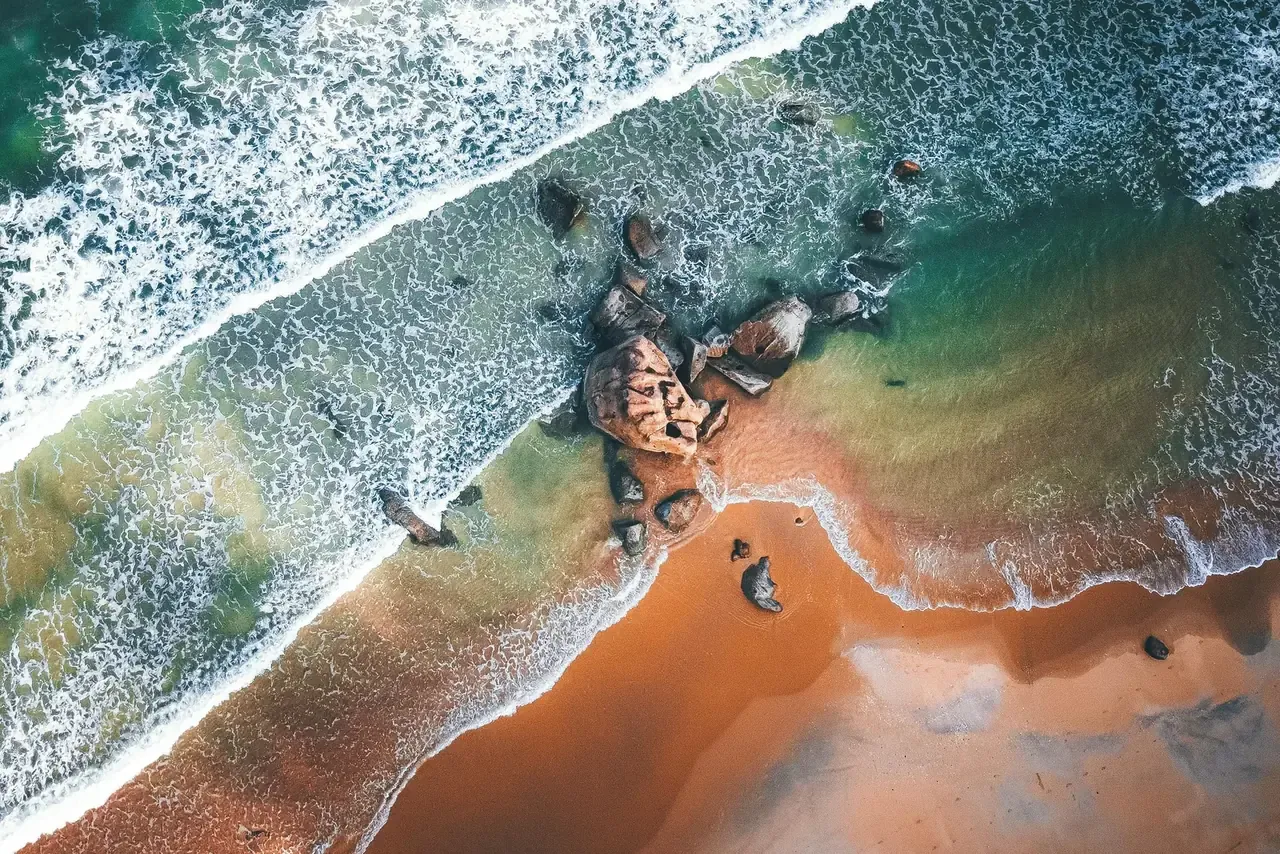
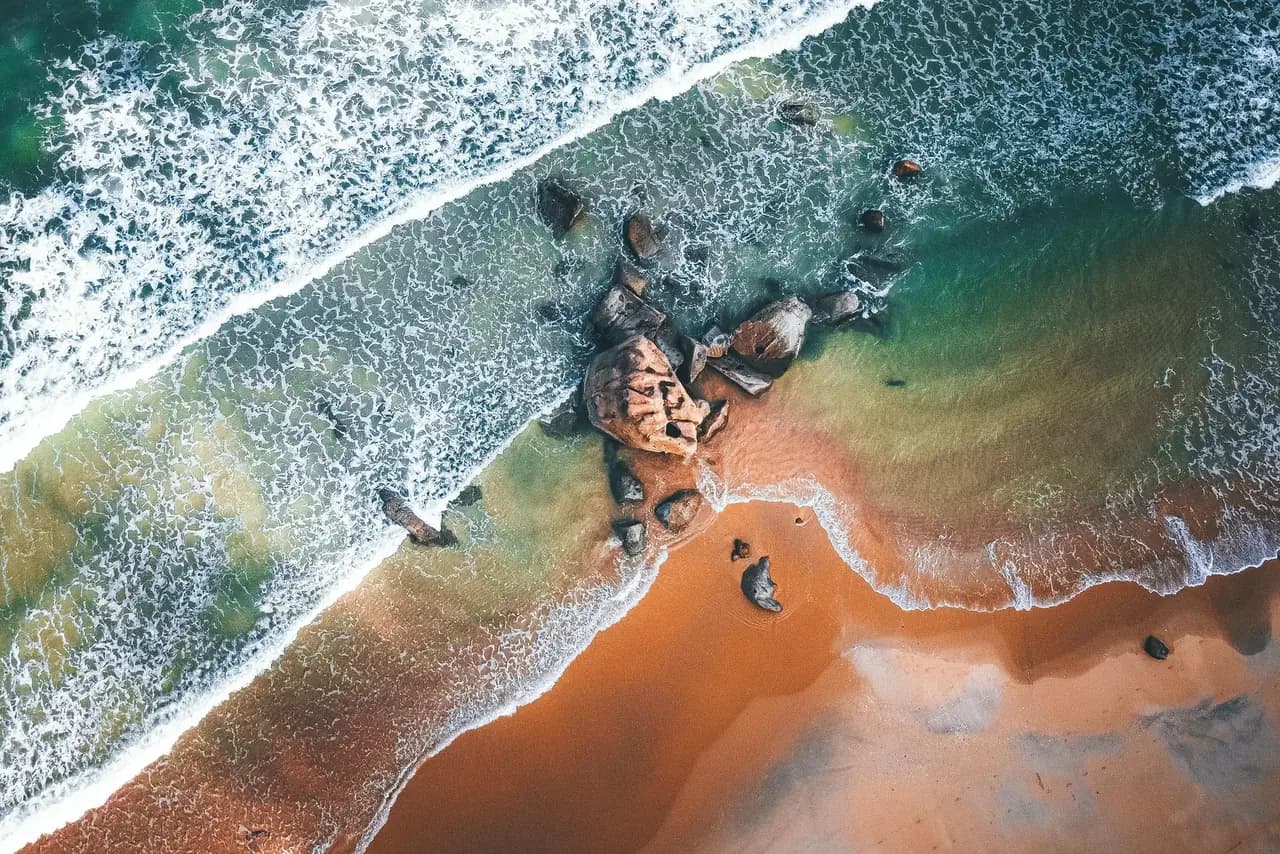
Mirissa's main beach is 800 metres of sheltered bay - smaller than Unawatuna but with calmer water in the dry season, better for swimming. The eastern end of the bay, near the harbour, is calmer and shallower; the western end has more wave action.
Secret Beach / Parrot Rock: A small headland at the western end of the bay with a rock platform above the water. At low tide you can walk out to the rock for views over the bay. One of the most photographed spots in Mirissa; get there early before the sunbathers arrive.
Swimming: Safe year-round in the dry season (November–April). Red flags are flown when conditions are dangerous - respect them. The southwest monsoon (May–October) brings rough seas and rip currents.
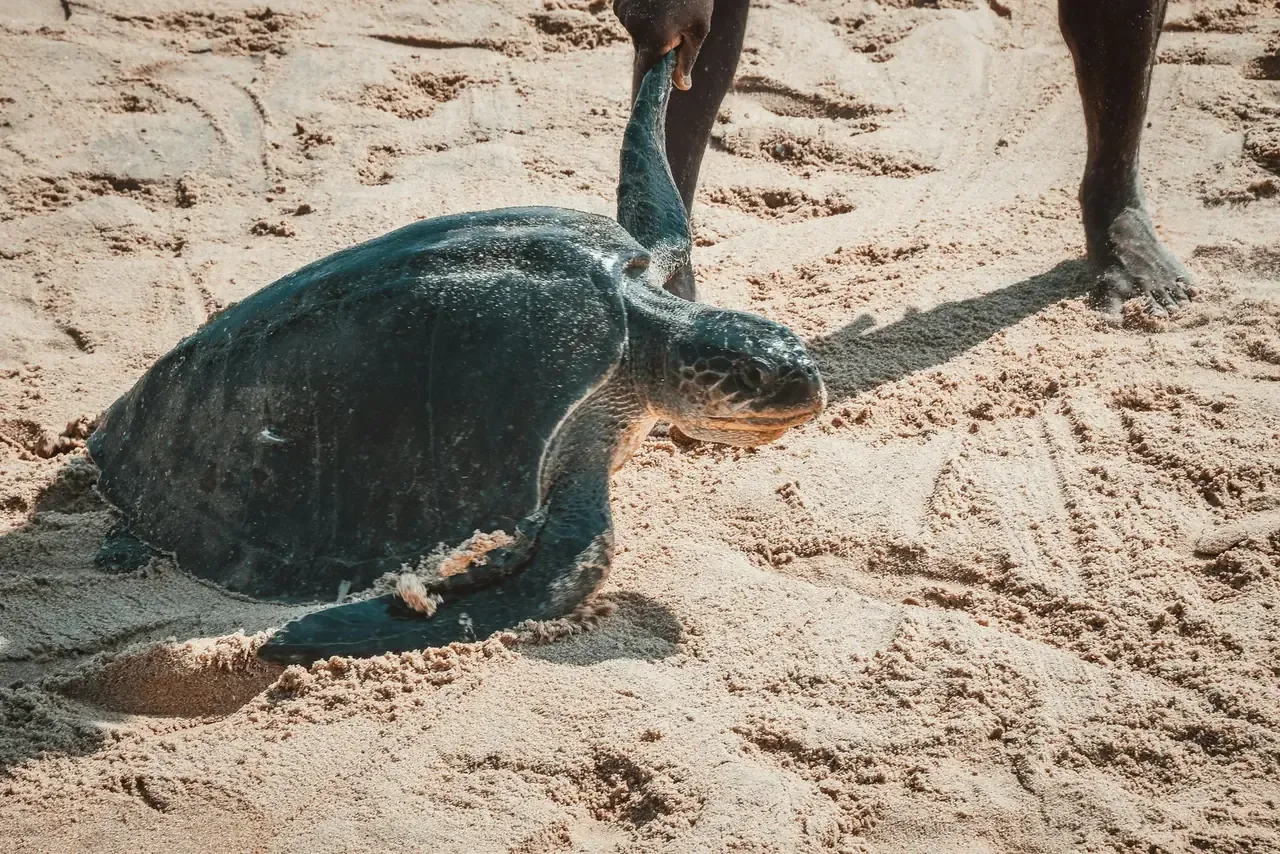
Snorkelling: Patchy reef at the eastern end of the bay with parrot fish, reef fish, and occasional sea turtles. Equipment available for hire from beach vendors (LKR 500/hour). The reef is not as diverse as Hikkaduwa, but sea turtle encounters are more reliable. For more reliable turtle sightings still, Polhena beach near Matara - about 10 km and a 15-minute tuk-tuk ride away - has a reef-protected lagoon that's calmer and shallower than Mirissa itself. See our ethical guide to swimming with sea turtles in Sri Lanka for the full Polhena and Hikkaduwa breakdown.
Surfing in Mirissa
Mirissa's surf season runs April–October, when the southwest monsoon generates consistent swells from the Indian Ocean. The beach break is best for intermediate surfers - less powerful than Arugam Bay on the east coast, but good enough for a session at the right swell.
Best surf months: May–August for the strongest and most consistent swell. April and September–October are good shoulder months with smaller, more forgiving conditions for beginners.
Surf schools and board rental: Several operators on the beach rent boards (LKR 500–800/hour) and offer lessons (from LKR 2,500 for a 90-minute group session).
Note: Whale watching (November–April) and surfing (April–October) seasons do not substantially overlap. Visitors wanting both should aim for April.
Mirissa Food and Restaurants
The restaurant strip along the beach road is strong for its size. Fresh seafood - whatever came in from the harbour that morning - is the dominant offer.
Mirissa Hills - rooftop restaurant above the beach, best known for sunset cocktails and fresh grilled fish. Consistently rated one of Mirissa's best.
Dewmini Roti Shop - local roti restaurant on the inland road; roti with filling (banana, egg, coconut, dahl) for LKR 150–300. The closest thing to a local canteen in Mirissa; queues in high season.
Jolly Lobster - the beach restaurant most often mentioned for fresh lobster and crab. Prices vary with the catch; negotiate before ordering.
Amarasinghe Guest House Restaurant - attached to one of Mirissa's older family guesthouses, this restaurant is popular for Sri Lankan rice and curry at lunch. Simple and honest.
Where to Stay in Mirissa
Mirissa has a wide range of accommodation - from beach-facing resorts to family guesthouses down the palm-lined interior roads. The beach road and roads immediately behind it have the highest concentration of options.
Hotels in Mirissa
Check availability & prices on Booking.com
Powered by Booking.com · We may earn a small commission at no extra cost to you.
Luxury: Amari Galle Sri Lanka (20 minutes east) and Cantaloupe Levels in Mirissa are the highest-end options on this stretch of coast, both with infinity pools and Indian Ocean views.
Mid-range: Buddha View, South Point Villa, and numerous boutique guesthouses in the LKR 5,000–12,000 ($16–40) range. Many have small pools; all within a short walk of the beach.
Budget: Family-run guesthouses on the roads behind the beach from LKR 2,500–4,000 ($8–13). Clean, simple, and genuine - the owners of these properties are often the best source of local information and can help book whale watching tours at local prices.
Getting to Mirissa
From Galle (35 km): 45 minutes by tuk-tuk (LKR 1,500–2,000) or 1 hour by bus (change at Matara bus station). The coastal road is scenic and passes Unawatuna and Weligama on the way.
From Colombo (150 km): 2–2.5 hours by car via the Southern Expressway (fastest). Or 3 hours by train to Matara, then tuk-tuk the final 6 km. The train from Colombo Fort via the Coastal Line is scenic but slow (4+ hours to Matara).
From Yala (90 km): 1.5–2 hours by private car on the coastal road through Hambantota. Tuk-tuks are not practical for this distance.
From Ella (150 km): 3–3.5 hours by car on the mountain road. The most scenic approach from the hills - descending from the tea country to the coast in a single journey.
Mirissa vs. Other South Coast Beaches
| Beach | Best For | Surf | Whale Watching | Vibe |
|---|---|---|---|---|
| Mirissa | Blue whales, calm swimming | April–Oct | Nov–April ✓ | Relaxed, mid-range |
| Unawatuna | Easy access from Galle, snorkelling reef | Minimal | - | Busier, budget–mid |
| Weligama | Beginner surfing | Year-round | - | Surf village feel |
| Tangalle | Seclusion, turtle nesting | - | - | Remote, peaceful |
| Arugam Bay | Advanced surfing | May–Oct | - | Surf, backpacker |
Practical Information
Best time: November–April for whale watching and beach conditions. December–March for peak season.
Avoid: May–October for whale watching (monsoon, rough seas). The beach remains accessible but conditions are less ideal.
Water safety: Respect the flag system. Red flags mean dangerous currents. Sea conditions can change quickly on this coast.
ATMs: There are ATMs in Mirissa town and at the larger hotels. Bring some cash - smaller restaurants and guesthouses often don't accept cards.
Book Mirissa Whale Watching & Tours
Blue whale and dolphin watching tours, snorkelling trips, and south coast day excursions.
What Most Visitors Get Wrong About Mirissa Whale Watching
Not all boats are equal. The Mirissa harbour launches 20 to 40 boats on peak mornings and they are not equivalent. The best operators run smaller boats (under 20 passengers) with experienced marine biologists on board who cut the engine at a respectful distance and let the whales surface naturally. The worst operators crowd around sightings and rev their engines close to the animals. Ask specifically: how many passengers? Does the boat have a naturalist on board? How close do they approach?
Book through the right operator. The conservation project Raja and the Whales is the most responsible operator in Mirissa - it combines sightings with research data and maintains international marine wildlife watching standards. The extra LKR 500 to 1,000 above cheaper options funds research that is making a measurable difference to how the Mirissa fleet operates.
Blue whales are not guaranteed. On roughly 85 to 90 percent of mornings in peak season (January–March), blue whales are sighted. On the remaining days, you may see sperm whales, spinner dolphins, or bryde's whales. You may also see nothing if conditions are rough. This is wild ocean wildlife, not an aquarium. A reputable operator will not promise a sighting.
Seasickness is a real issue. The Mirissa whale watching boats travel 15 to 25 km offshore into open Indian Ocean water. Conditions can be choppy even on otherwise pleasant days. Take precautions if you are at all susceptible - seasickness medication the night before, ginger tablets, a position at the back of the boat, and breakfast before departure (not during).
Mirissa Beyond the Beach
Parrot Rock: A small island 200 metres offshore from the main beach, accessible by wading at low tide or a short swim. Popular with travellers who want a slightly elevated view and some solitude from the main beach. Arrive early morning before the crowds.
Secret Beach: 15 minutes' walk west from Mirissa town along a coastal path, Secret Beach is a smaller, rockier cove that gets significantly less traffic than the main beach. Better for swimming in a quieter setting, slightly rougher underfoot. Ask at your guesthouse for the current path conditions.
Weligama (15 km east): The best beginner surf break on the south coast. A bay break with gentle, long rollers suitable for first-time surfers. Many travellers based in Mirissa take a tuk-tuk to Weligama for a morning surf lesson and return for the afternoon.
South Coast Practical Comparison
| Beach | Best for | Distance from Mirissa |
|---|---|---|
| Mirissa | Whale watching, beach bars, couples | - |
| Weligama | Beginner surf, budget accommodation | 15 km east |
| Unawatuna | Sheltered swimming, backpackers | 28 km west |
| Tangalle | Remote beach, upmarket resorts | 50 km east |
| Hiriketiya | Body surfing, hipster crowd, bowls | 45 km east |
Mirissa: Frequently Asked Questions
Is Mirissa the best whale watching in Asia? Widely considered so for blue whale encounters specifically. The deep trench just offshore concentrates blue whales in numbers unusual for any fixed watching location. Blue whales are reliably sighted in the December–March peak season.
How far in advance should I book whale watching? Book the night before at minimum in high season (December–March). Tour operators often sell out. Your hotel can arrange it; expect to pay LKR 5,000–7,000 per person.
Is Mirissa beach good for swimming? Yes, in the dry season (November–April). The bay is sheltered and the water calm. During the southwest monsoon (May–October), currents and waves make swimming at times dangerous - check the flag system and ask locals.
How many days should I spend in Mirissa? 2 nights is ideal - one for whale watching (early departure, morning at sea), one for the beach, restaurants, and the sunset from Secret Beach.
Is Mirissa good for families? Yes, in the dry season. The calm bay is suitable for children; accommodation ranges cover all budgets. The early morning whale watching is popular with children aged 8 and above.
What is the Mirissa to Ella route like? The road climbs from sea level to 1,000 metres through rice paddies, rubber and coconut estates, and then tea country. It is a spectacular transition - arguably one of the most visually varied drives in Sri Lanka. Allow 3.5–4 hours with stops.
Related Guides
- Ethical Encounters: Your Guide to Swimming with Sea Turtles in Sri Lanka
- Turtle Hatcheries in Sri Lanka: Supporting True Conservation (and How to Spot the Fakes)
- Unawatuna Beach Guide 2026: Swimming, Snorkelling & Where to Stay
- Anuradhapura Sri Lanka Guide 2026: Ancient City, Sacred Sites & What to See
- Nuwara Eliya Sri Lanka Guide 2026: Tea Country, Gregory Lake & Things to Do
- Arugam Bay Surfing Guide 2026: Sri Lanka's Best Surf & East Coast Beach
Advertisement
Flights, hotels and tours - all in one place.
Plan Your Sri Lanka Trip
Find the best price to Colombo from your city
Search Flights →Compare prices across Booking.com, Agoda & more
Find Hotels →Bus fares, train times and transport options
Plan Transport →Powered by Travelpayouts · We may earn a small commission at no extra cost to you.
Leave a Comment
Share your thoughts, questions, or travel experiences